Interactive example · Tours & experiences
A booking system for seats on a departure, with the weather day built in
Selling seats on a departure is not like selling a room or an appointment. Capacity is per balloon, bus or boat, guests arrive in parties with add-ons and vouchers, each needs a waiver, and when the forecast turns the whole departure moves at once. Below is a working version for a fictional dawn ballooning operator in the Yarra Valley. Use it as a guest, as the operator and as the pilot.
In short
A tour and experience booking system sells seats on departures rather than rooms or appointments: a calendar showing seats left per date, passengers and add-ons, gift vouchers redeemed against the total, digital waivers tied to each booking, and a crew manifest. When weather holds a departure, it texts every booking a one-tap re-book instead of a phone round at dawn.
Interactive demo: Tour and experience booking
Live demo · Warramate Ballooning, Yarra Glen is a fictional business with sample data. Nothing you do here is saved or sent.
- Book a flight with a voucherAs the guest, pick a date from the calendar, enter two passengers with their weight bands, keep the breakfast, apply the sample voucher WB-7GK2-DAWN and pay the balance.
- Sign the waiver on your phoneFrom the confirmation, tap Sign your waiver now: tick the three acknowledgements, sign with your finger or mouse and submit. The pilot's manifest shows it signed.
- Put a departure on weather holdSwitch to Operator, open the next departure, choose Weather hold, pick wind or fog, read the text every booking gets and send it. Then, as the guest, re-book with one tap.
- Complete the dawn manifestSwitch to Pilot. Check in every guest, take a signature from anyone who turned up unsigned, enter a surface wind under 18 km/h, tick fuel and radio, and tap Manifest complete.
Example app · sample data
Warramate Ballooning
Guest · Imogen Sattler's phone
Example app · sample data
Warramate Ballooning is fictional. Guests, departures, prices and vouchers are sample data. Payments, texts and waivers are simulated, and nothing is charged or sent.
Built for tour operators, experience businesses and anyone selling seats on a departure
Three people it has to work for, and what each is hiring it to do
- Owner-operatorSell every seat, stop paying commission on bookings that come to us anyway, and survive a weather day without a 4:30 am phone round
- Pilot and crewA manifest at the meet point with weights, waivers and check-ins, not a clipboard and a guess
- GuestPick a date I can see is free, use the voucher I was given, sign once on my phone, and get moved quickly if the weather turns
What you just used
How Warramate Ballooning runs, screen by screen
- Voucher, seats, paySystemLedger and seats move at once
- Balanced, launchedSystemFlight log opens
How the work moves through Warramate Ballooning: who does what, and where the software takes over. Steps with a mint mark are ones you can do in the demo above.
A calendar that shows seats, not just dates
Every date shows what's left: open, a few seats, or sold out, with the meet time for that morning. Capacity comes from which balloons fly that day, so the calendar can never sell a seat the basket doesn't have.
Weight bands, asked kindly and used properly
Balloons are balanced by weight, so the booking asks for a band per passenger and explains why. The pilot's phone turns those bands into a load plan, heaviest placed first, each to the lighter side.
Gift vouchers that are a ledger, not a drawer
Most of this operator's Christmas trade is vouchers. A code is checked and taken off the total at booking, the balance is charged, and the ledger moves the same second: sold, redeemed and the liability still to fly.
Waivers tied to the booking
Each passenger signs their own waiver on their phone before the day, with a text link for the second passenger. The manifest shows who has and hasn't, and the pilot can take a signature at the meet point for anyone who hasn't.
A weather hold that moves everyone at once
After the 4:30 am forecast, one hold texts every booking on the departure a one-tap re-book link to the next dates with room. Seats stay with each booking, re-books tick in on the operator's screen, and anyone who hasn't moved by nine gets a call.
The pilot's manifest, done on a phone
Check-in per guest, waiver status, the load plan and the launch checks, wind reading included. Manifest complete tells the office everyone is aboard and signed, and opens the flight log.
Built for you
Your departures, not a platform's template
The demo is one operator's rules. Built for your business, it would carry your own:
- Your capacity model: per balloon, bus, boat or guide, with the days each one runs
- Your holds and cut-offs: how far out bookings close, deposits, and how a weather call moves guests
- Your passenger rules: weights, ages, fitness questions and what the waiver must say
- Your add-ons and partners, with the winery or café told the numbers the day before
- Vouchers and agent bookings on their own ledgers, so the accountant sees the liability
- A manifest for the crew that works on a phone in the dark with one bar of signal
Connects to what you already use
Where a tool offers an API or a calendar feed, the build talks to it directly. Your data stays in accounts you own.
- Stripe
- Square
- Xero
- SMS
- Google Calendar
- Mailchimp
- Bureau of Meteorology forecasts
- Google Maps
A diary and a payment link, a booking platform, or a custom build?
Rezdy, FareHarbor and Bookeo are the honest first stop for most operators: a calendar, online payments and a listing in the channels that bring tourists, for a monthly fee or a cut of each booking. Custom is for when the rules of your departures, holds, vouchers and crew no longer fit the platform's.
| Criteria | Phone, diary and a payment link | Booking platform | Custom booking system |
|---|---|---|---|
| Time to start | Today | A week or two | A couple of months for a first version |
| Seats, holds and vouchers | In your head and a spreadsheet | Seats and vouchers, holds by hand | Your capacity and voucher rules, enforced |
| Weather day | A phone round at dawn | Cancel and re-book one by one | One hold, every booking texted a one-tap re-book |
| Waivers and manifest | Paper on a clipboard | Often a separate waiver app | Signed on phones, on the crew's manifest |
| Cost model | Your time | Monthly plan or a percentage of each booking | A fixed build, then hosting; you own the code |
| Best when | A handful of departures a week | Growing, and the channels bring you guests | Direct bookings dominate and the rules are the business |
How we'd build yours
Fixed price, agreed before we start
Start from one departure
We map a single morning with you from booking to landing: how seats are counted, what a hold does, who signs what, and what the crew needs on the phone. That's the specification that matters.
Fix the scope and the price
Booking, vouchers, waivers, holds and the manifest in the first version, what's left for later, and one fixed price you approve before we start.
Run it beside the old system for a season
The booking page goes live on your own site first. Platform bookings keep flowing in while direct ones grow, and the crew uses the manifest from the first morning.
Tune it from real mornings
Holds, cut-offs and the manifest change with what the season shows. You own the code, so it goes where the business goes next, with us or without.
What moves the price
Custom work is quoted individually, at a fixed price, once the scope is written down. These are the things that make the biggest difference.
- Capacity model
- One kind of departure with fixed seats is simplest; several vehicles, guides and seasonal timetables add work.
- Payments and vouchers
- Pay in full by card is standard; deposits, agent bookings and voucher ledgers add rules and reports.
- Holds and texting
- A hold that texts and re-books is a real workflow with SMS costs; a note on the booking is not.
- Crew app
- A manifest in the browser covers most crews; an offline-first app for no-signal launch sites is more.
When you shouldn't build this
If a platform's channels bring you a good share of your guests, stay on Rezdy or FareHarbor: the commission is paying for that marketing, and you'd have to replace it. Build custom when most bookings are direct, the per-booking fees have become a real cost, and the parts the platform does badly, holds, vouchers, waivers and the manifest, are where your mornings go wrong.
Want this, with your name on it?
Tell us how the work runs today. We'll reply within one business day with what we'd build first, what we'd leave out, and whether an off-the-shelf tool would serve you better.
Common questions
Software that sells seats on departures: a calendar with seats left on each date, passengers and add-ons, payment or vouchers, and a manifest for the people running the tour. Good ones also handle what happens when a departure can't run, which for most operators is the hard part.
Usually yes, to start. Both give you a calendar, payments and a listing in the channels that bring tourists, for a monthly fee or a percentage of each booking. Build your own when direct bookings dominate, the fees have grown, and your rules for holds, vouchers, weights and waivers don't fit theirs.
The operator picks the departure and a reason, and the system texts every booking a one-tap link to the next dates with room. Seats stay with each booking until they move, and the operator sees re-books come in. Nobody is cancelled and nobody is phoned at 4:30 am unless they ask to be.
Yes. A voucher code is checked at payment and taken off the total; any balance is charged to the card, and anything left stays on the voucher. The operator's ledger shows vouchers sold, redeemed and the outstanding liability, which is what the accountant asks for at year end.
Electronic signatures are recognised under Australian electronic transactions law, and a waiver signed on a phone with the terms shown, the acknowledgements ticked and the signature and time stored against the booking is generally as good as paper. Have your own terms checked by a lawyer; the software stores and shows them, it doesn't write them.
More examples to try
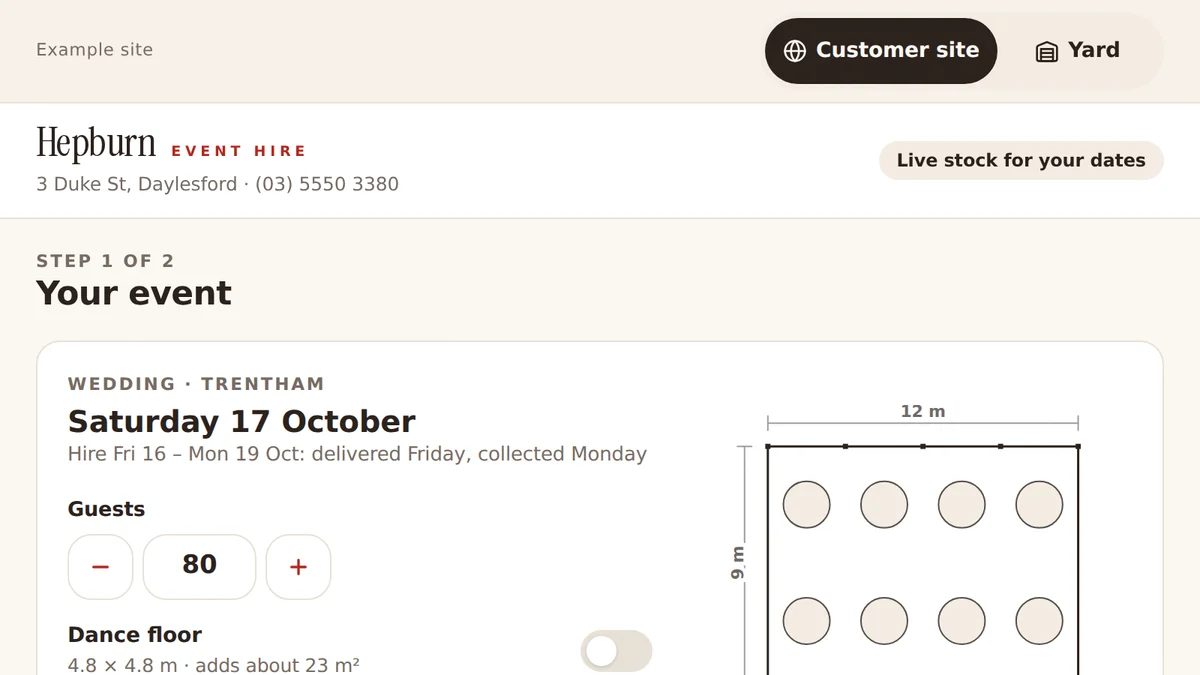
- Party, event and equipment hire businessesBookings, stock and returns for event hireBook a marquee against what's free that weekend, pay the deposit, load the truck from a pick list, settle the bond.Live demoTry it
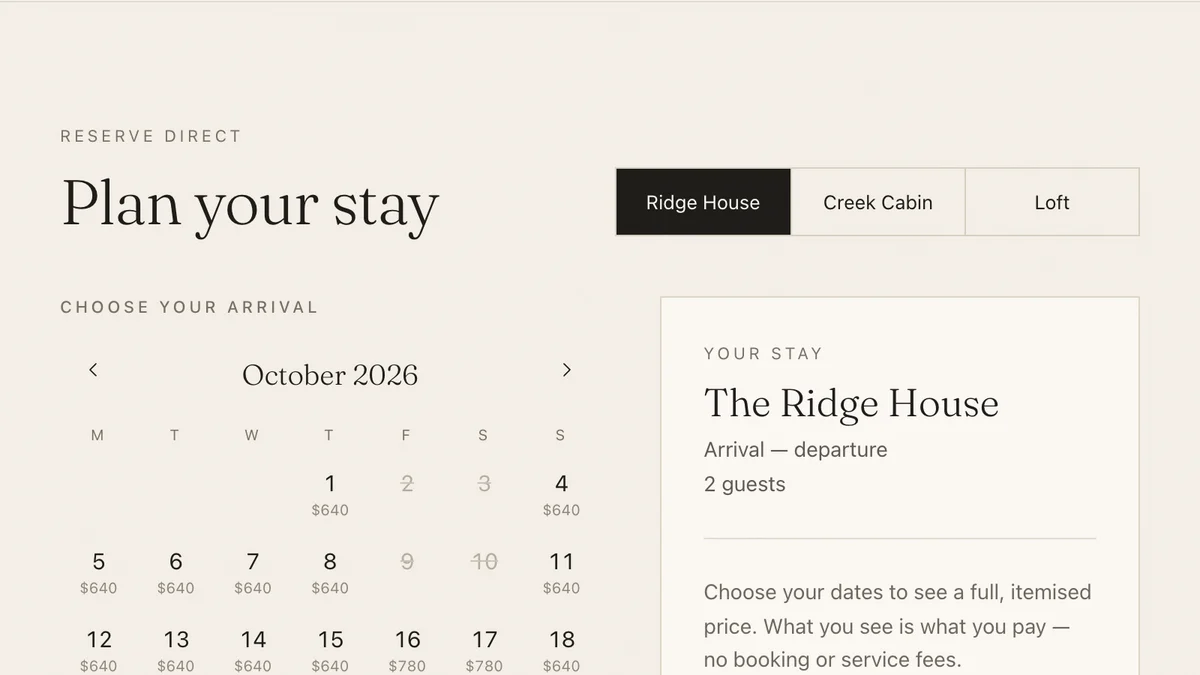
- Boutique stays, B&Bs, cabins and holiday homesDirect booking for accommodationA direct booking site for a High Country retreat, with the owner's view behind it.Live demoTry it
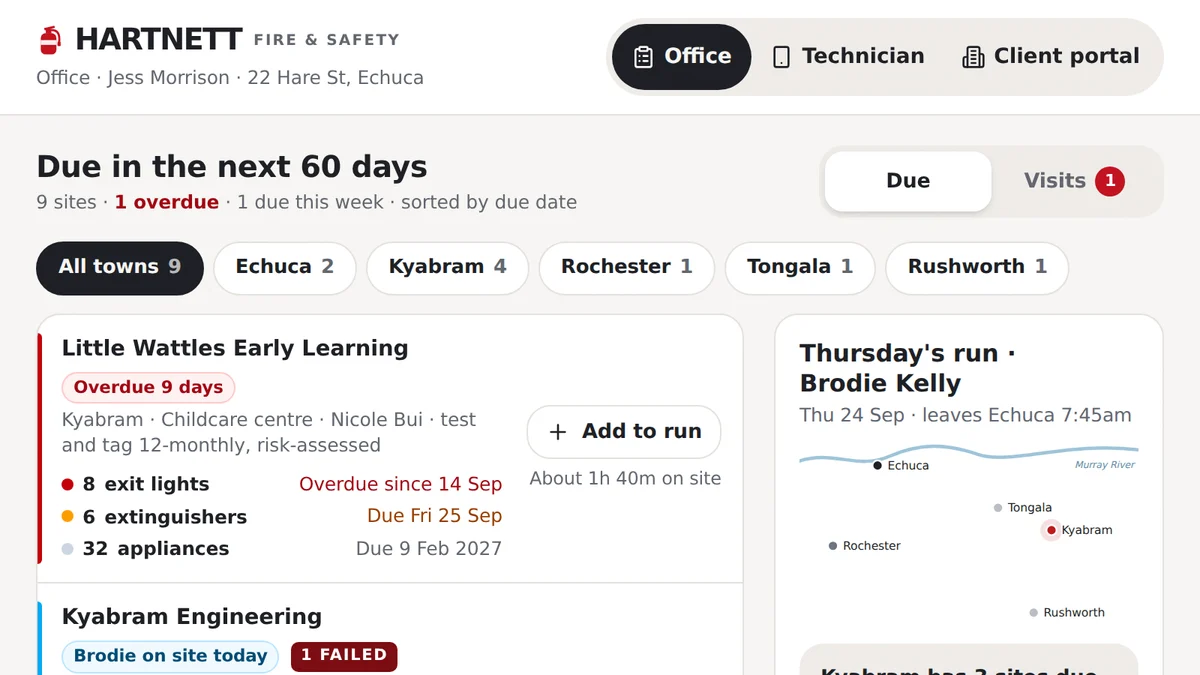
- Fire safety, test and tag and electrical compliance businessesTest, tag and fire safety inspectionsEvery asset due on its own cycle: tests done on a phone, failures tagged out, repairs approved, certificate sent.Live demoTry it
Last reviewed .