Pricing
What it costs to build an app in Australia
App budgets go wrong in a predictable way: the build is estimated carefully and everything around it — payments, permissions, support, the second round of changes once real people use it — isn't. AI tools have genuinely reduced the cost of the first version. They've barely touched the cost of everything after it.
Rather just ask someone? Talk to usIn short
In Australia in 2026, a genuine MVP costs roughly $15,000 to $40,000, a v1 product with payments and accounts $40,000 to $120,000, and a multi-sided platform $120,000 upwards. Then budget 15-25% of the build cost per year for hosting, maintenance and the changes real users will demand.
Australian app build costs, 2026
Web and cross-platform mobile. Native iOS plus native Android separately is meaningfully more.
- Prototype $2,000 – $8,000
- Clickable, convincing, not real. For testing an idea or raising money. AI tools have made this dramatically cheaper.
- MVP $15,000 – $40,000
- Real accounts, real data, one core workflow done properly, secure enough for actual customers. Deliberately narrow.
- v1 product $40,000 – $120,000
- Payments, roles and permissions, admin tooling, notifications, integrations, the unhappy paths handled.
- Platform $120,000+
- Multiple user types, complex business rules, compliance obligations, scale. Usually a team over many months.
- Ongoing 15 – 25% of build / year
- Hosting, dependency updates, security, monitoring, support and the changes that follow real usage. Not optional.
What actually matters
Scope drives cost far more than technology
The framework barely matters to the price. Number of distinct user types, number of integrations, and how much of your business logic has exceptions — those are the levers. Every 'except when…' in a requirements conversation is money.
Payments always cost more than expected
Taking a payment is easy. Failed payments, refunds, disputes, subscription changes, proration, tax and reconciliation are not. Budget for the unhappy paths, because your customers will find them all.
AI has cut the first 40%, not the last 60%
Getting to something that works is faster and cheaper than it has ever been, and that's a real saving. Security, permissions, reliability, edge cases and support have not become cheaper — and they're most of the work.
The second version is not free
Real usage always produces a list. Plan and fund a round of changes after launch; teams that don't end up with a product that reflects their assumptions rather than their users.
Fixed price and time-and-materials both have a catch
Fixed price puts risk on the builder, who prices that risk in and resists changes. Time-and-materials is flexible and open-ended. Fixed-price phases with a re-scope between them is usually the sane middle.
Cheap builds have an interest rate
Shortcuts get taken and repaid later with interest, usually at the least convenient moment. This is the single most common reason we're called in, and it is much more expensive than doing it properly the first time.
Where we'd tell you otherwise
If you haven't yet confirmed people will pay for this, don't build an MVP — build a prototype, or a landing page and a waitlist. The cheapest possible way to learn your idea doesn't work is not to build the software. We'd rather tell you that than take the project.
Want a second opinion?
Tell us what you're weighing up. We'll give you a straight answer, including when the answer is that you don't need us.
Common questions
A genuine MVP typically costs $15,000 to $40,000, a v1 product with payments and accounts $40,000 to $120,000, and a larger platform $120,000 and up. Add 15-25% of the build cost per year for hosting, maintenance and post-launch changes.
It genuinely makes the first working version far cheaper, and you should use it. What it doesn't reliably do is security, permissions, payment edge cases and long-term maintainability. A large share of our work is finishing and securing apps that AI tools got most of the way through.
A prototype looks real and isn't — it's for testing an idea. An MVP is genuinely usable by real customers for one core workflow. A v1 is a complete product with the surrounding machinery: payments, admin, permissions, support. The costs differ by roughly an order of magnitude across that span.
Different assumptions about scope, seniority and what counts as 'done'. One quote assumes you're supplying design and content and testing it yourself; another includes all of it plus support. Ask each to list what's excluded — that's where the difference lives.
Hosting and services, dependency and security updates, monitoring, support, and the changes real usage produces. Fifteen to twenty-five per cent of the build cost per year is a realistic planning figure, and it is not a sign anything went wrong.
See it working
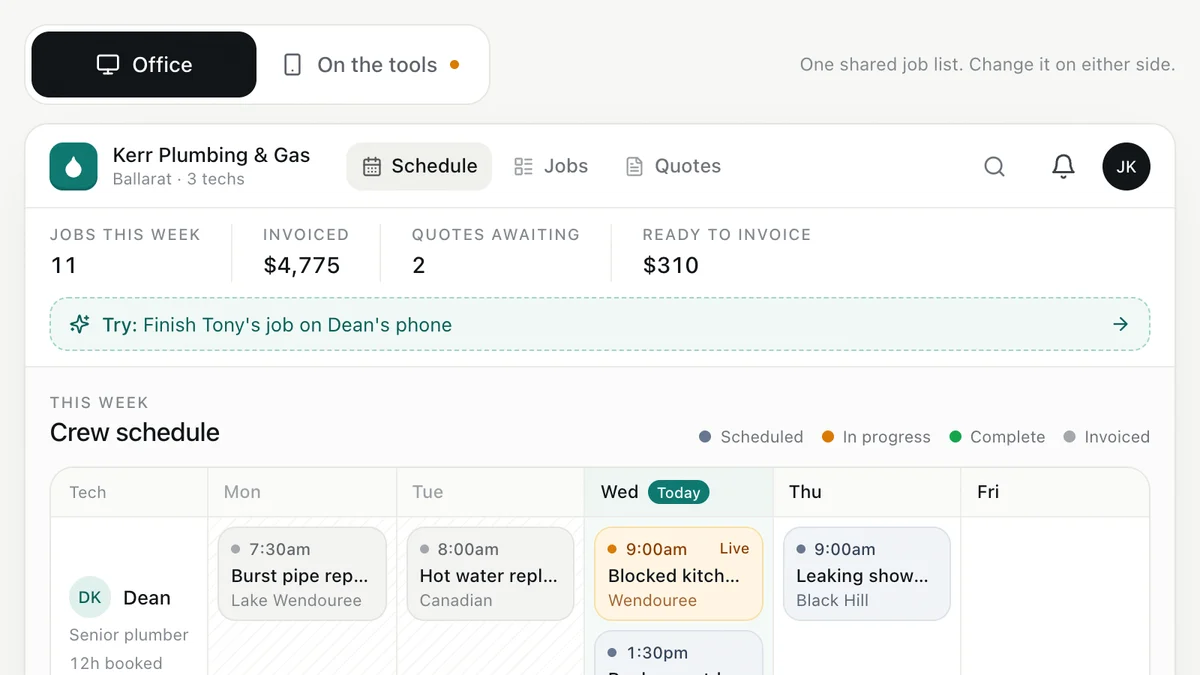
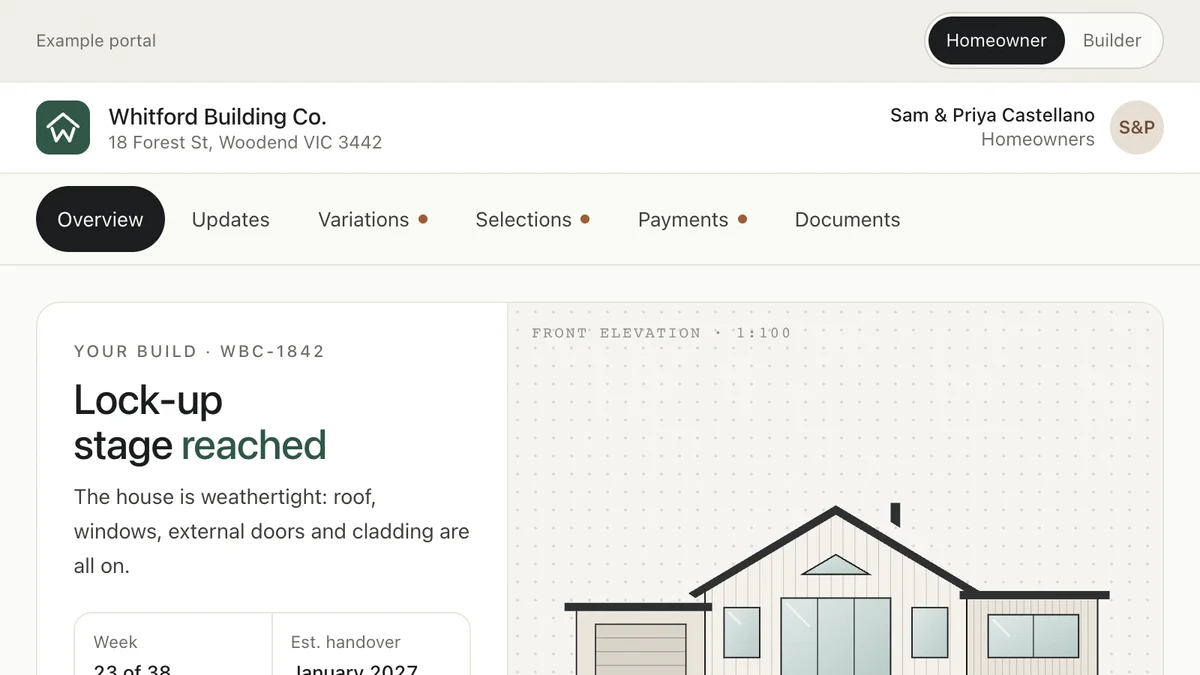
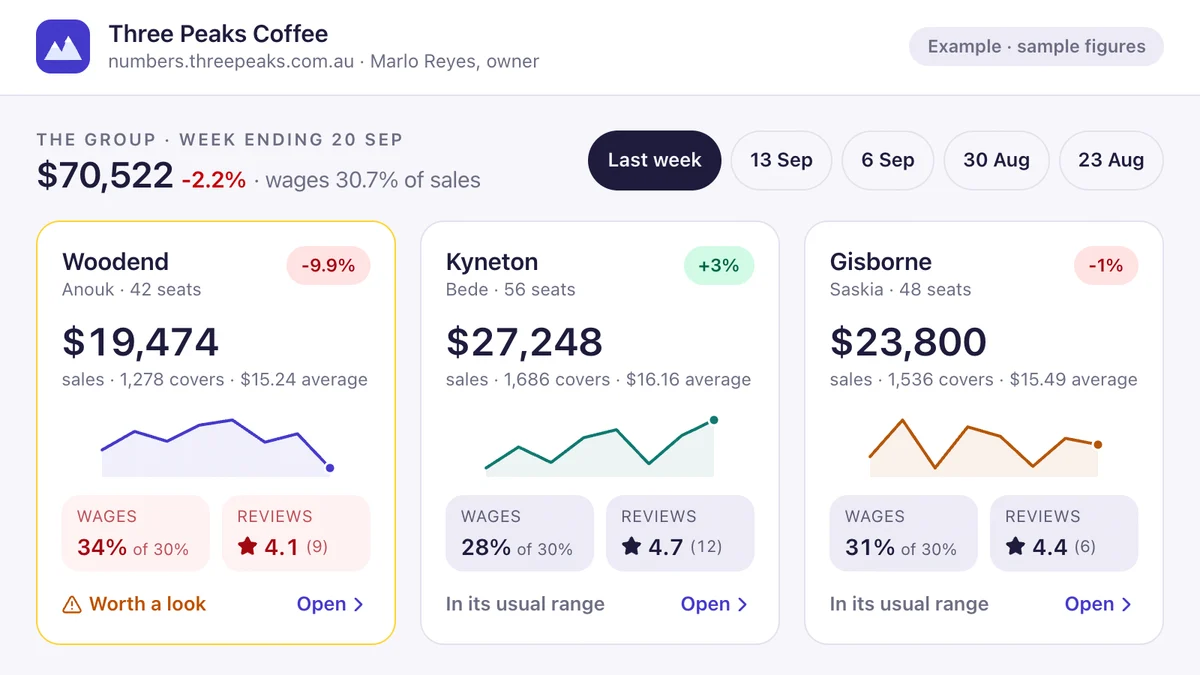
Software we'd build, running with a fictional business and sample data. Use it, then decide.
Also worth a look
- Should You Build an MVP or the Full Product?
- Need a Fractional CTO for Your Startup?
- What a Website Costs in Australia (2026)
- Already built something that's stuck? We fix those
Last reviewed . Prices are indicative Australian ranges, not quotes.