Fractional CTO
Need a fractional CTO for your startup?
There's an awkward stage in most startups where the technical decisions have outgrown the founders but the company can't justify — or attract — a full-time CTO. You need someone to say whether the architecture will hold, whether the contractor's quote is reasonable, and whether the thing you've built can be sold. That's a few days a month of senior judgement, not a permanent hire.
Rather just ask someone? Talk to usIn short
A fractional CTO is a senior technical leader you engage part-time — typically two to six days a month — to own architecture, hiring, vendor decisions and technical risk. In Australia that runs roughly $4,000 to $12,000 a month, against $220,000 or more for a full-time CTO. It suits companies with real technical decisions but not enough of them to fill a role.
- What does a fractional CTO actually do?
- They own the technical decisions a founder shouldn't have to make alone: what to build and what to buy, how the system should be structured, which developers to hire and how to evaluate them, what the security and compliance obligations are, and what technical risk the business is carrying. They are not a part-time developer — if what you need is code written, you need developers, and they are cheaper.
What it costs, and what it replaces
Indicative Australian figures for 2026. Fractional engagements are usually a monthly retainer with an agreed number of days.
- Advisory $2,000 – $4,000 / month
- One to two days a month. Architecture review, vendor decisions, a standing call. Suits pre-revenue and early startups.
- Fractional CTO $4,000 – $12,000 / month
- Two to six days a month. Owns the technical roadmap, hiring and vendor management. The common shape.
- Embedded $12,000 – $25,000 / month
- Multiple days a week, hands on the work. For funded companies building quickly before a permanent hire.
- Full-time CTO $220,000+ / year
- Plus superannuation, equity and a hiring process measured in months. The thing fractional is an alternative to.
What actually matters
You have technical decisions but not a technical team
Non-technical founders making architecture calls by reading blog posts is a common and expensive failure mode. A fractional CTO makes those calls with you and takes responsibility for them.
You're about to spend serious money on development
The single highest-return use of a fractional CTO is reviewing a build before you commit to it. Vendor selection, scope review and a sanity check on the quote routinely save more than the engagement costs.
You're hiring developers and can't assess them
Interviewing engineers when you can't evaluate the answers is close to guessing. A fractional CTO writes the role, screens candidates, runs the technical assessment and tells you what a fair salary looks like.
Investors or customers are asking technical questions
Due diligence, security questionnaires, enterprise procurement — all require someone who can answer credibly and produce the documentation. Turning up without that answer costs deals.
You inherited a system nobody understands
A technical founder left, or an agency handed over a black box. Someone senior needs to assess what you actually own, what it's worth and what it will cost to keep running.
You need a second opinion you can trust
Sometimes the value is simply having someone with no stake in the answer tell you whether your developer's estimate is reasonable, or whether the rewrite they want is necessary.
Fractional CTO, technical co-founder or agency?
Three ways to get technical leadership, with genuinely different trade-offs.
| Criteria | Fractional CTO | Technical co-founder | Development agency |
|---|---|---|---|
| Cost | Monthly fee, cancellable | Equity — the most expensive option long-term | Project fees, no leadership included |
| Commitment | Low. Scale up or down | Permanent and hard to unwind | Per project |
| Owns technical risk | Yes | Yes | Only within the project scope |
| Best when | Decisions are big but infrequent | The technology is the business | You know exactly what to build |
| Main risk | Limited hours and attention | A co-founder split that fails | Nobody is thinking beyond the invoice |
Where we'd tell you otherwise
If your product is technically simple and the real risk is whether anyone wants it, spend the money on finding customers instead — a fractional CTO won't fix a demand problem. And if technology genuinely is your competitive advantage, you eventually want that person permanently and invested, not on a retainer.
Want a second opinion?
Tell us what you're weighing up. We'll give you a straight answer, including when the answer is that you don't need us.
Common questions
A consultant advises and leaves. A fractional CTO takes ownership — they're accountable for the technical outcome, they make decisions rather than presenting options, and they stay long enough to see the consequences of what they recommended.
Most engagements run $4,000 to $12,000 a month for two to six days. Lighter advisory arrangements start around $2,000. Compare that with $220,000 or more, plus super and equity, for a full-time CTO — and a hiring process that takes months.
Only if technology is the business rather than a means of delivering it. A co-founder is the most expensive form of technical help there is, paid in equity forever. If you mainly need good decisions made well, fractional is cheaper and reversible.
They can, but it's usually poor value — you'd be paying leadership rates for development work. The better arrangement is a fractional CTO directing a development team, which is how we structure it.
Usually with a paid technical review: we look at what you have, what you're planning and what you're spending, and give you a written assessment. That tells both of us whether an ongoing arrangement is worth having.
See it working
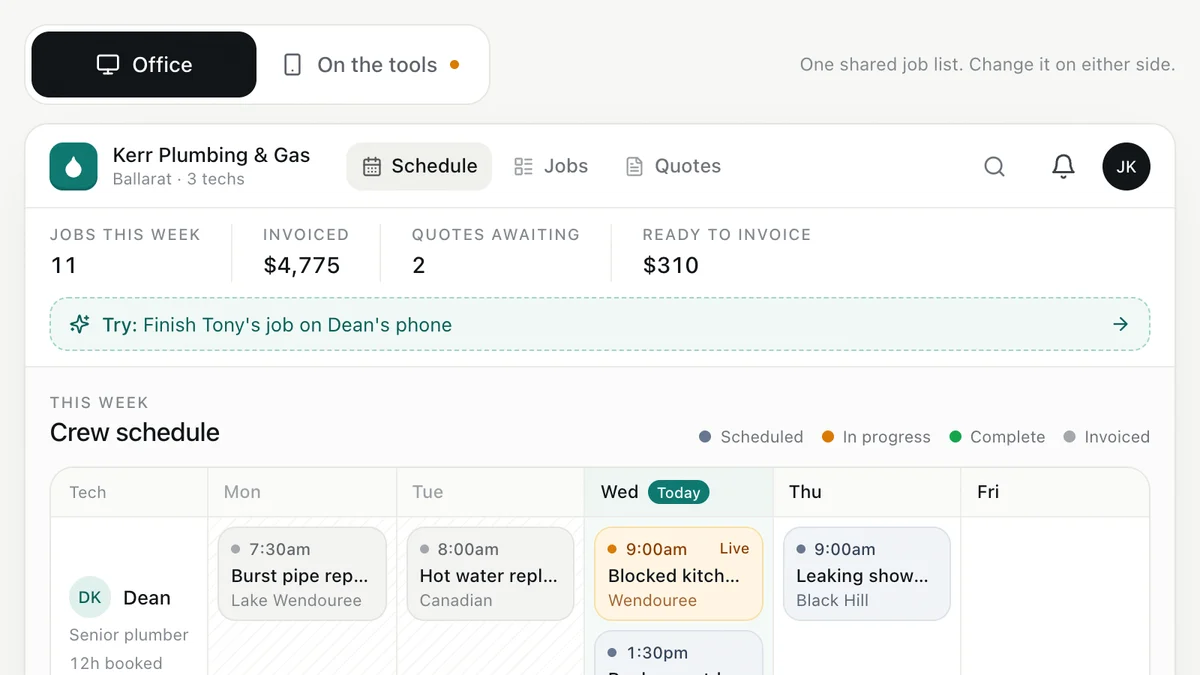
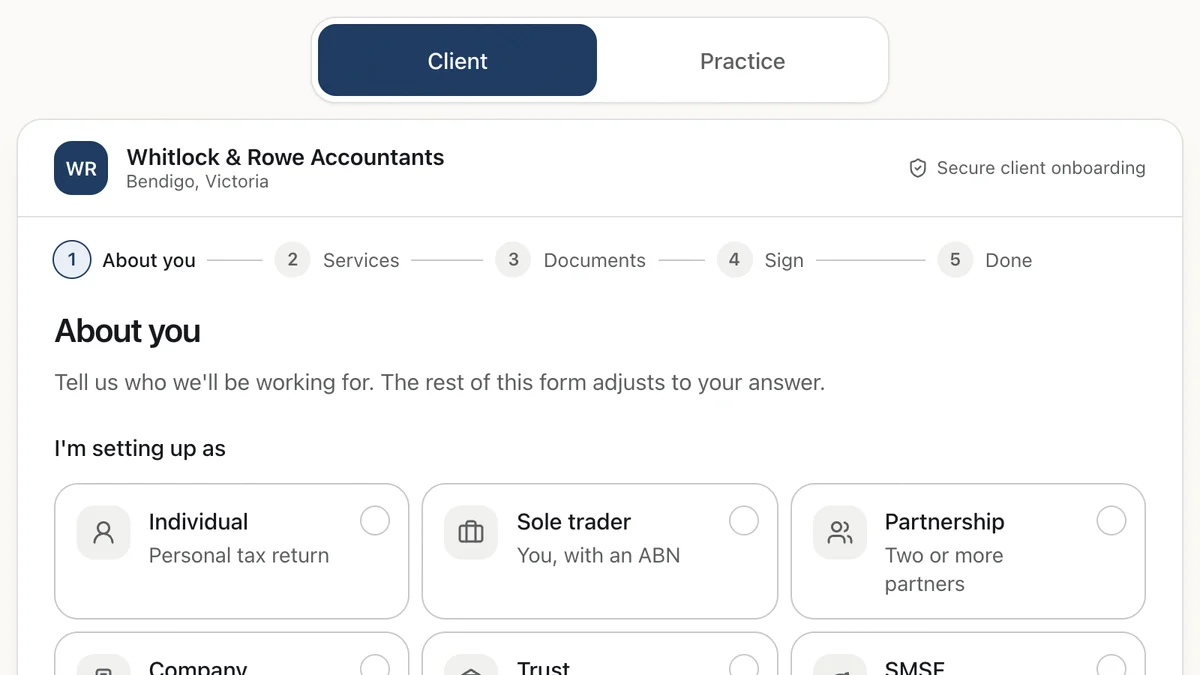
Software we'd build, running with a fictional business and sample data. Use it, then decide.

Also worth a look
- Should You Build an MVP or the Full Product?
- What an App Costs to Build in Australia (2026)
- How to Choose a Web Developer in Australia
- Already built something that's stuck? We fix those
Last reviewed . Prices are indicative Australian ranges, not quotes.