How to buy
Offshore or Australian developers?
This question usually gets answered by whoever is selling. Offshore development is not a scam and it is not a shortcut — there are excellent engineers everywhere, and there are Australian agencies quietly subcontracting the work you thought you were paying a premium for. What actually varies is the cost of communication, and who is accountable when something goes wrong.
Rather just ask someone? Talk to usIn short
Offshore development can be excellent value when your requirements are clear, written down and unlikely to change. It struggles when the specification is a conversation. Australian teams cost two to four times more per hour, and buy you shared timezone, shared context, and legal recourse that is actually usable.
What actually matters
The rate is not the cost
A $40/hr developer who needs three rounds of clarification for something a local resolves in one call is not cheaper. Offshore economics work when specification quality is high enough to avoid those rounds.
Somebody has to own the specification
The most common failure isn't skill, it's ambiguity. If nobody on your side can write a precise brief and review the output critically, offshore will disappoint — and that role is itself a real cost.
Timezone helps and hurts
Overnight turnaround is genuinely useful for well-defined work. It's painful when something is blocked and the answer takes eighteen hours. Insist on a few hours of daily overlap.
Australian context has to be taught
GST, ABN validation, Australian address and phone formats, local payment methods, the Privacy Act, and what a customer in regional Victoria expects from a website. None of it is obvious from elsewhere.
Check who is actually building it
Plenty of Australian agencies subcontract offshore at Australian rates. That's not automatically wrong, but you should know, and you should be paying for the coordination rather than for an illusion.
Recourse matters more than people expect
If a build fails badly, pursuing an Australian business is unpleasant but possible. Pursuing an entity in another jurisdiction is usually theoretical. Weigh that against the size of what you're risking.
The trade-offs, honestly
Generalisations, and there are outstanding exceptions in every column.
| Criteria | Offshore | Australian |
|---|---|---|
| Typical rate | $25 – $70 / hr | $100 – $250 / hr |
| Overlap with your day | Two to four hours, or none | Full working day |
| Works best when | Spec is written and stable | Spec emerges through conversation |
| Cost of a misunderstanding | High — often a day lost per round | Low — resolved in a call |
| Legal recourse | Technically available, practically difficult | Australian Consumer Law, enforceable |
| Local context | Needs explaining: GST, ABN, AU addresses, local search | Assumed |
| Management overhead | Significant — someone must own it | Modest |
Making offshore work
If you go offshore — and for the right project it's a sound decision — these are what separate the good outcomes from the cautionary tales.
- A written specification with screens or wireframes, not a paragraph of intent
- A paid trial task before committing to the full project
- At least three hours of daily overlap with your working day
- Code in your repository from day one, and access to every account
- Weekly demos of working software, not status reports
- Someone on your side who can review the work critically
- Payment against milestones you have actually seen working
Where we'd tell you otherwise
We're an Australian studio, so we're not neutral. But for a well-specified, stable-scope build where price is the deciding factor, a good offshore team is a legitimate choice and we'd rather you succeed with them than fail with us. Pay for local when the requirements are still being discovered, or when the cost of the project failing is high.
Want a second opinion?
Tell us what you're weighing up. We'll give you a straight answer, including when the answer is that you don't need us.
Common questions
Per hour, substantially — typically $25 to $70 against $100 to $250. Whether it's cheaper overall depends on how much management and rework the arrangement needs. With a stable, well-written specification the saving is real. With an evolving one it often evaporates.
Not inherently. There are outstanding engineers in every market and poor ones in all of them too. Quality tracks who you hire and how well you specify the work, not where they live.
Ask directly who will write the code, where they're based, and whether you can speak with them. It's a fair question. An honest answer is fine — an evasive one tells you something about how the rest of the project will go.
Your practical protection is structural rather than legal: your own repository and accounts from day one, milestone payments, and working demos you've seen. Cross-border legal recourse exists on paper and is rarely worth pursuing for a small business.
See it working
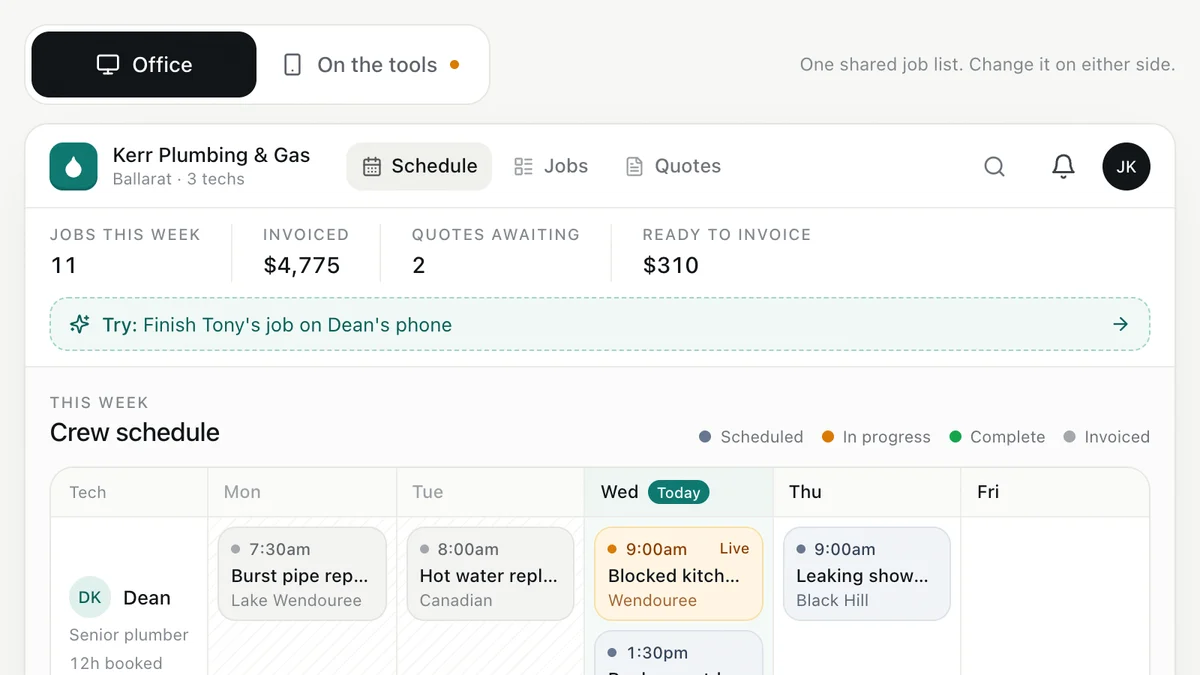
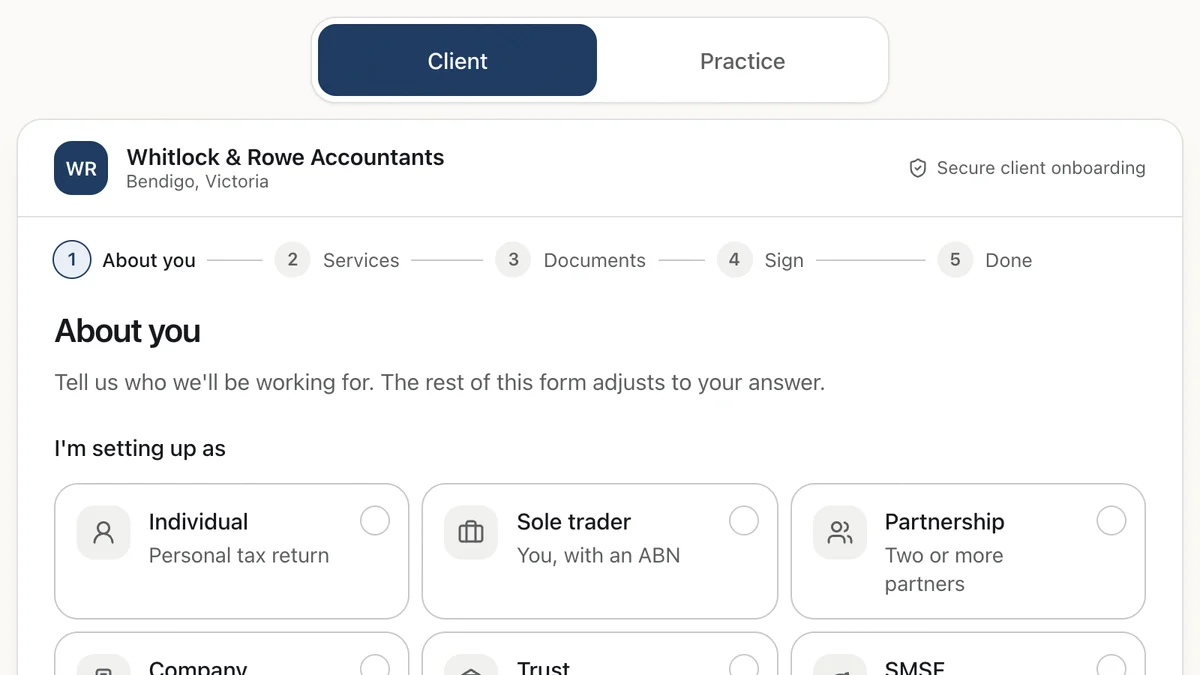
Software we'd build, running with a fictional business and sample data. Use it, then decide.

Also worth a look
- Freelancer, Agency or In-House?
- How to Choose a Web Developer in Australia
- Who Owns Your Code, Domain and Data?
- Already built something that's stuck? We fix those
Last reviewed . Prices are indicative Australian ranges, not quotes.