Ownership
Who actually owns your website?
Most business owners assume that paying for something means owning it. With software that's often not true by default — intellectual property law starts from the position that whoever wrote it owns it, unless your agreement says otherwise. Combine that with a domain registered in a developer's personal account and you have a business that doesn't control its own front door.
Rather just ask someone? Talk to usIn short
Under Australian copyright law the developer usually owns what they write unless your agreement assigns it to you. Domains, hosting and analytics belong to whoever registered the account, not whoever paid. Put ownership in writing before work starts, and register every account in your business's name from day one.
- Paying for it isn't the same as owning it
- In Australia, copyright in commissioned software generally sits with the person who created it unless the contract says otherwise — the situation differs from employment, where work created by an employee usually belongs to the employer. Accounts are simpler and stricter: a domain belongs to the registrant, a hosting plan to the account holder. If your developer's email is on those accounts, they hold them, whatever your invoices say.
What actually matters
The domain is the one that really hurts
Lose access to your domain and you lose your website and your email at the same time. It should be registered to your business, with your billing details and your email as the contact. This is a five-minute thing to check and the most expensive one to fix later.
Ask for an IP assignment clause, in writing
One sentence assigning ownership of the delivered work to you on final payment. Most developers agree without blinking because it's normal. The ones who don't are giving you valuable information early.
Understand what can't be assigned
Third-party components — frameworks, licensed themes, stock imagery, paid plugins — are licensed rather than owned, and that's normal. What matters is that the licences are in your name and transfer with the site.
Your data is yours, and you should be able to get it out
Customer records, orders, form submissions. Ask specifically how you'd export everything if you left tomorrow. A platform with no export path is a decision worth making deliberately rather than discovering.
The repository should be yours from day one
Code in an organisation account your business owns, with the developer invited in — not the reverse. It costs nothing at the start and removes an entire category of dispute.
Proprietary platforms are a legitimate choice, made knowingly
Plenty of good businesses build on a platform you can't take with you, and the value can be real. The problem is only ever discovering it at the point you want to leave.
Accounts that should be in your business's name
Check each one. Being the person who pays the invoice is not the same as being the account owner.
- Domain registrar — registrant and billing contact
- Hosting or platform account
- Code repository (GitHub, GitLab) — an organisation your business owns
- Database and backend services
- Google Analytics, Search Console and Google Business Profile
- Email and transactional email services
- Payment gateway (Stripe, Square, PayPal)
- Any paid licences — themes, plugins, fonts, stock imagery
- DNS, if managed separately from the registrar
Where we'd tell you otherwise
If your developer is a trusted long-term partner and everything is running well, this can feel like paperwork for its own sake — and most of the time it never matters. It matters entirely on the day the relationship ends, and by then it is far harder and more expensive to arrange. It's insurance, and it's nearly free.
Want a second opinion?
Tell us what you're weighing up. We'll give you a straight answer, including when the answer is that you don't need us.
Common questions
Not automatically. Under Australian copyright law, ownership of commissioned work usually stays with the creator unless the contract assigns it to you. Paying an invoice generally buys you a licence to use the work, not the copyright in it. Ask for a written assignment.
Start by asking for a transfer — most are cooperative. If they're not, the registrar has a dispute process, and evidence that your business name and payments are behind the domain carries real weight. For .au domains, auDA's rules require eligibility connected to the registrant, which usually favours the business.
That intellectual property in the delivered work transfers to you on final payment; that all accounts are registered in your business's name; that third-party licences transfer with the project; and that on termination you receive the code, content and a full data export.
It's recoverable more often than people expect. Domains and hosting can be traced from public records and reclaimed through the provider's dispute process. It takes patience and paperwork rather than luck — and it's a service we provide when taking over an abandoned project.
See it working
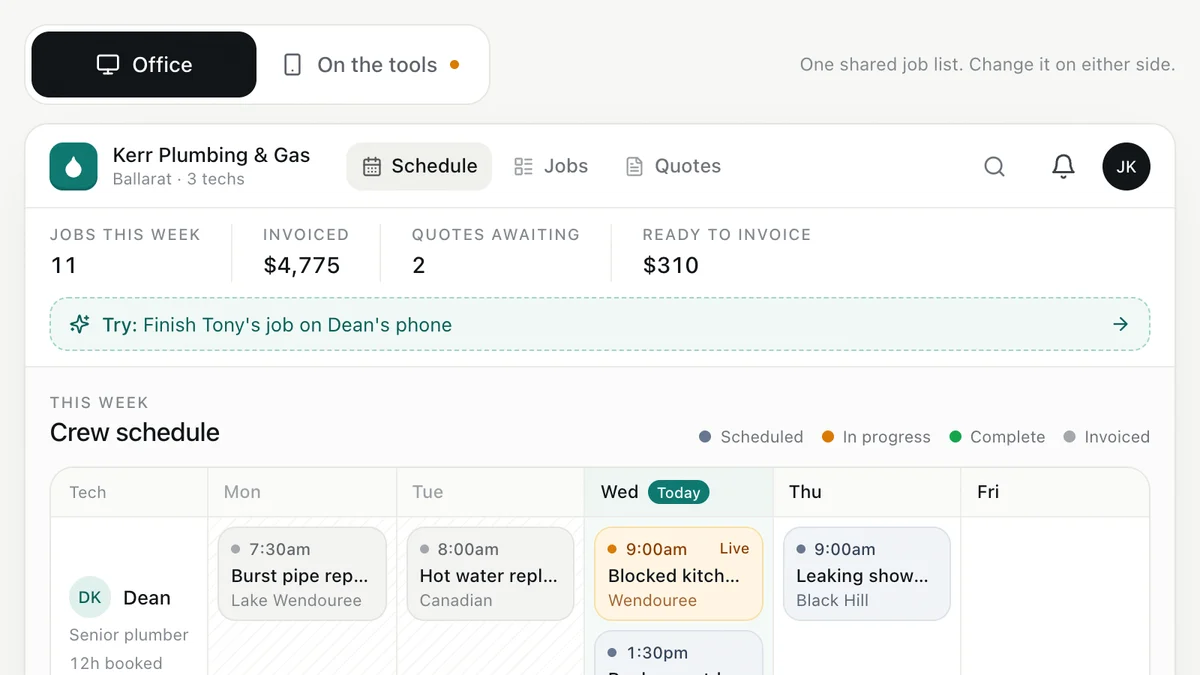
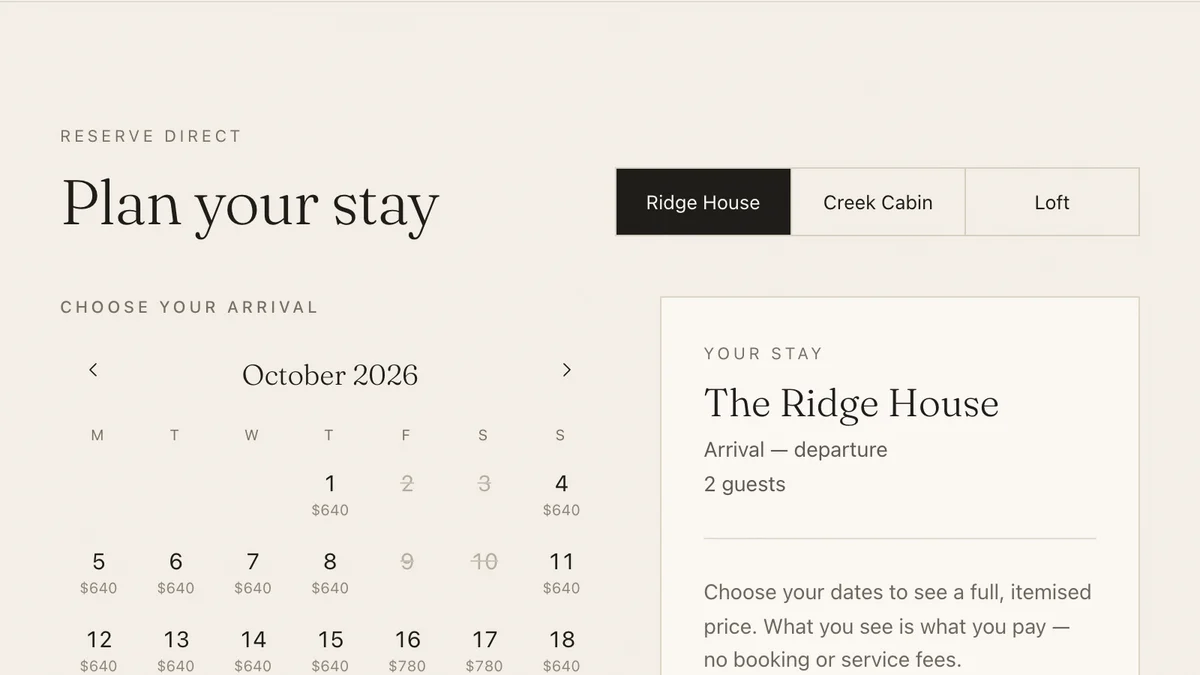
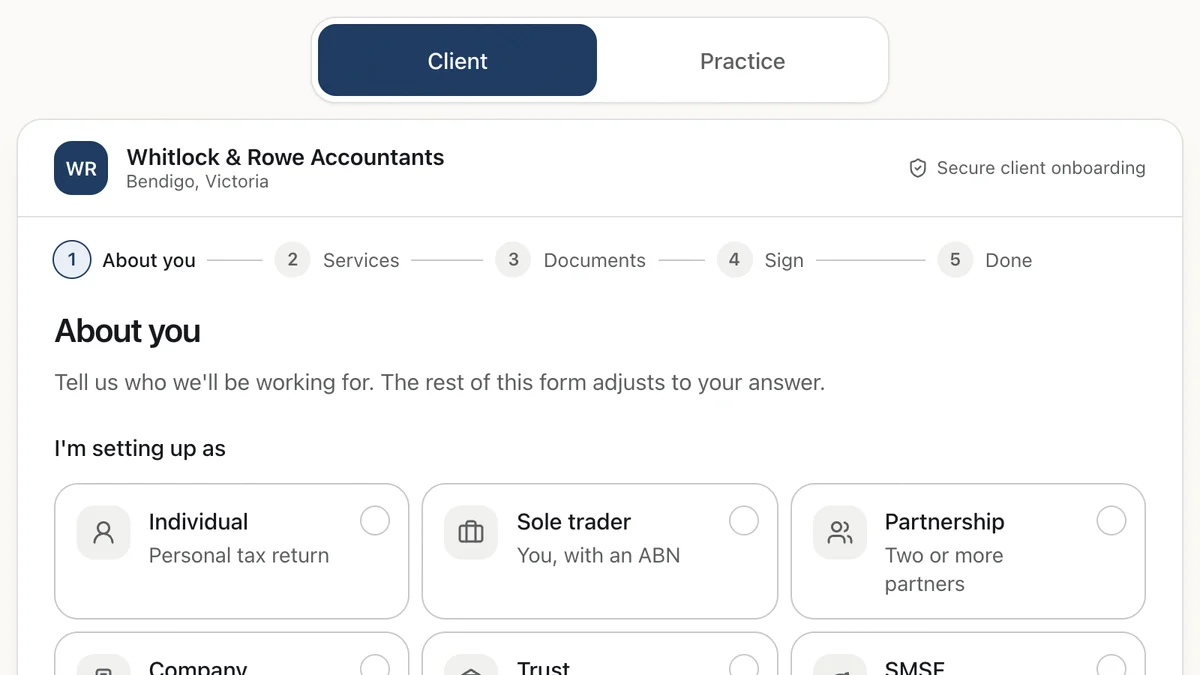
Software we'd build, running with a fictional business and sample data. Use it, then decide.
Also worth a look
- Questions to Ask Before You Hire a Developer
- How to Choose a Web Developer in Australia
- Offshore or Australian Developers?
- Already built something that's stuck? We fix those
Last reviewed . Prices are indicative Australian ranges, not quotes.