Conversion
Plenty of visitors, no enquiries
This is the most common complaint we hear, and the most common cause is genuinely mundane: the form has been broken for months and nobody knew. Check that before anything else. After that it's usually a small number of fixable things rather than a fundamental problem with the site.
Rather just ask someone? Talk to usIn short
Test your own contact form first — silently broken forms are the single most common cause, and they often fail for months unnoticed. If it works, the usual culprits are an unclear offer, a weak or buried call to action, no trust signals, friction on mobile, or traffic from people who were never going to buy.
What actually works
Submit your own form. Today.
From a phone, on mobile data, using an address you don't own. Then check it arrived, and check spam. Deliverability changes, hosts change, plugins update, and the failure is silent — the visitor sees a thank-you message either way. We find this constantly.
Track submissions somewhere other than email
Email is a notification, not a record. Write enquiries to a database or a CRM so a mail problem can never lose a lead, and so you can tell the difference between 'nobody enquired' and 'we didn't receive it'.
Say what you do, for whom, and where
Visitors decide in seconds. If the top of your homepage is a slogan rather than a plain statement of the service, the area and the next step, a share of them leave without knowing whether you're relevant.
One obvious next step per page
A single primary action, repeated — at the top, in the middle, at the end. Four competing buttons is the same as none. On mobile the phone number should be tappable and visible without scrolling.
Give people a reason to believe you
Reviews, real photographs of real work, named people, a physical location, years in business, licence numbers. Most small business sites are missing all of it, and it's the cheapest conversion improvement available.
Ask for less
Every extra required field costs you submissions. Name, contact and a message is usually enough — you can ask the rest when you reply. Budget dropdowns and long qualification forms suppress exactly the enquiries you'd have wanted.
Check the traffic is the right traffic
Rankings for terms with no buying intent, or a social post that went wide, produce visitors who were never going to enquire. Look at which pages the enquiries you do get come from, and judge the rest against that.
Watch someone use it
Session recordings, or literally handing your phone to someone and asking them to get in touch. Ten minutes of this beats a month of speculating about what's wrong.
The conversion audit
In order. Most sites fail at least three of these, and the first one alone explains a surprising number of cases.
- The form actually delivers — tested from a phone, to an address you don't control
- Enquiries are stored somewhere, not only emailed
- What you do, for whom and where is stated above the fold
- A tappable phone number is visible without scrolling on mobile
- One primary call to action, repeated down the page
- Reviews or testimonials with real names on the page that converts
- Real photographs of your actual work, not stock
- The form asks for three or four fields, not ten
- A confirmation message that says what happens next and when
- Analytics records form submissions as an event, so you can see the trend
When this isn't your problem
If you're getting thirty visits a month, this isn't a conversion problem — it's a visibility problem, and no amount of button-tuning will fix it. Below a few hundred visits a month the numbers are too small to tell you anything, and the work belongs in local search and content instead.
Want us to look at it?
Send us your site and what you're trying to improve. We'll tell you what we'd do first — including when the honest answer is that you don't need us.
Common questions
Usually deliverability rather than the form itself: the site sends from an address it isn't authorised to use, so the message is silently rejected or filed as spam. Proper SPF, DKIM and DMARC records and a real transactional email service fix it. Check your spam folder before assuming nobody enquired.
For local service businesses, roughly 2-5% of visitors making contact is normal, and well-targeted local traffic can run higher. Below 1% with genuinely relevant traffic points at something specific — usually a broken form or a missing call to action.
Usually not first. Most small business sites gain more from a visible phone number and a form that works. A chat widget helps when you have enough volume that questions repeat and someone can actually answer promptly — otherwise it's another thing that ignores people.
Track form submissions as an analytics event and change one thing at a time. Most small business sites don't have the traffic for statistically valid A/B testing, so sequential changes with an honest look at the trend is the practical approach.
See it working
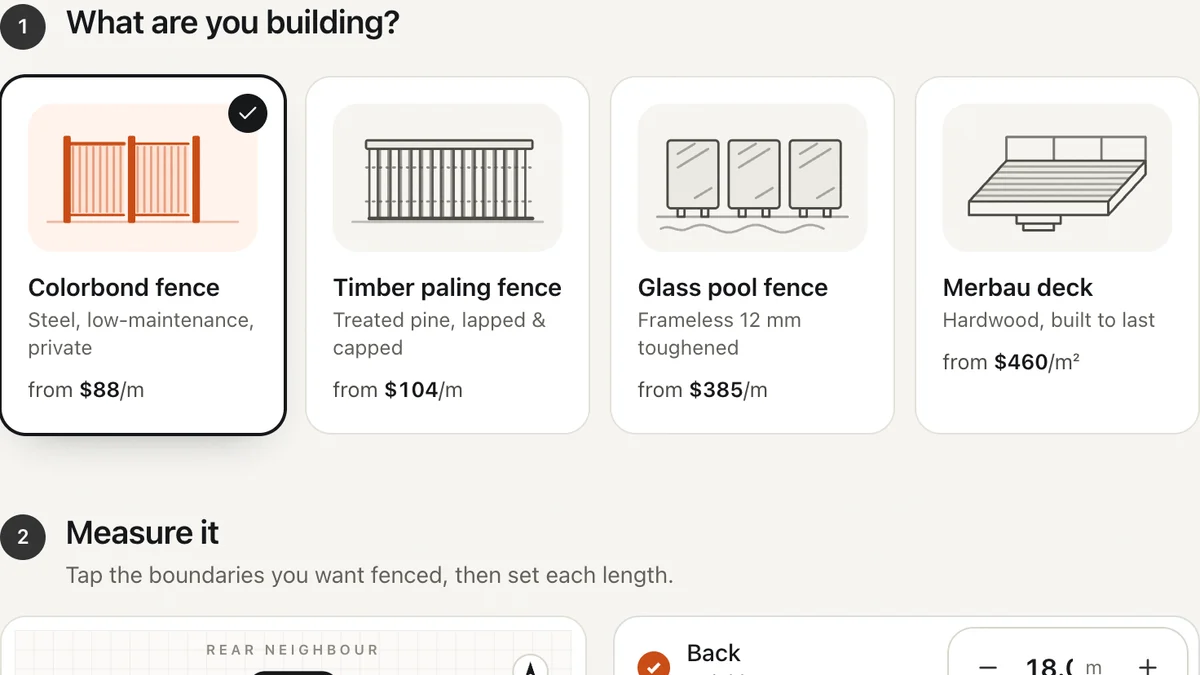
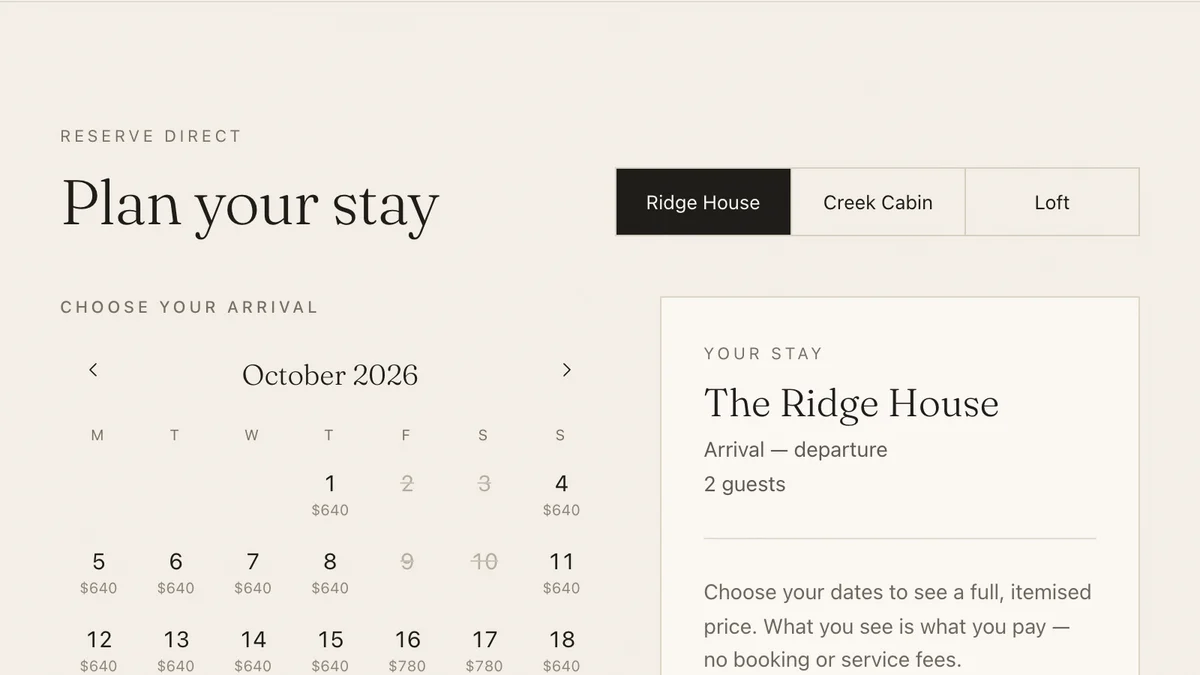
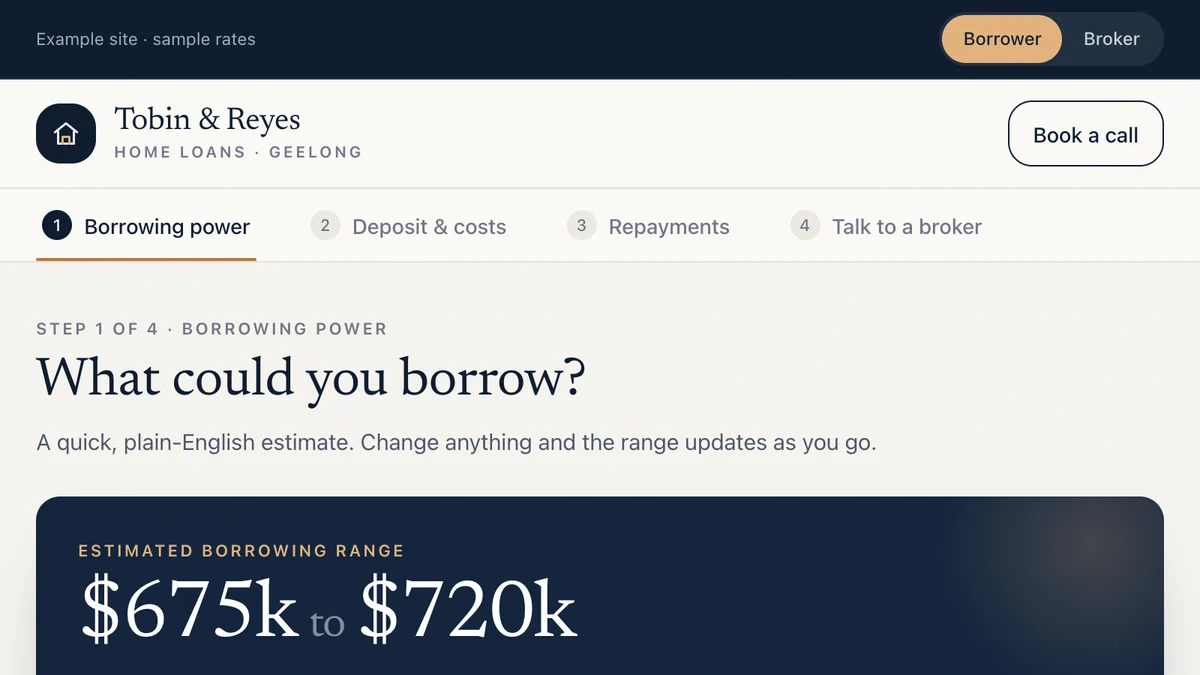
Software we'd build, running with a fictional business and sample data. Use it, then decide.
Also worth a look
- How to Rank Locally in Your Own Town
- Why Your Website Is Slow, and What It Costs You
- Why You're Not Showing Up on Google Maps
- Weighing up who should build it, and what it should cost?
Last reviewed . Figures are indicative Australian ranges, not quotes.