27 November 2026
What is AEO, and how is it different from SEO?
AEO, or answer engine optimisation, is the work of getting your business named when an AI assistant answers a question, in ChatGPT, Google's AI Overviews and AI Mode, Perplexity or Copilot. SEO earns a place in a list of links; AEO earns a mention inside the answer. Most of the groundwork is the same, and Google treats them as one discipline.
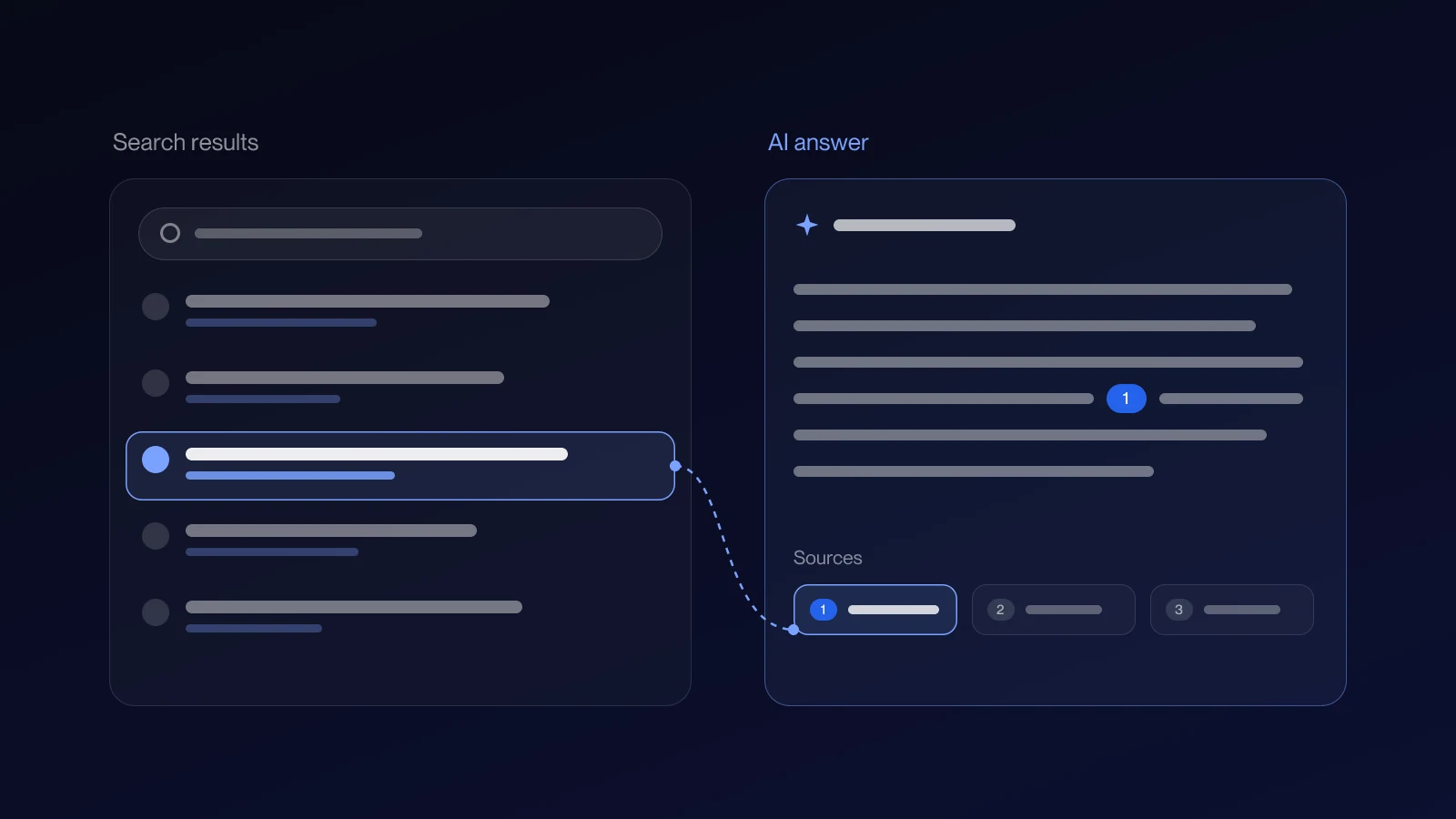
If you run a business with a website, someone has probably tried to sell you AEO by now. The pitch tends to go like this: people ask ChatGPT instead of Googling, your SEO is out of date, and you need a new kind of optimisation. Some of that is true. Australians really are asking AI assistants for recommendations, and those assistants really do name a handful of businesses and skip everyone else. What isn't true is that you have to start from scratch.
What AEO means
Answer engine optimisation is the work of making your business easy for AI assistants to find, understand and quote. When someone asks "who fixes split systems in Bendigo?" or "how much should a small business website cost?", you want your business, or a page you wrote, to be part of the reply.
An answer engine is any tool that replies with an answer instead of a list of links: Google's AI Overviews and AI Mode, ChatGPT with web search, Perplexity, Microsoft Copilot and Gemini. You'll also see the work called GEO (generative engine optimisation) or LLM SEO. People use all three names for the same thing.
How answer engines decide what to say
When a question needs current or local information, most of these tools don't answer from memory. They search first, read a selection of pages, and write a reply from what they found, usually with links to the sources.
Google calls this grounding, or retrieval-augmented generation. Its guide to generative AI features also describes query fan-out: the model turns one question into several related searches and runs them at once. Google's own example is a question about fixing a lawn full of weeds, which might also trigger searches for the best lawn herbicides, weeding without chemicals and how to stop weeds coming back.
ChatGPT does something similar. OpenAI says it rewrites your question into one or more targeted searches, sends them to third-party search providers, reviews the results and sometimes searches again. It also has its own crawler, OAI-SearchBot, and a site has to let that crawler in to be eligible for ChatGPT's search results.
Two things follow. What gets used is usually a passage rather than a whole page: a few sentences that cleanly answer one of those fanned-out questions. And because the sources come from search results, a page that search engines can't find rarely makes it into an answer.
Where AEO and SEO differ
SEO | AEO | |
|---|---|---|
The aim | A high position in a list of links | Being quoted or named in the answer |
What a win looks like | A click through to your site | A mention, a source link, sometimes a click |
What gets judged | The whole page | A passage that answers one question |
Where it happens | Mostly Google and Bing | Google's AI features, ChatGPT, Perplexity, Copilot, Gemini |
How you measure it | Rankings, clicks, Search Console | Mentions, citations, AI referral traffic, Google's new AI report |
Fewer people click, so being named matters more
Pew Research Center tracked the real browsing of 900 American adults in March 2025. When Google showed an AI summary, people clicked an ordinary search result on 8% of visits, compared with 15% when there was no summary. They clicked a link inside the summary on just 1% of visits.
So if an answer names your business, the person might remember you, look you up later or ring you, and none of that shows up as a click from the answer. That's why being named is the outcome to aim for, even when it sends no traffic you can see.
Passages get judged on their own
A traditional result can rank on the strength of the whole page. An assistant lifting three sentences needs those sentences to make sense out of context. A service page that spends two paragraphs on your passion for quality before saying what you do, where and for how much is easy for an assistant to skip.
There's more than one engine to think about
Google's AI features draw on Google's own index. ChatGPT draws partly on third-party search providers and partly on its own crawler, and Perplexity runs its own crawler too. Being well set up for Google helps everywhere, but checking that the other crawlers can actually reach your site is a separate job.
Measurement is fuzzier
You could always look up where you ranked. AI answers change with how the question is worded, who's asking and where they are, so there's no single position to check. Any tool selling you an exact "AEO ranking" is estimating.
Where they're the same (which is most of it)
Google is unusually blunt about this. Its guide, published in May 2026, says that from Google Search's perspective, optimising for generative AI search "is optimizing for the search experience, and thus still SEO". A page has to be indexed and eligible to show with a snippet before it can appear in AI Overviews or AI Mode, which are the same requirements as an ordinary search result.
There is one new switch worth knowing about. Since 31 August 2026, every site in Google Search Console has a Search generative AI control under Settings. By default it's set to include, so your content can appear in AI Overviews, AI Mode and the AI features in Discover. If someone has set it to exclude, your site won't appear in any of them, and changes take a few days to come through. It takes about 30 seconds to check.
So the foundations are shared: a site search engines can crawl, pages that load quickly and work on a phone, clear headings, accurate business details and content written for the people reading it.
Why it's worth thinking about now
Using AI assistants isn't a niche habit in Australia any more. Roy Morgan's figures for the March quarter of 2026 had 13.6 million Australians, 58% of everyone aged 14 and over, using an AI tool in an average four weeks. ChatGPT alone had 10.5 million users.
The University of Canberra's Generative AI and News: Australia 2026 report, released this week, found that 35% of Australians say they search less since they started using AI tools. It also found 61% mainly come across AI-generated content through search engines, in AI answers and summaries.
Search isn't going anywhere, and most AI content still reaches people through it. What's changed is that more "who should I call?" questions get answered before anyone opens a website, and the businesses named in the answer are the ones that get the call.
What actually works
Answer the question near the top
Write down the questions customers ask you on the phone. The page that covers each one should answer it in the first sentence or two, in a way that still makes sense if someone reads nothing else. A mobile dog groomer's pricing page should say what a wash and clip costs for a small, medium and large dog, instead of "every dog is different, contact us for a quote".
Say things only you can say
Google's guide calls the alternative commodity content: the generic "7 tips" article anyone could write, or any AI could produce. Assistants have read thousands of those. What they can't find elsewhere is your prices, your service area, how long jobs take, what you won't do and what you've learned from doing the work. Those specifics are what get quoted.
Keep your business details consistent
Your name, address, phone number, hours and service area should match across your website, your Google Business Profile and the directories you're listed in. Google's guide points local businesses straight to Business Profile. Assistants cross-check what they read, and conflicting details make you a riskier business to recommend.
Let the crawlers in
Check your robots.txt file and any bot settings at your host or CDN. Some "block AI bots" switches also block the crawlers that AI search tools use, including OAI-SearchBot, which OpenAI needs access to before your site can appear in ChatGPT search. Blocking AI training and blocking AI search are separate decisions, and both are worth making on purpose.
Earn mentions elsewhere, honestly
Answer engines lean heavily on what other people say about you. In Pew's study, Wikipedia, YouTube and Reddit were the most-linked sources in Google's AI summaries. For a small business, the realistic version is reviews, local press, industry associations and genuinely useful answers in forums. Google's guide warns that manufactured mentions don't help.
Keep your structured data, but don't expect miracles
Schema markup still helps search engines understand your business and is needed for some rich results. Google says it isn't required for AI features and there's no special markup for them. Google also stopped showing FAQ rich results in 2026, so FAQ schema added just to get that display no longer does anything you can see.
What you can ignore
An llms.txt file, if you're doing it for Google. It's a proposed format for AI tools, and Google says Google Search ignores it completely. Some other tools read it, so it's harmless to have, but it won't move anything on Google.
Breaking your pages into tiny "AI-friendly" chunks. Google says there's no need, and that there's no ideal page length.
Rewriting your content in a special style for AI. These systems understand synonyms and paraphrasing.
Anyone who guarantees you'll be recommended by ChatGPT or Google. Nobody outside those companies controls that, and Google warns that no third-party tool has access to its internal ranking or AI systems.
How to tell if it's working
In Google Search Console, the Generative AI performance report shows how your pages appear in AI features on Google Search and Discover.
In your analytics, watch referral traffic from chatgpt.com, perplexity.ai and copilot.microsoft.com. It undercounts, because so many people never click, but the trend tells you something.
Once a month, ask the main assistants the five or six questions your customers actually ask, word for word, and note who gets named. Keep the questions the same each time so the results are comparable.
Add "an AI assistant like ChatGPT" to the "How did you hear about us?" options on your enquiry form. It's the most direct measure you'll get.
Should you pay for AEO?
If your website is slow, thin or hard to crawl, or your Google Business Profile is half finished, fix those first. That's SEO, and it's also most of AEO. An AEO package that doesn't touch your content, your site's crawlability or your business details is selling you a label.
Paid help earns its keep when someone rewrites your key pages so they answer real questions plainly, checks what every major crawler can reach, tidies your business details across the web and sets you up with a simple way to track mentions. That's the scope of our answer engine optimisation service. If you'd rather do it yourself, our guide to showing up in AI search works as a practical checklist.
Quick answers
Is AEO replacing SEO?
No. AI answers are built on search results, so SEO is the foundation AEO sits on. Google treats them as the same discipline.
Is GEO the same as AEO?
In practice, yes. Generative engine optimisation and answer engine optimisation describe the same goal: having your content used and cited in AI-generated answers.
Do I need an llms.txt file?
Not for Google, which ignores it. It does no harm if another tool you care about reads it.
Can I keep my site out of Google's AI Overviews?
Yes. The Search generative AI control in Search Console excludes your site from AI Overviews, AI Mode and Discover's AI features, and Google says it doesn't affect your normal search rankings. You also give up any traffic those features would have sent you.
How long does AEO take?
Answer engines pick up changes when they recrawl your pages, the same way search does. Fixes to crawler access or business details can show up within weeks. Building the kind of reputation that gets you recommended takes longer, and there's no shortcut worth paying for.
Sources checked 27 November 2026: Google Search Central and Search Console help, OpenAI's help centre, Pew Research Center (July 2025), Roy Morgan (June 2026) and the University of Canberra's Generative AI and News: Australia 2026 report.
Stay up to date
Tech that matters to Australian small businesses. Unsubscribe anytime.