AI search
Getting recommended when someone asks an AI who to hire
A growing share of 'who should I call' questions now go to ChatGPT, Perplexity and Google's AI answers, and the reply names two or three businesses. Answer engine optimisation is the work of being one of them. Half of what's sold under that label is repackaged SEO, and some of it is nonsense. This is what we do, why, and what we won't promise.
Rather just ask someone? Talk to usIn short
Answer engine optimisation makes your business easy for AI assistants to read, trust and quote: crawlable pages, plain facts stated in text, consistent business details everywhere, structured data that matches the page, and direct answers to the questions customers actually ask. It builds on good SEO rather than replacing it, and nobody can guarantee a mention.
- AEO, GEO and SEO: what the letters mean
- Search engine optimisation earns a ranking in a list of links. Generative engine optimisation is the broad practice of being visible in AI-generated results. Answer engine optimisation is the sharper aim: being the source an assistant cites when it answers directly. They overlap heavily. Google's own guidance says AI Overviews and AI Mode rely on the same fundamentals as ordinary search, and that special files or tricks aren't needed for Google. Other assistants retrieve differently, which is why the work covers both.
What actually matters
Find out what the assistants say now
We ask ChatGPT, Claude, Perplexity and Google's AI answers fifty or so real customer questions about your category and area, and record who gets named and what's said about you. It's the baseline, it's often uncomfortable, and it tells us exactly where the gaps are.
Fix the facts first
Business name, services, areas, hours, and prices where you're willing to publish them, consistent across your site, Google Business Profile, directories and social profiles. Inconsistency is the most common reason a model won't commit to naming a business.
Rewrite key pages to answer, then explain
The first paragraph of each service page states the answer plainly enough to be quoted on its own. The rest of the page earns trust. This is also just better writing for people, which is why it's the part of AEO that survives whatever the models do next.
Make structured data match what's on the page
Organisation, local business, services, FAQs. Not because schema wins citations, but because it removes ambiguity. Google is explicit that structured data should match the visible text, so we don't add anything the page doesn't say.
Serve pages an assistant can actually read
Server-rendered HTML, fast, crawlable, with AI crawlers allowed in robots.txt, and a plain-text summary at llms.txt for the tools that read one. Google says its search doesn't use that file, and no major assistant has publicly committed to it. It costs an hour, so we do it and don't oversell it.
Earn mentions elsewhere
Assistants weight corroboration: directories, industry bodies, local press, genuine reviews. We identify the two or three places that matter for your category and help you get listed properly. We don't buy mentions, and we'd walk away from anyone who offers to.
Re-ask and report
The same questions, monthly, with a short note on what changed. It's imperfect measurement, but it's honest, and it's the only feedback loop that exists for this work right now.
What's included
The scope of an AEO engagement with us, so you can compare it with anyone else's.
- Baseline audit across four assistants against real customer questions
- Business fact consistency across site, Google Business Profile, directories and socials
- Answer-first rewrite of your key service and location pages
- Organisation, LocalBusiness, Service and FAQ structured data that matches the page
- Technical check: rendering, speed, crawl access for search and AI crawlers
- llms.txt and a crawler policy that lets the right ones in
- A short list of the directories and mentions worth pursuing for your category
- Monthly re-ask and a plain-English report on what moved
When this isn't the answer
If your site doesn't rank on Google yet, start there. Assistants cite businesses that are already visible and consistent, and the same work fixes both. And if anyone promises you a guaranteed ChatGPT recommendation, ask them how, because the models don't sell placement. We'd rather do the unglamorous work and show you the transcripts.
Start with a 30-minute call
Tell us the task that eats the most time, or just that you're not sure where to begin. We'll tell you on the call whether it's worth automating, and what we'd do first.
Common questions
It's an extension. Everything that makes a page rank still helps. The difference is emphasis: assistants extract passages rather than rank documents, so the answer has to sit near the top, be self-contained, and be specific enough to quote.
No, and nobody honest can. There's no paid placement and no submission process. We can make you far easier to cite and show you, month by month, what the assistants say. That's the whole offer.
No. Google has said its search, including AI Overviews and AI Mode, ignores llms.txt and needs no special markup beyond ordinary SEO. Some AI tools and crawlers do read it, so we publish one because it costs little. We don't pretend it's a growth lever.
Fact fixes and page rewrites can show up in assistant answers within weeks, because retrieval is live. Corroboration from other sites takes months. We report monthly and expect the first real movement inside a quarter.
A good part of it, yes. We've published the full checklist in our guide to showing up in AI search. What clients pay us for is the audit, the rewriting, and the technical work on the site itself.
See it working
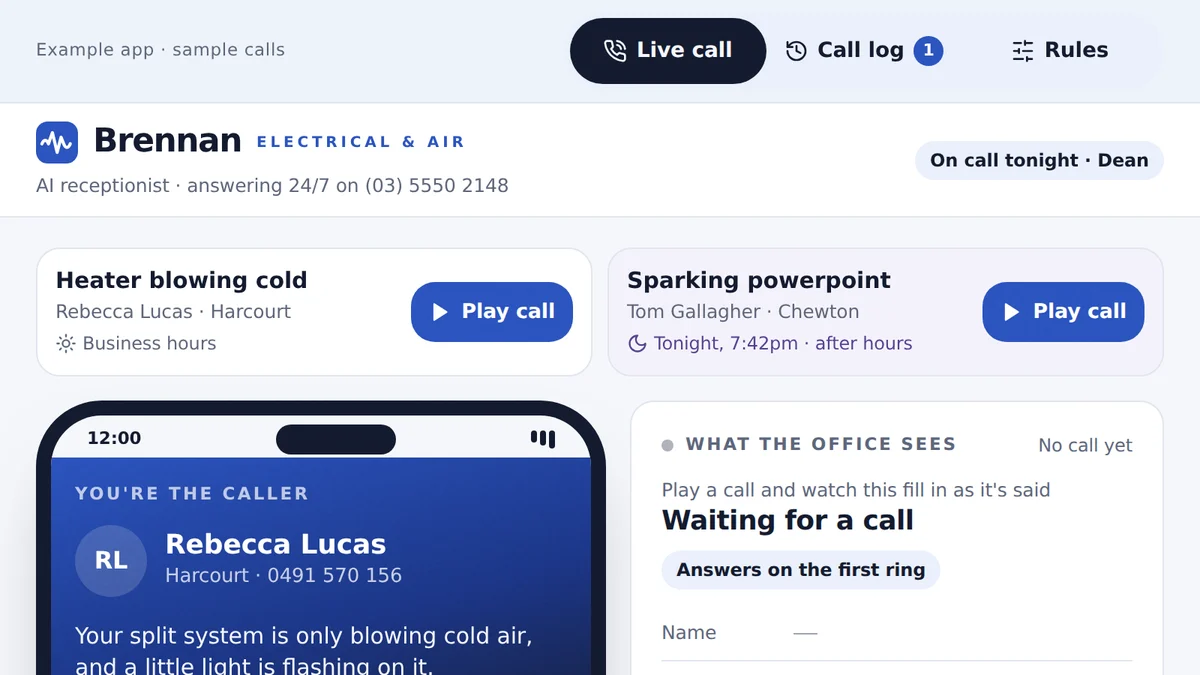
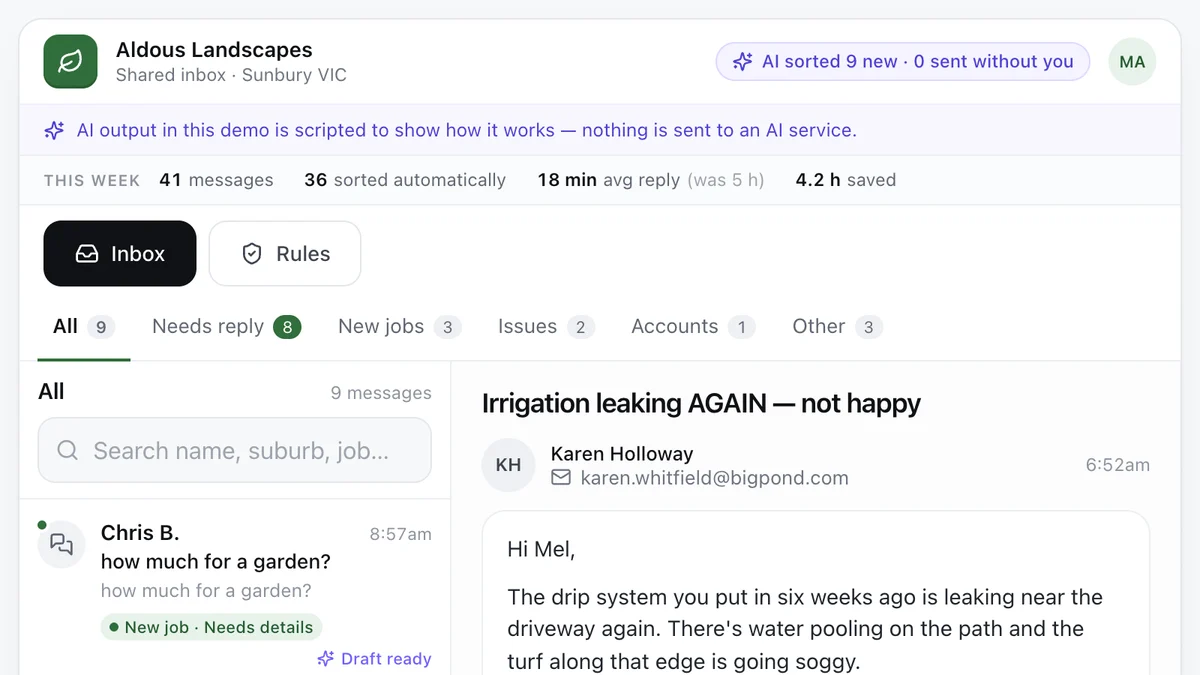
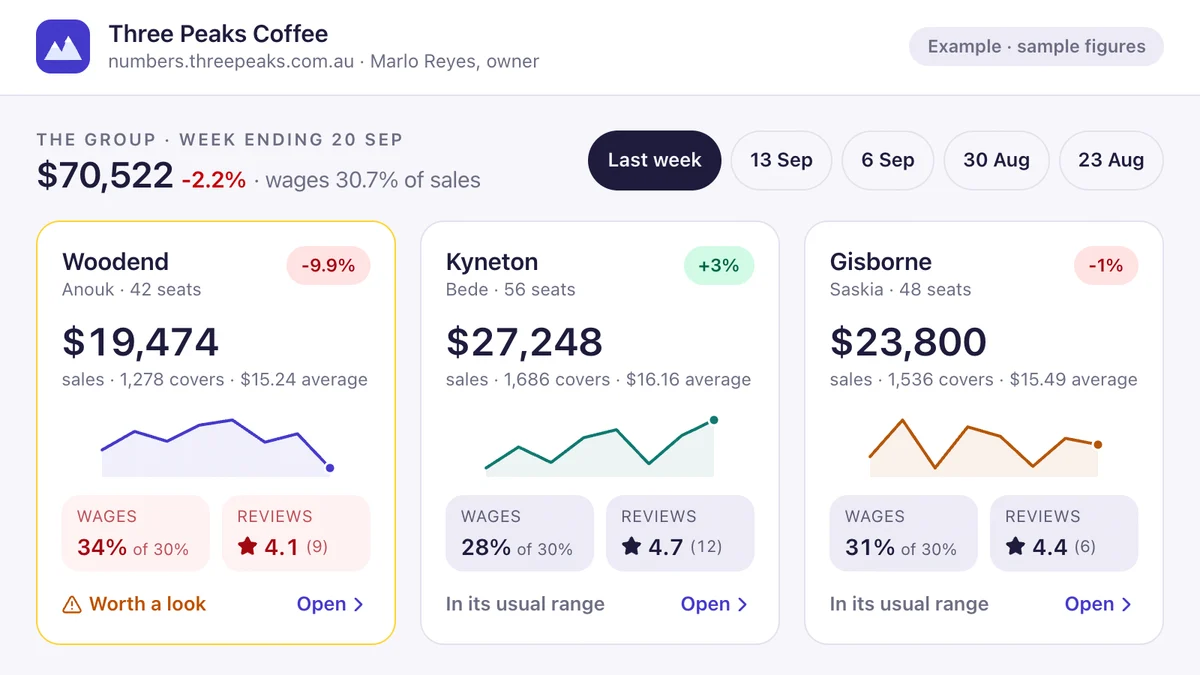
Software we'd build, running with a fictional business and sample data. Use it, then decide.
Also worth a look
- Where to Start With AI in a Small Business
- What AI Automation Costs in Australia (2026)
- Is AI Safe for My Business? Privacy and Control
- Want the do-it-yourself guide to showing up in AI answers?
Last reviewed . Figures are indicative Australian ranges, not quotes.