Launch readiness
It works on your screen. Production is the other 80%.
The demo is the easy part now — AI tools genuinely have made that trivial, and that's a real change. What hasn't changed is everything between a working demo and software you can charge people for: what happens when the payment fails, when two people edit at once, when the API is down, when someone asks you to delete their data. That work is invisible right up until it's missing.
$495 fixed price · written report within 3 business days · no obligation to continue
In short
A prototype becomes production-ready when it handles failure, protects data and can be operated by someone other than its author. PixelApps takes AI-built prototypes through that gap — security, permissions, payments, error handling, monitoring, backups and launch. A $495 readiness audit tells you exactly what stands between you and going live.
Sound familiar?
If you recognise two or three of these, an audit will pay for itself.
You keep pushing the launch date
There's always one more thing. The list isn't getting shorter because nobody has written it down and scoped it.
Errors show a blank screen
When something fails, the user sees nothing and you hear nothing. You find out days later, from a customer, if at all.
There's one environment
You test in production because there's nowhere else. Every experiment is performed on live customer data.
Nobody has tested a restore
There may be backups. Whether they can actually be restored is an untested assumption, and those tend to fail exactly when it matters.
Payments have only ever succeeded
Declines, refunds, disputes, expired cards, failed webhooks — none of the unhappy paths have been built or tried.
The legal basics are missing
No privacy policy, no terms, no consent for tracking, no answer for a customer asking what you hold about them.
- What does production-ready actually mean?
- It means the software survives contact with reality. Concretely: real users can sign up and only see their own data; failures are handled and reported rather than showing a blank screen; secrets live outside the code; there is a way to deploy and a way to roll back; data is backed up and restoring it has been tested; someone is notified when it breaks; and the legal basics — privacy policy, terms, consent — are in place. A prototype needs none of that. A product needs all of it.
What we actually do
We write down what's missing
A readiness audit against a concrete checklist: security, data, reliability, performance, accessibility, legal and operations. You get a prioritised list, not a vibe.
We fix security and data first
Access rules enforced at the database, secrets moved out of code, permissions tested, and backups that have actually been restored at least once.
We make failure survivable
Error boundaries, retries, sensible messages for users, and monitoring that pages us — not your customers — when something breaks.
We build the unhappy paths
Failed payments, expired sessions, rate limits, upstream outages, duplicate submissions. This is most of the missing 80%.
We set up how you'll operate it
Separate environments, a deploy pipeline with a rollback, analytics that answer real questions, and documentation for whoever is on call — even if that's you.
What it costs
Everything is quoted at a fixed price before it starts. No hourly surprises.
Rescue audit
$495
fixed price
A senior developer reviews your codebase, database and deployment, and sends a written report within 3 business days.
Rescue sprint
$2,500 – $8,000
typical range
We fix what the audit found: security holes closed, the app stabilised, deployment sorted, and the parts that stopped you shipping actually finished.
Ongoing care
$750
from, per month
A monthly retainer: hosting, updates, security patches, backups, monitoring, an agreed block of development time, and a human who answers when something breaks. We also work ad-hoc — just ask.
What the $495 audit includes
- A plain-English summary of what you have and what state it is in
- Security review — database access rules, exposed keys, login and permissions
- A prioritised list of what is broken, what is risky and what is merely untidy
- A fixed-price quote for the work, and an honest view on rebuild vs repair
- The report is yours to keep and take to any developer
When you don't need us
If you're still testing whether anyone wants this, don't harden it yet — a production-grade app nobody uses is an expensive way to learn something a rough prototype would have taught you for free. Do this once you have paying users, or the moment you start storing data you'd hate to lose or leak.
Send us your app
$495 fixed price. Written report within 3 business days.
Common questions
For a typical AI-built app, two to six weeks after the audit. The range is wide because it depends almost entirely on how much of the security and data layer already exists. The audit turns that into a date and a fixed price.
A prototype proves the idea can work. An MVP is the smallest thing real customers can actually rely on — which means it still needs security, error handling and support, just across a deliberately narrow feature set. Most AI-built apps are prototypes being asked to behave like MVPs.
Yes. Domain, hosting, email deliverability, analytics, monitoring and the go-live itself. We can also stay on afterwards on a retainer from $750 a month so there's someone watching it who isn't you.
No, and we'll tell you which parts you can defer. Security, backups and error visibility are genuinely not optional. Plenty of the rest can wait until you have the users to justify it.
What a finished build looks like
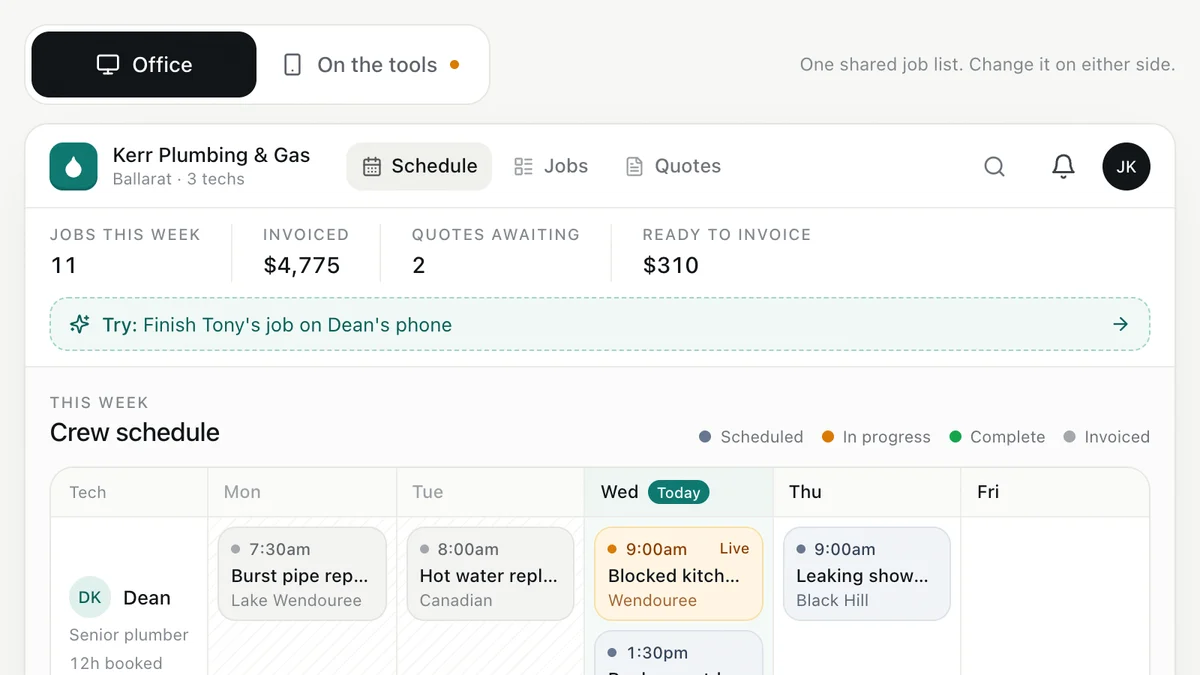
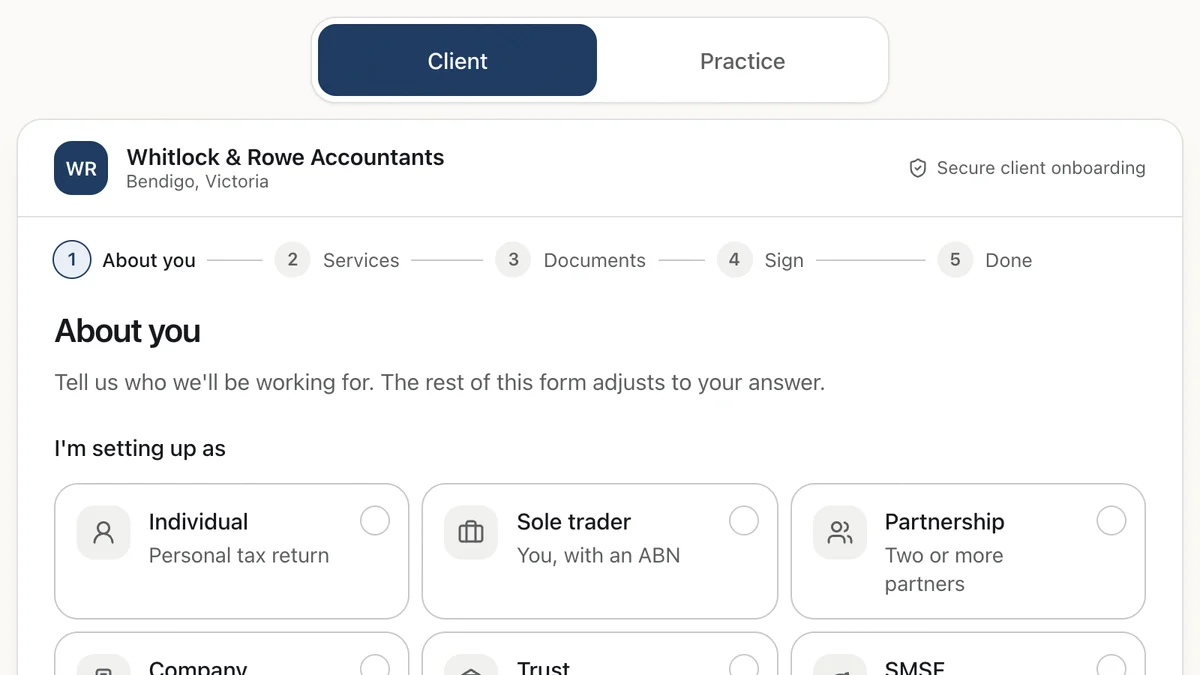
Working software we've built as examples, with a fictional business and sample data.