Interactive example · Startups and platforms
A two-sided marketplace with the hard parts working: trust, payments and payouts
Most marketplace ideas are easy to mock up and hard to run: who checks the sellers, when the money moves, what happens when someone cancels, who gets paid what and when. Below is a working version for a fictional Gippsland startup that connects families with local tutors. Use it as a parent, as a tutor and as the founder.
In short
A two-sided marketplace connects buyers with independent sellers and takes a fee on each transaction. A working one needs search and profiles, checks before sellers go live, bookings against real availability, payments held until the service is delivered, automatic payouts less the platform fee, reviews, cancellation rules and the reporting the ATO now requires.
Interactive demo: Two-sided marketplace
Live demo · Swotspot, Traralgon is a fictional business with sample data. Nothing you do here is saved or sent.
- Find a tutorAs a parent, look for Year 9 maths near Morwell. Filter to in person and open a tutor's profile to compare.
- Book and pay for a lessonPick a time that's free and pay. The card is charged, but the money's held until the lesson happens.
- Teach it and get paidSwitch to the tutor. Mark today's finished lesson done with a note for the parent, and see the split: the lesson, the platform's fee, the tutor's share.
- Approve a new tutorAs the founder, check a new tutor's Working with Children Check and ID, then approve them. They appear in the parents' search straight away.
swotspot
Parent · Kylie Morgan, Morwell
Swotspot is fictional. Tutors, families, prices and fees are sample data. Working with Children Check and ID checks are simulated, and no real register is searched. Payments and payouts are simulated, and nothing is charged.
Built for founders building a marketplace or booking platform
Three people it has to work for, and what each is hiring it to do
- FounderGrow both sides without doing the checks, the payments and the chasing by hand
- TutorFill the week with students nearby, and get paid without invoicing anyone
- ParentA tutor I can trust, a time that works, and paying only once the lesson's happened
What you just used
How Swotspot runs, screen by screen
- Tutor appliesTutorCheck, ID, subjects
- Paid, less the feeSystemTotalled for the ATO
How the work moves through Swotspot: who does what, and where the software takes over. Steps with a mint mark are ones you can do in the demo above.
Search that ranks what matters
Subject, year level, in person or online, distance, and who's actually free after school. Parents see checks, reviews and prices up front, so choosing takes minutes, not a week of messages.
Nobody goes live unchecked
Tutors apply with their Working with Children Check, ID and subjects. The founder checks each against the source before approving, and expiry dates are tracked, so a lapsed check takes a tutor out of search by itself.
Bookings against real availability
Tutors set their weekly hours, parents only see times that are free, and a booking holds the slot at once. Cancellation rules are applied by the software instead of argued over later.
Money held until the lesson happens
The parent's card is charged at booking and the funds are held. Once the tutor marks the lesson done, the payout is released less the platform's fee. A dispute pauses that one payout, not the whole relationship.
The fee, the split and the paperwork
Every payment shows the lesson price, the platform's fee and the tutor's share, with receipts for both sides. Payouts are totalled for the ATO's twice-yearly sharing economy report instead of rebuilt from bank statements.
A founder's view of both sides
Applications waiting, bookings this week, gross bookings and the take rate, and the suburbs where families search but no tutor teaches. The numbers that decide where to recruit next.
Built for you
Your marketplace's rules, not a template's
The demo is one marketplace's rules. Built for yours, it would carry your own:
- Your two sides, whatever they are: tutors and families, venues and hirers, makers and buyers
- Your checks: licences, screening, insurance and ID, with expiries tracked
- Your money rules: commission, booking fees, deposits, held funds, refunds and cancellation windows
- Payments and payouts through Stripe Connect, with the split and the receipts handled
- Search and matching built on what your buyers actually choose on
- An admin that shows the numbers you'd raise money on, and the reports the ATO expects
Connects to what you already use
Where a tool offers an API or a calendar feed, the build talks to it directly. Your data stays in accounts you own.
- Stripe Connect
- Xero
- Google Maps
- SMS
- Zoom
- Google Meet
- ID verification
Custom build, a marketplace builder, or an AI-built prototype?
Sharetribe is the honest first stop for most marketplace founders: listings, search, bookings, reviews and Stripe payments, ready in weeks. AI builders such as Lovable get a clickable prototype running in days. Custom is for when the rules that make your marketplace different won't fit either.
| Criteria | Marketplace builder | Custom-built | AI-built prototype |
|---|---|---|---|
| Time to launch | Weeks | A couple of months for a first version | Days, for a demo |
| Payments and payouts | Stripe Connect, built in | Stripe Connect, with your own fees, holds and refunds | Possible, rarely production-ready |
| Checks and trust | Basic, extendable | Your checks, expiries and rules, enforced | Usually missing |
| Your own rules | Within its settings, more with custom code | Whatever the model needs | Until the code gets hard to change |
| Cost model | Monthly plan plus transaction fees | A fixed build, then hosting; you own the code | Low at first, then often a rebuild |
| Best when | Proving people will transact at all | The model works and its rules are the product | Showing investors, or testing a flow |
How we'd build yours
Fixed price, agreed before we start
Start from one transaction
We map a single booking with you from search to payout: who pays what, when the money moves, and what happens if someone cancels or complains. That's the specification that matters.
Fix the scope and the price
Both sides, the admin, payments and checks in the first version, what's deliberately left for later, and one fixed price you approve before we start.
Launch small, in one region
A first version for one area and one category, so you learn from real bookings before building the features you think you'll need.
Grow it from the numbers
Search, matching and the admin improve from what the bookings show. You own the code, so it can go wherever the business goes next, with us or without.
What moves the price
Custom work is quoted individually, at a fixed price, once the scope is written down. These are the things that make the biggest difference.
- Payments model
- A simple commission is standard; deposits, held funds, subscriptions or split payments add work.
- Checks
- Manual checks by the founder are simplest; automated ID and licence checks add integrations.
- Search and scheduling
- Filters and distance are straightforward; matching across many sellers' availability is more.
- Apps
- A responsive web app covers both sides at first; native iPhone and Android apps add to it.
When you shouldn't build this
If you haven't had a single paid transaction yet, don't build this. Launch on Sharetribe, or even a form and a spreadsheet, and prove people will pay. Custom makes sense once the model works and the platform is holding you back: your fees, checks or matching don't fit it, its transaction fees have grown, or you need to own the code you're raising money on.
Want this, with your name on it?
Tell us how the work runs today. We'll reply within one business day with what we'd build first, what we'd leave out, and whether an off-the-shelf tool would serve you better.
Common questions
A platform where two groups transact with each other through you: families and tutors, hirers and venues, buyers and sellers. The platform handles finding, trust and payments, and earns a fee on each transaction rather than selling anything itself.
Start on Sharetribe or something like it unless you already know its model won't fit. It's the fastest way to prove people will transact. Build custom when the rules that make your marketplace work, such as fees, checks, matching or scheduling, fight the platform, or when you need to own the code.
Usually through Stripe Connect. Each seller has a connected account, the buyer pays the platform, and the platform keeps its fee and pays the seller out. Funds can be held until the service is delivered, and refunds and disputes are handled against the original payment.
Since 1 July 2024, operators of electronic distribution platforms, service marketplaces included, must report their sellers' transactions to the ATO twice a year under the sharing economy reporting regime. Building that reporting in from the start is far easier than rebuilding it from bank statements later.
Yes. Tutoring children is child-related work in Victoria, and a paid tutor needs an employee Working with Children Check. A marketplace connecting families with tutors should verify each check before a tutor goes live, and track when it expires.
Often, yes. Payments, permissions and the rules between the two sides are what AI-built marketplaces usually get wrong. We audit it first and tell you whether a rescue or a rebuild is cheaper.
More examples to try
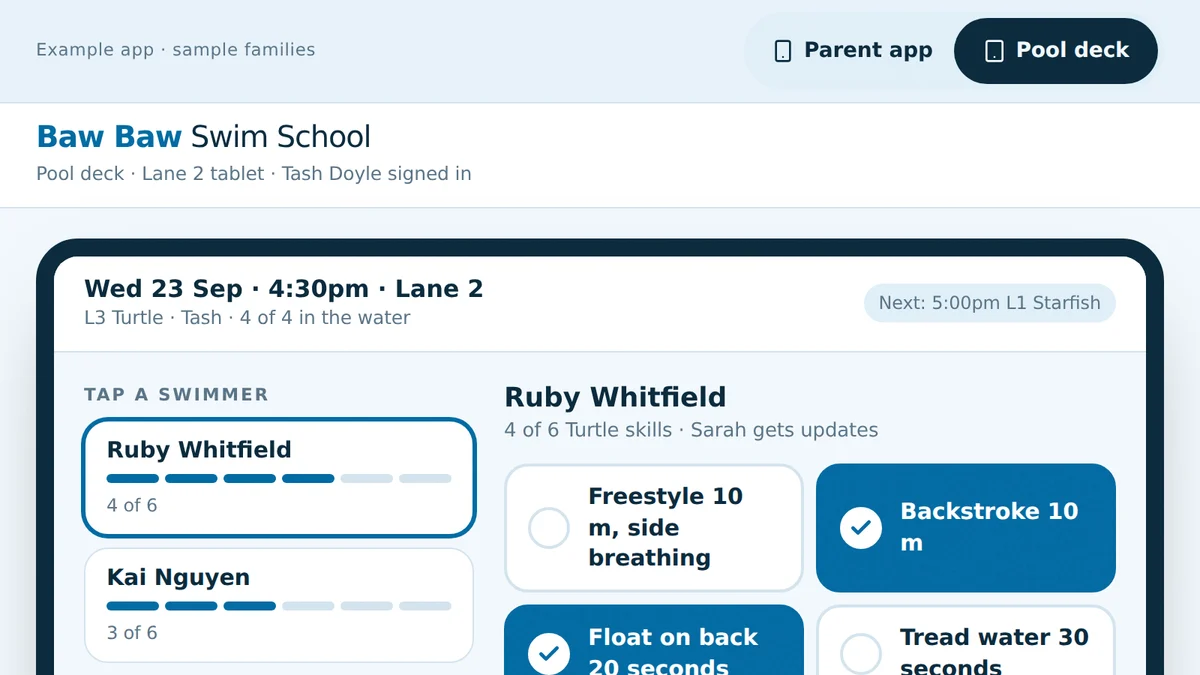
- Swim schools, and anyone running classes by term and levelLessons, make-ups and levels for swim schoolsA parent swaps a sick day for a make-up in the right level, the teacher ticks skills on the pool deck, the swimmer moves up to a class with room, and next term's enrolment already knows.Live demoTry it
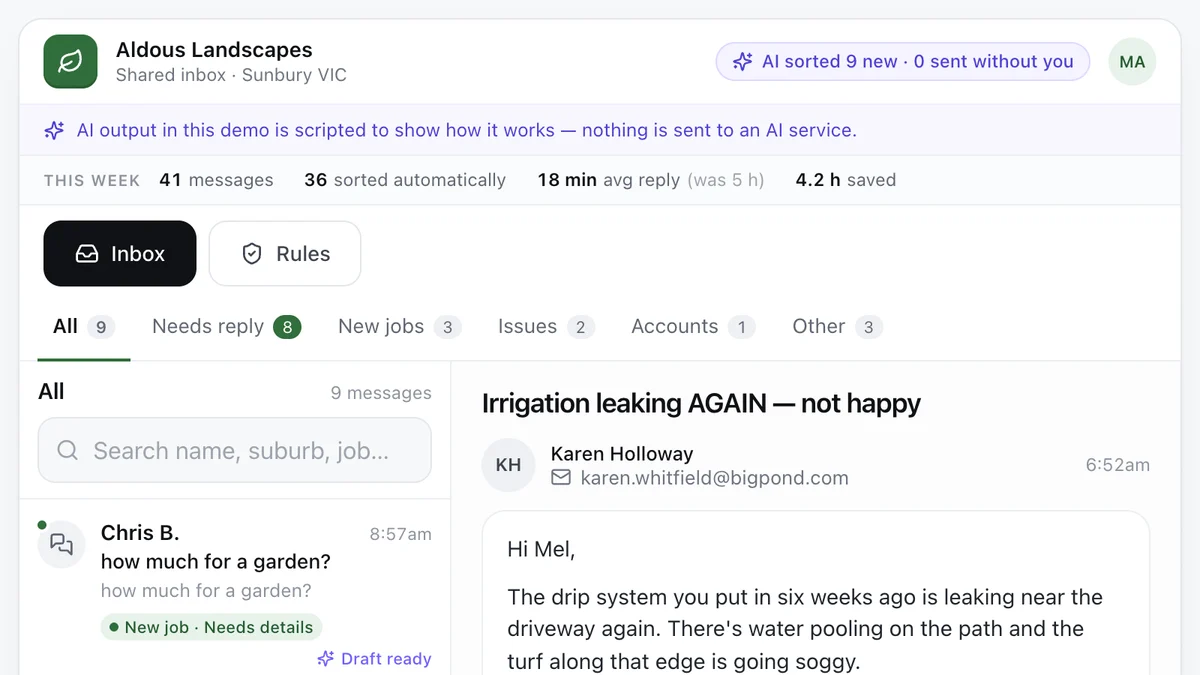
- Tradies and service businesses with a busy inboxAI enquiry inboxEvery message sorted, the details pulled out and a reply drafted, with a person approving what goes out.Live demoTry it
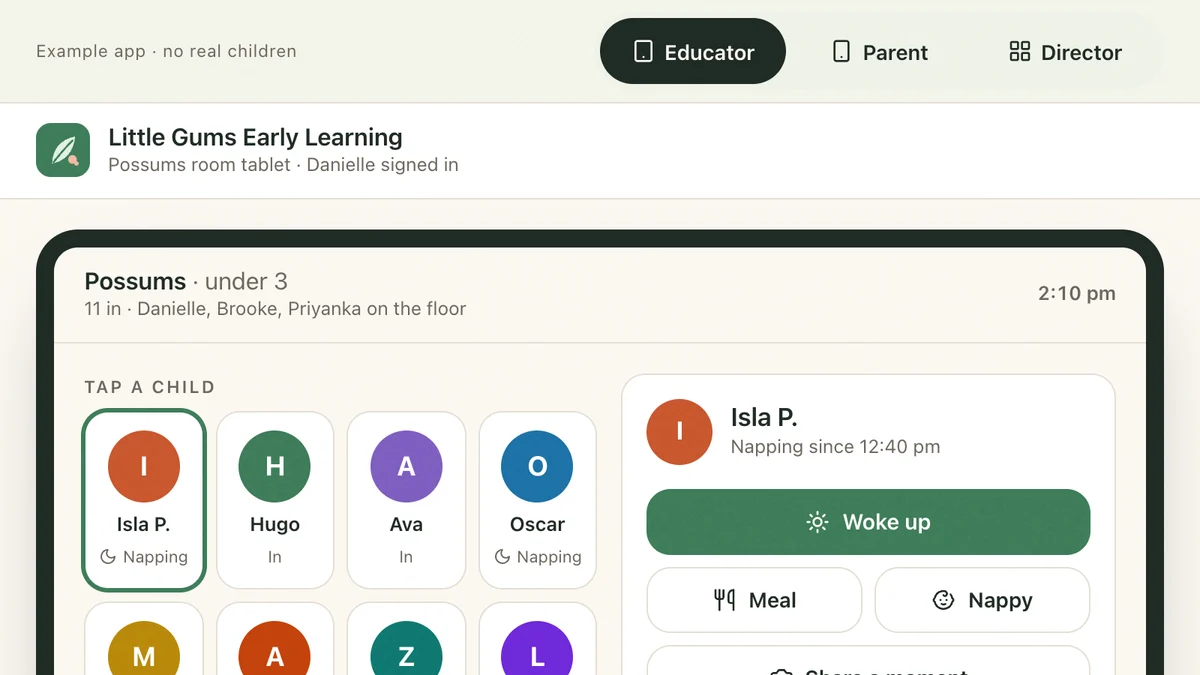
- Childcare centres, kinders and OSHCParent updates and enrolments for childcareAn educator logs the afternoon on the room tablet, the parent watches it arrive and signs out with a PIN, and the director holds the ratio and fills a place from the waitlist.Live demoTry it
Last reviewed .