AI features
Should you put AI on your website?
We build AI features for a living, which makes this the page where we talk ourselves out of work most often. Most small business websites do not need a chatbot. Some do, and a few AI features are quietly excellent — but the ones that pay off are usually not the ones being sold.
Rather just ask someone? Talk to usIn short
Most small business sites don't need a chatbot — a visible phone number and a form that works convert better. AI earns its place when questions repeat at volume, when there's a lot of content to search, or when it removes work behind the scenes: triaging enquiries, drafting replies, summarising, and handling documents.
What it costs to run
Indicative Australian figures for a small business implementation, excluding the initial build.
- Off-the-shelf chat widget $50 – $300 / month
- Fastest to launch, least control, and it will sound like everyone else's.
- Custom bot on your content $5,000 – $20,000 build
- Grounded in your pages and documents, in your voice, with a proper handover to a human.
- Model usage $20 – $500 / month
- Depends entirely on volume and model. Easy to underestimate if the bot is popular.
- Keeping it accurate Ongoing
- Content changes, prices change, the bot has to be re-grounded. This is the cost people forget.
What actually works
A chatbot is a poor substitute for a phone number
If a visitor's question is 'do you cover my area and how much', a bot is slower and less convincing than a tappable number. Chat earns its place when volume is high enough that the same questions genuinely repeat all day.
Answering from your own content is the honest use
A bot grounded in your actual pages, policies and documentation is useful and low-risk. A general model improvising about your business will eventually invent a price, a policy or a service, and it will do it confidently.
The best AI is usually behind the scenes
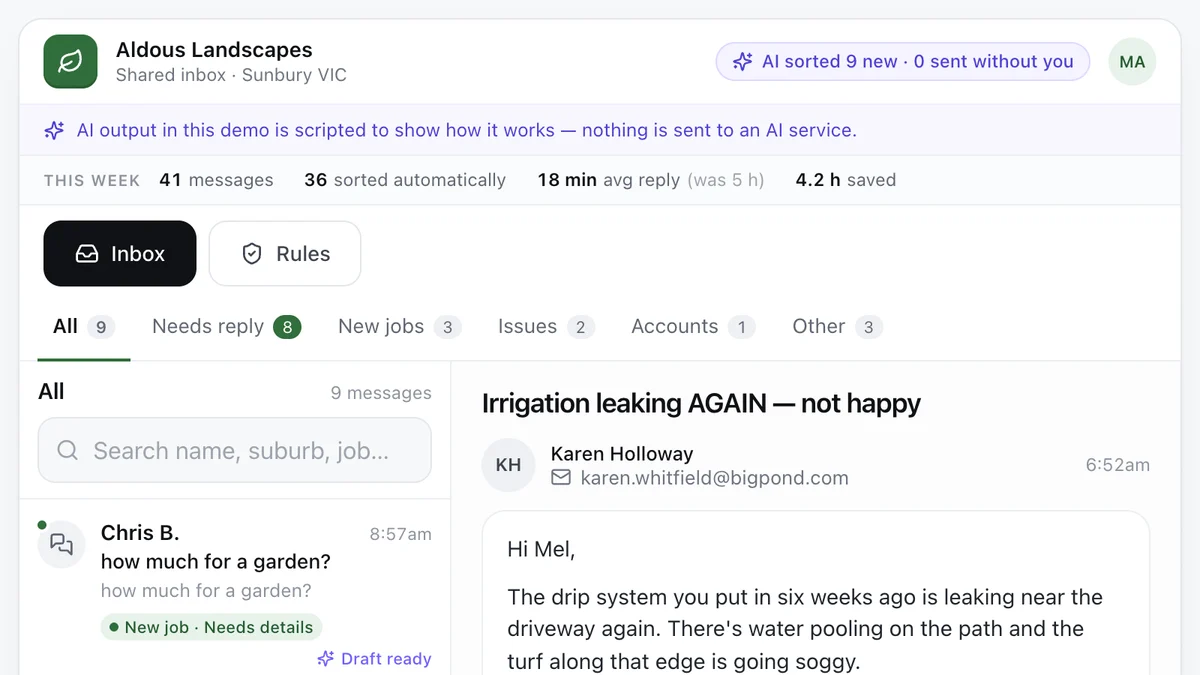
Classifying and routing enquiries, drafting replies for a human to send, summarising long documents, extracting data from invoices, flagging what needs attention today. Customers never see it and it saves real hours.
Search is where it quietly shines
If you have a lot of content — a knowledge base, hundreds of products, years of articles — semantic search that understands what someone meant rather than the words they typed is a genuine improvement on keyword matching.
Always leave a way to reach a person
The fastest way to lose a customer is a bot with no exit. Any AI on a business site needs a visible, immediate escape to a human, and it should hand over the context rather than making people start again.
It's a running cost, not a purchase
Model usage, hosting, monitoring and the ongoing work of keeping it accurate as your business changes. An AI feature is a small piece of software you now own and maintain — budget accordingly.
Be careful what it can see
Anything a bot can read, a determined visitor can extract. Don't ground it in documents you wouldn't publish, and don't let it near customer records without proper access controls and a clear position in your privacy policy.
Where it helps, and where it doesn't
Our honest read from building these. Your volume is the deciding variable.
| Criteria | Usually worth it | Usually isn't |
|---|---|---|
| Customer-facing chat | High volume, repeating questions, out-of-hours demand | A local business with a phone and a few enquiries a day |
| Content search | Hundreds of pages or products | A ten-page marketing site |
| Enquiry triage | Enough enquiries that sorting them costs real time | Five a week you read anyway |
| Drafting and summarising | Almost always — a human still sends it | Rarely a bad idea |
| Document processing | Invoices, forms, applications at volume | Occasional one-offs |
| AI-generated page content | Drafting, with a human editing | Publishing unedited — it reads like it |
When this isn't your problem
If you're reading this because a competitor added a chat bubble, that's not a reason. Start with the question you're actually trying to answer — are people asking the same thing repeatedly, is your team drowning in triage, is your content impossible to search? If none of those is true, spend the money on the phone number being easier to find.
Want us to look at it?
Send us your site and what you're trying to improve. We'll tell you what we'd do first — including when the honest answer is that you don't need us.
Common questions
Probably not. For most local businesses a visible, tappable phone number and a form that works convert better than a chat widget. Chat starts earning its place when the same questions arrive repeatedly, or when a lot of enquiries come in outside business hours.
Off-the-shelf widgets run $50 to $300 a month. A custom bot grounded in your own content is typically $5,000 to $20,000 to build, plus $20 to $500 a month in model usage, plus the ongoing work of keeping it accurate as your business changes.
It can, and this is the main risk. Grounding it strictly in your own approved content, having it say it doesn't know rather than guess, and giving people an immediate route to a human are what keep it safe. A general model left to improvise will eventually invent a price.
It's a good drafting tool and a poor publishing tool. Unedited AI copy reads like unedited AI copy, and it can't know what's true about your business. Use it to get a first draft, then have someone who knows the business rewrite it.
See it working
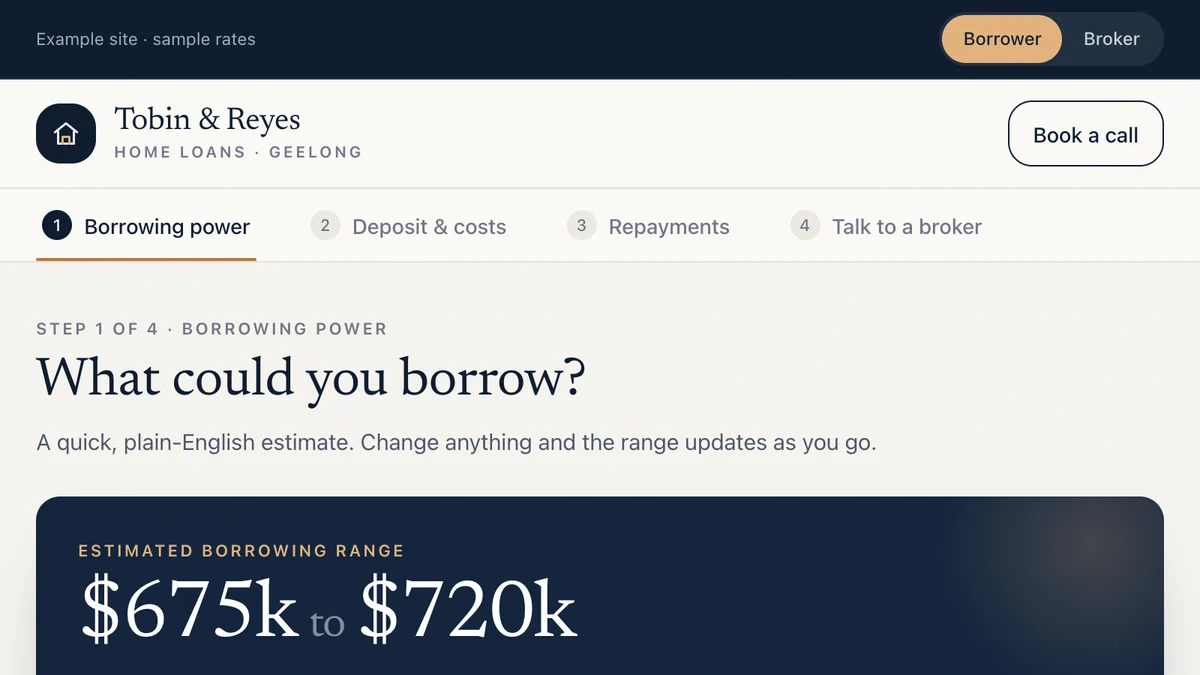
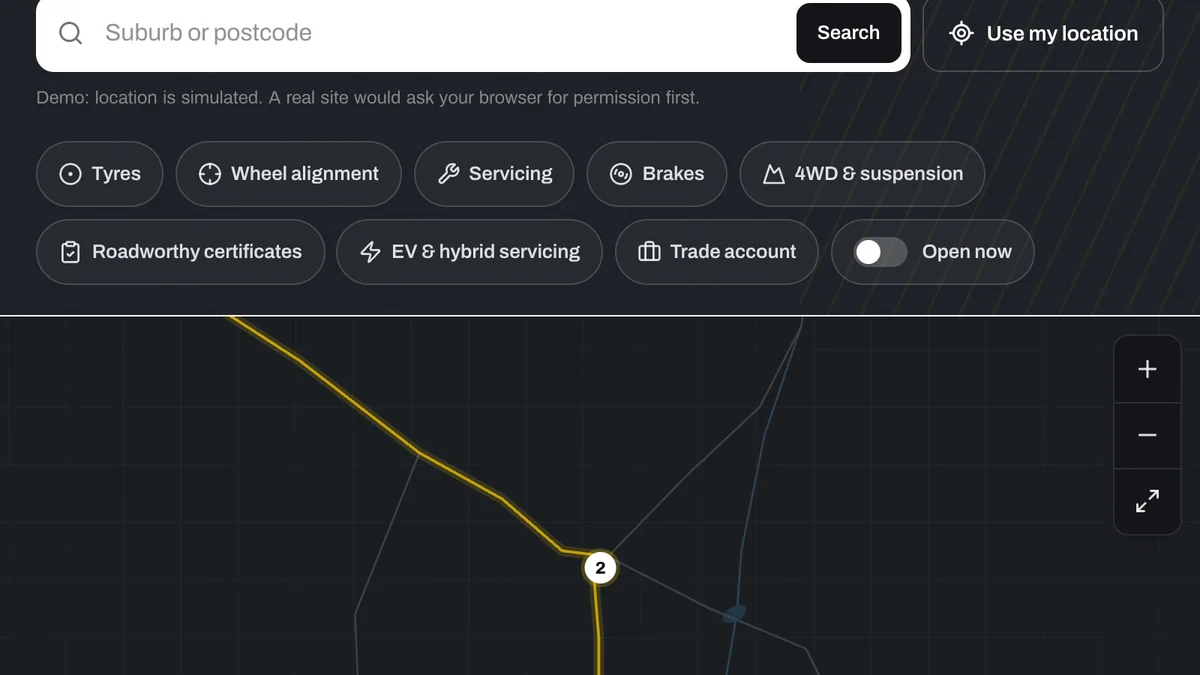
Software we'd build, running with a fictional business and sample data. Use it, then decide.
Also worth a look
- Your Website Gets Traffic But No Enquiries
- How to Show Up in ChatGPT and AI Search Results
- Does Your Website Need a Privacy Policy?
- Weighing up who should build it, and what it should cost?
Last reviewed . Figures are indicative Australian ranges, not quotes.