Interactive example · Hospitality & retail
Wholesale orders that land in the bake, on the van and in Xero
Most wholesale food businesses take orders by phone, text and voicemail at 5 am, build the run sheet on paper, and find out about short deliveries when the customer disputes the invoice. Use the version below, for a fictional Kyneton bakehouse: change tomorrow's order as a café, bake it, drive it, invoice it.
In short
A custom wholesale ordering and delivery system gives customers a portal to manage standing orders and one-offs before a cutoff, aggregates the orders into a production list and run sheets by driver, gives drivers a phone app with stop order, proof of delivery and short-line capture, and raises invoices in Xero from what was actually delivered, with credits already applied.
Interactive demo: Wholesale orders and delivery runs
Live demo · Piper Street Bakehouse, Kyneton is a fictional business with sample data. Nothing you do here is saved or sent.
- Change tomorrow's orderOn the café portal, add croissants, drop a loaf, add a one-off fruit loaf and confirm before the 4 pm cutoff.
- Confirm the bakeSwitch to the bakery. The bake sheet shows your change against every other customer's standing order. Confirm it and the dockets print.
- Deliver the stopOn the driver's phone, tap Arrived at Trentham, mark two baguettes short, take the photo, sign and deliver.
- Invoice from the docketBack in the bakery, Invoices. The short line is already credited and GST is only on the pastries. Send it to Xero.
Example app · sample orders
Piper Street Bakehouse
Wholesale portal · Trentham Corner Store, signed in as Frankie
Piper Street Bakehouse is fictional. Customers, products, prices, the run and the invoice are sample data. GST treatment shown is simplified; check your products against the ATO's food list. The café clock is fixed at 2:40 pm and the driver's phone is the next morning. Texts, photos and Xero are simulated.
Built for bakeries, wholesale food and drink suppliers, growers
Three people it has to work for, and what each is hiring it to do
- OwnerStop taking orders at 5 am, and stop arguing about invoices
- Bakery or packing floorOne production list that's right at cutoff, and dockets in stop order
- DriverStops in order, a photo and a signature, done
- Café customerChange tomorrow's order in ten seconds, and get credited without a phone call
What you just used
How Piper Street Bakehouse runs, screen by screen
- Bake and run sheets builtSystemAggregated by product and by run
- Docket texted to the caféSystem
How the work moves through Piper Street Bakehouse: who does what, and where the software takes over. Steps with a mint mark are ones you can do in the demo above.
Standing orders with a cutoff
Every customer has a standing order per delivery day and changes it themselves before the cutoff. After that, the change goes on the next delivery and the dough is already weighed. No voicemail, no 'did you get my text'.
A production list that's right at cutoff
The bake sheet totals every order by product with dough weights, and shows what changed since the standing orders rolled over. Confirming it prints dockets per customer in stop order and sends the run sheets to the drivers' phones.
Runs on a map, stops in order
Each run's stops, ETAs and kilometres, with the van on the map as it goes. Customers get a text two stops out, so the café's back door is unlocked when the driver arrives.
Proof of delivery at the door
The driver ticks the lines, notes anything short, takes a photo and gets a signature. The docket is texted to the customer on the spot. Disputes stop because the evidence is on the invoice.
Invoices from what was delivered
The invoice is built from the docket, not the order: short lines are credited, GST is worked out per product (bread is GST-free, pastries aren't), and it lands in Xero with the photo attached. Daily invoices roll into a weekly statement.
Portal, not an app to install
Customers use a web portal on any phone, so the café owner and the Saturday manager can both order without a login dance. Your brand, your product list, your prices per customer.
Built for you
Your rules, not a template's
The demo is one bakery and one run. Built for yours, it carries your own:
- Products, pack sizes, prices per customer or tier, and minimum order rules
- Cutoff times per run or per customer, and what happens to late changes
- Production the way you plan it: dough weights, tray counts, pick lists or packing slips
- Runs by driver and day, with route order you set or optimise, and the texts customers get
- Proof of delivery rules: photo, signature, temperature, returns and short-line reasons
- Invoicing to Xero or MYOB: daily or weekly, statements, credits, and payment terms per customer
Connects to what you already use
Where a tool offers an API or a calendar feed, the build talks to it directly. Your data stays in accounts you own.
- Xero
- MYOB
- Stripe
- SMS
- Google Maps
- Label printers
- Square
Custom build, wholesale ordering software, or the phone?
Ordermentum, Foodbomb and similar platforms run wholesale ordering for many suppliers and take a cut or a subscription for it. The question is whether their model fits how you sell, whether you want your customers inside someone else's marketplace, and whether production and delivery are covered or left to paper.
| Criteria | Wholesale ordering platform | Custom-built | Phone, text and paper |
|---|---|---|---|
| Time to start | Days | Weeks to months | Already running |
| Ordering | Their app, their marketplace, your competitors alongside | Your portal, your brand, your rules | Voicemail at 5 am |
| Production | Order totals, usually | Bake or pack sheets the way you plan, with changes highlighted | A whiteboard |
| Delivery | Sometimes, as an add-on | Runs, stop order, proof of delivery and short lines on the driver's phone | A paper run sheet and a memory |
| Invoicing | Built in, on their terms | From the docket to Xero, credits applied, statements weekly | Manual, disputed |
| Cost model | A subscription or a percentage of every order | A fixed build, then hosting and support | Your mornings |
| Best when | You want reach to new customers and don't mind the platform | You have the customers and need the operation to run itself | A handful of customers, for now |
How we'd build yours
Fixed price, agreed before we start
Ride the run and sit in the bakery
We watch orders arrive, the bake get planned, the van get loaded and the invoices get argued about, and write down every rule that lives in someone's head.
Fix the scope and the price
A written scope: portal, cutoffs, production, runs, proof of delivery and Xero in the first version, with one fixed price you approve before we start.
Portal and production first
Customers move to the portal a few at a time while the phone still works. The bake sheet runs beside the whiteboard until it's trusted.
Drivers, then invoicing
Proof of delivery goes on the phones once the runs are in the system. Xero invoicing comes last, when the dockets are already right.
What moves the price
Custom work is quoted individually, at a fixed price, once the scope is written down. These are the things that make the biggest difference.
- Customers and pricing
- One price list is simplest; per-customer pricing, tiers and minimums add rules.
- Production planning
- Totals by product are standard; dough weights, tray plans and pick lists are more.
- Delivery
- Stops in order with proof of delivery is standard; route optimisation and live tracking add work.
- Invoicing
- Daily invoices to Xero are standard; statements, credits and card payments each add a piece.
When you shouldn't build this
If you have a handful of customers and the phone works, keep the phone and put a cutoff in writing. If you want reach to new cafés, a marketplace platform will bring them. Custom makes sense when you already have the customers and the problem is the operation: orders at 5 am, a bake sheet on a whiteboard, invoices disputed because nobody wrote down the short line. Then the portal, the sheet and the driver's phone pay for themselves in mornings.
Want this, with your name on it?
Tell us how the work runs today. We'll reply within one business day with what we'd build first, what we'd leave out, and whether an off-the-shelf tool would serve you better.
Common questions
Software that lets trade customers manage standing orders and one-offs before a cutoff, turns the orders into production and run sheets, gives drivers proof of delivery on a phone, and invoices from what was delivered. It replaces the 5 am phone, the whiteboard, the paper run sheet and the invoice argument.
You might not. Ordering platforms bring reach and work well for many suppliers. A custom build makes sense when you already have the customers and want them in your own portal rather than a marketplace, when production and delivery need to run from the same system, or when the percentage or subscription has become a real cost.
Yes. The shape is the same: customers, standing orders, a cutoff, a production or pick list, runs and proof of delivery. Produce adds variable weights and market pricing, meat adds cut lists and temperature logs, drinks add kegs and returns. The words change; the build doesn't start over.
The driver records what was actually delivered at the door, with a reason. The docket goes to the customer immediately, and the invoice is built from the docket with the short line credited. Nobody raises a credit note later, and the dispute never starts.
Card payment through Stripe or Square is an option; most wholesale customers stay on terms with a weekly statement. GST is applied per product from your product list, so bread that's GST-free and pastries that aren't are invoiced correctly, and Xero's tax codes line up.
More examples to try
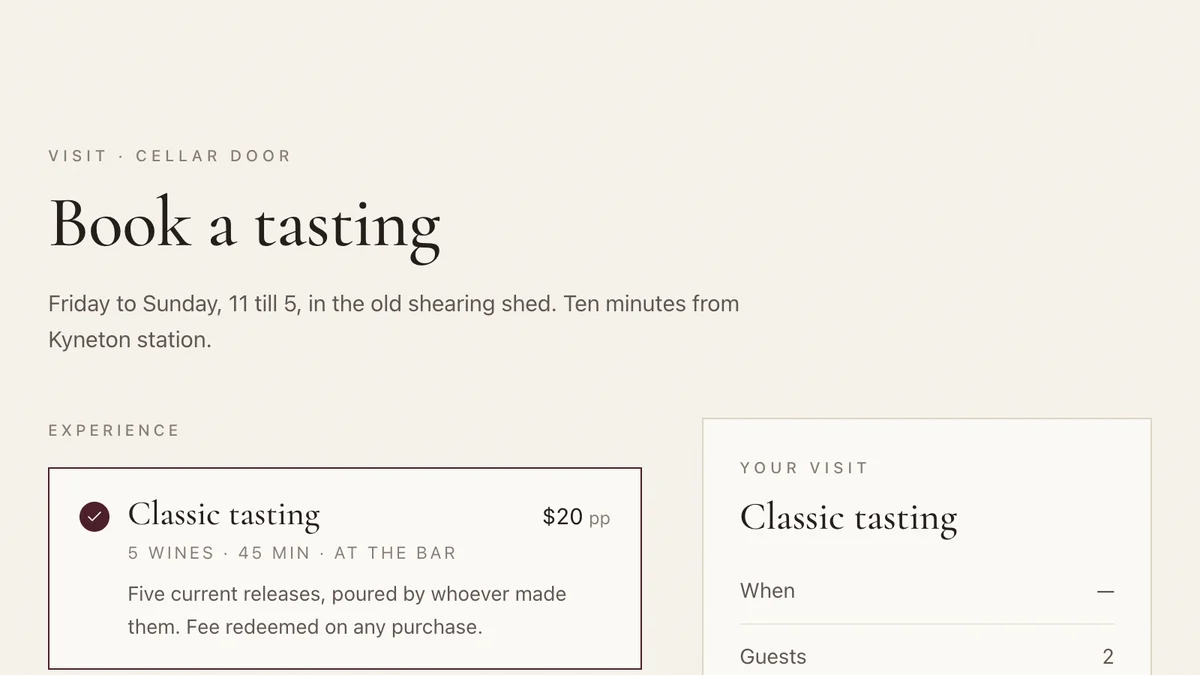
- Wineries, cellar doors and small producersCellar door and wine clubTasting bookings, club memberships and member-customised shipments for a small winery.Live demoTry it
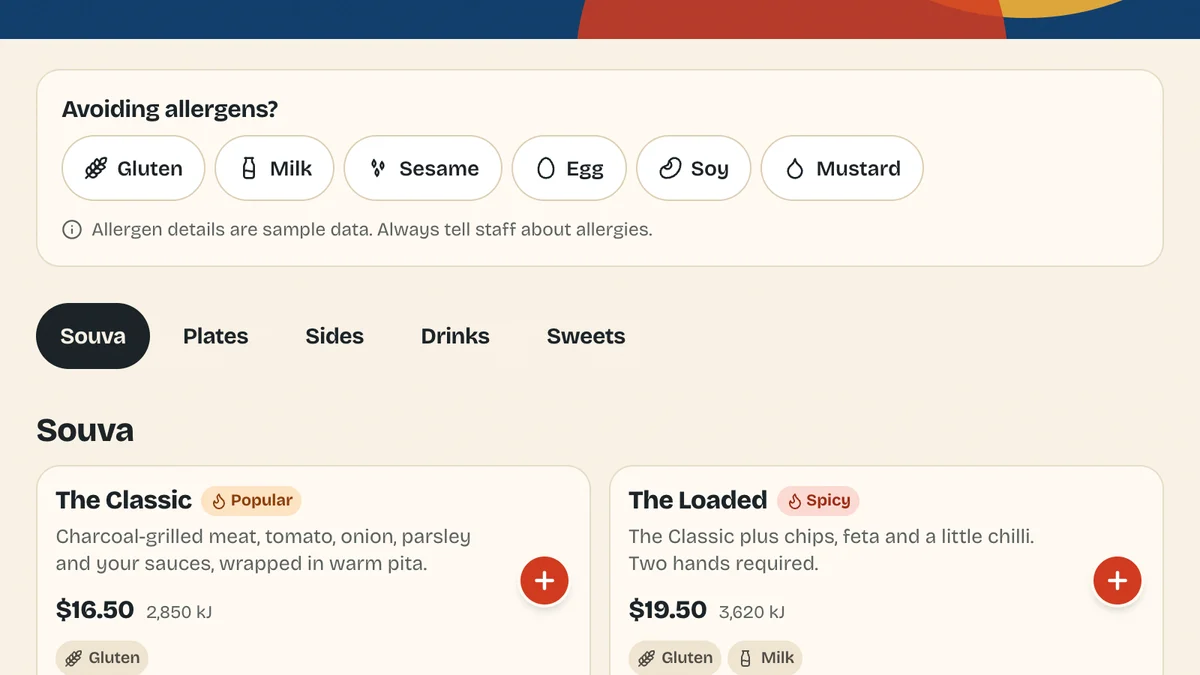
- Quick-service restaurants, cafés and takeawaysOnline ordering for restaurantsCommission-free order-ahead with modifiers, allergens and kitchen-aware pickup times.Live demoTry it
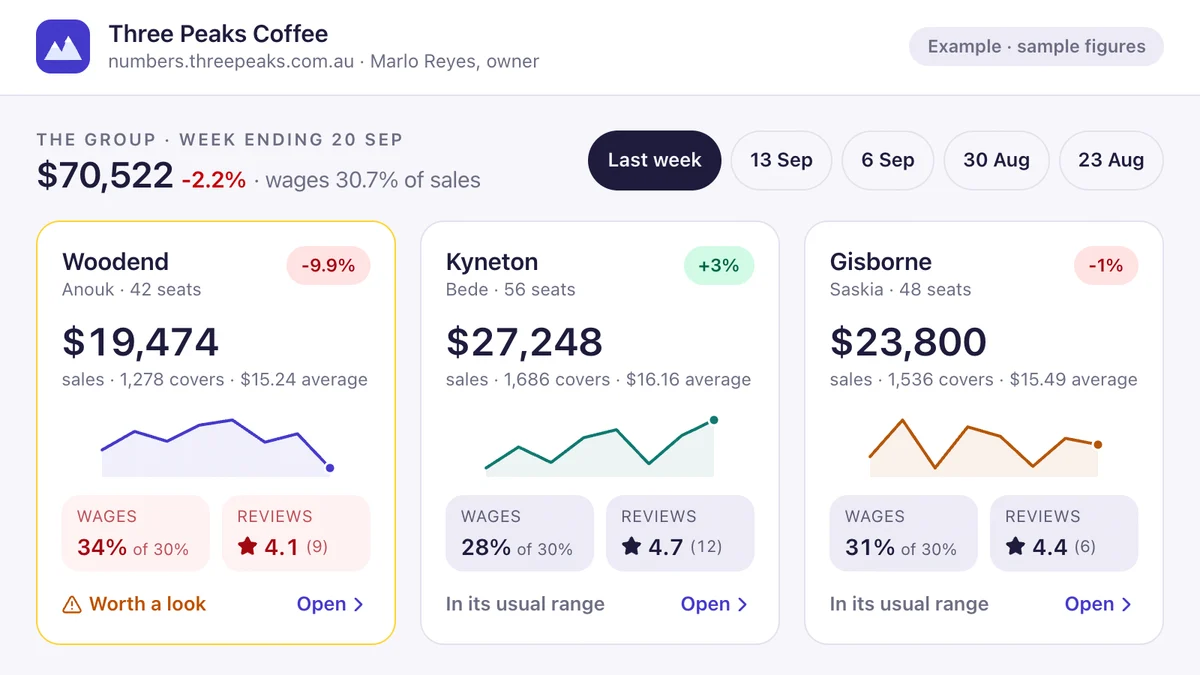
- Owners of cafés, venues, retail and multi-site businessesOwner's dashboard with a weekly briefThree venues on one screen against last week, a drill-in for the one that's off, a Monday brief written from the numbers you can ask questions of, and an alert that watches wages every Friday.Live demoTry it
Last reviewed .