Land surveyors
Software for land surveyors: from enquiry to registered plan
A surveying firm runs two businesses on one calendar. Quick jobs, such as boundary re-establishments, feature and level surveys and set-outs, arrive daily from owners, builders and designers who want a price now. Subdivisions run for months through council, referral authorities and the titles office. Both get slowed by quoting by email, field crews scheduled on a whiteboard and clients ringing to ask where things are up to.
Rather just ask someone? Talk to usIn short
Land surveyors gain most from online quoting and intake for common jobs such as feature and level, boundary and set-out surveys; field crew scheduling with site details and safety notes; and a client portal that shows each subdivision's stage, from planning permit to registered plan. Keep design and lodgement in your existing survey and planning software.
General information about systems and processes, current as at November 2026. It isn't legal or compliance advice: check how the rules apply to your business with your regulator, professional body or adviser.
- What is a licensed or registered surveyor?
- A surveyor authorised by their state's surveyors board to carry out cadastral surveys, the surveys that define and mark legal property boundaries. Every state and territory registers or licenses them. Feature, level and engineering surveys don't always need a registered surveyor, but anything defining a boundary does.
Who registers surveyors, by state
From state surveyors boards, checked November 2026. Each state sets its own rules; interstate recognition runs through the reciprocating boards.
- Victoria Licensed surveyor
- The Surveyors Registration Board of Victoria licenses surveyors to carry out cadastral surveys.
- New South Wales Registered surveyor
- The Board of Surveying and Spatial Information registers land surveyors under the Surveying and Spatial Information Act 2002.
- Queensland Consulting endorsement
- Operating a cadastral surveying business, or charging for a cadastral survey, needs a consulting endorsement on registration.
- Other states Registration or licence
- Each state and territory has a board that registers or licenses cadastral surveyors.
What actually works
Quote the common jobs online
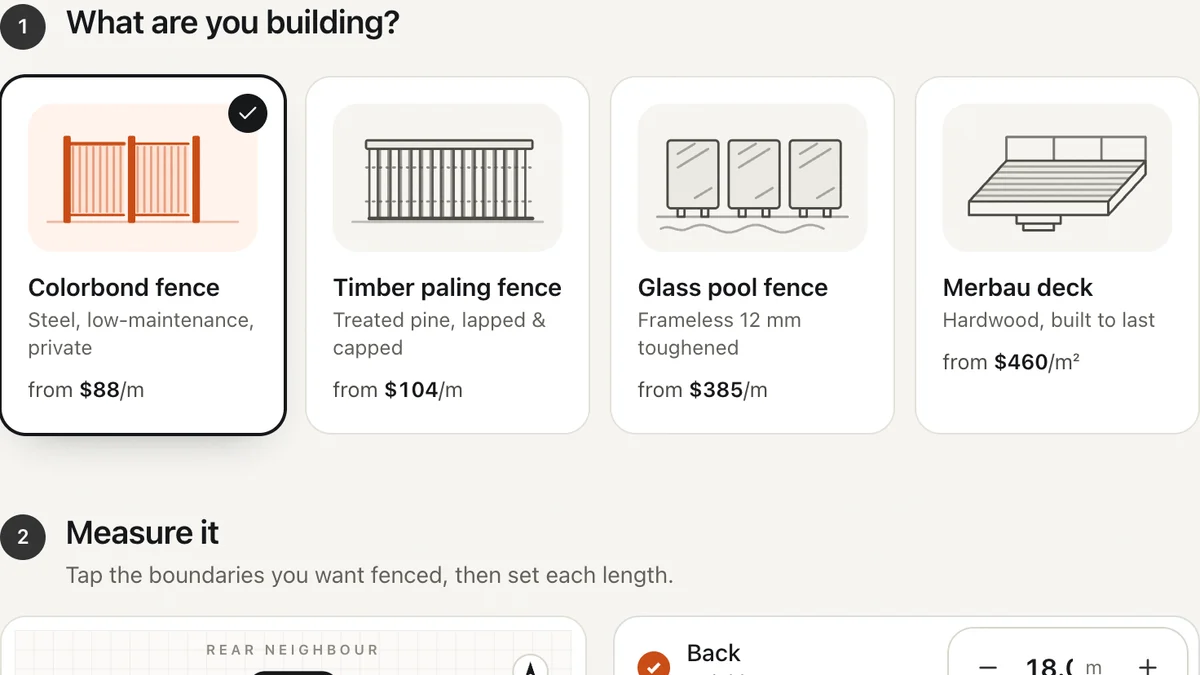
Feature and level surveys, boundary re-establishments and set-outs can be priced from the address, lot size, slope and purpose. A quote and booking on your website, with the title and plan uploaded, saves an email chain for every job and lets owners compare like with like.
Collect the right documents at intake
Title, plan of subdivision, design drawings, the builder's contact and the purpose of the survey. Asking for them at intake, in plain language, means the crew doesn't arrive at a site the office hasn't checked.
Schedule crews by area and kit
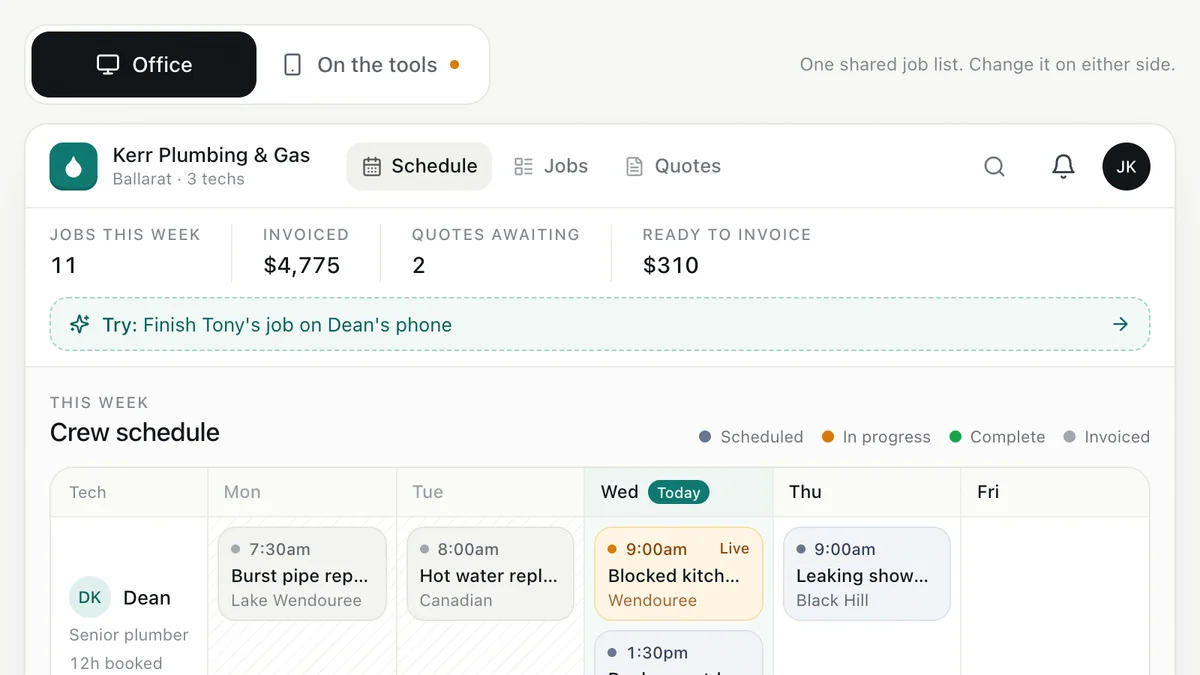
Group jobs by area, match them to the crew and equipment they need, and show each crew their day on a phone with access details, site contacts, dogs and safety notes. Weather and site delays should move the booking and tell the client.
Show subdivision clients where it's up to
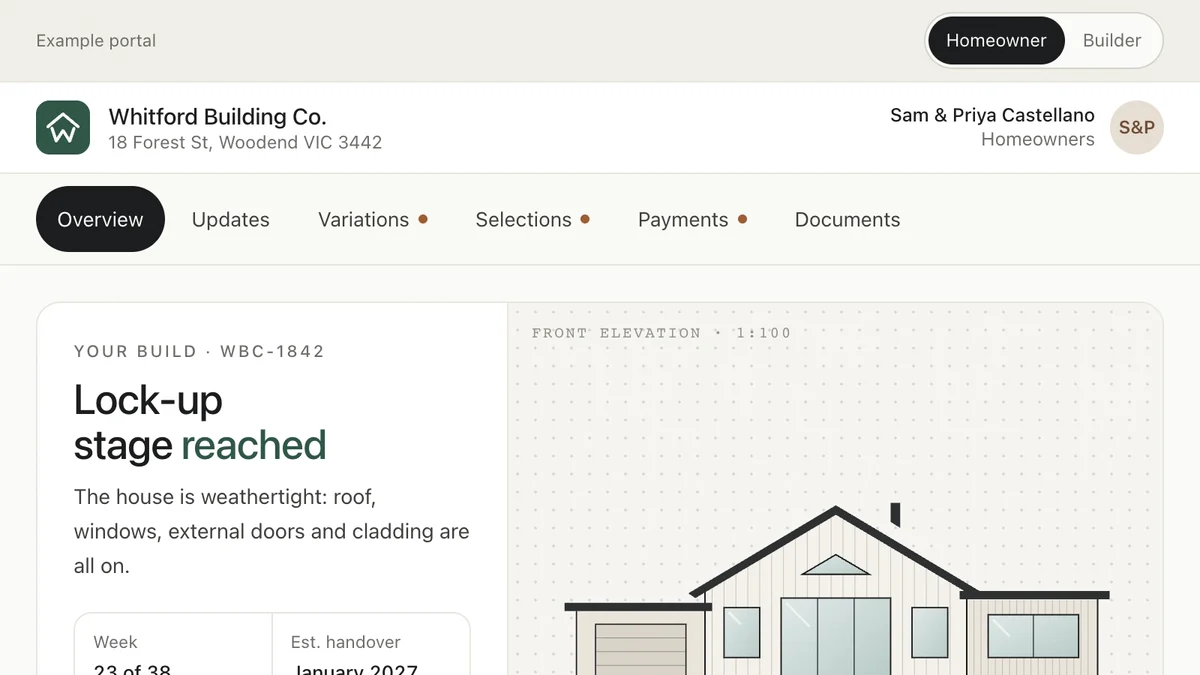
Planning permit, referral authority consents, certification, statement of compliance, lodgement, registration. Most subdivision clients ring to ask which stage they're at. A portal that shows the stage and what's being waited on answers that, and makes clear when the wait is someone else's.
Keep field records with the job
Photos of marks found and placed, notes and field book entries belong with the job record, not on a device. Boundary work can be questioned years later, and the record is what you'll rely on.
Lodgement stays in the official systems
Plans are lodged through each state's systems, such as SPEAR in Victoria and NSW LRS for registration. A custom tool should track what's been lodged and its status, not attempt to replace those systems.
Where we'd tell you otherwise
If you're a small firm whose survey and CAD software already includes job tracking, use it, and put the effort into a better website and quote form. Custom work fits firms with several field crews, a steady flow of subdivisions, or builders and developers who want a portal across many jobs. We don't do survey calculations or design, and we don't lodge plans.
Tell us how your files move
Describe the software you run and where work gets typed twice, chased by phone or held up waiting on a client. We'll tell you what we'd do first, including when the answer is a setting in software you already pay for.
Common questions
For common jobs, yes. Feature and level, boundary re-establishment and set-out surveys can be priced from the address, lot size, slope and purpose, with a booking and document upload. Unusual sites and subdivisions are still best quoted by a surveyor after a look at the title and plans.
For cadastral work, which defines legal boundaries, yes: every state and territory registers or licenses cadastral surveyors through its own board. Feature, level and engineering surveys don't always need a registered surveyor, depending on the state and purpose.
Yes. A portal shows each stage, from planning permit to registered plan, what's being waited on and who from, and the documents issued so far. It answers most 'where are we up to?' calls and shows when a delay is with council or an authority.
Lodgement happens in those systems, and access to them is controlled by the government. A custom tool records what's been lodged, when and its current status, and links to the official record, rather than lodging on your behalf.
It depends on the number of crews and job types, whether it includes online quoting and a subdivision portal, and what it connects to. Custom work is quoted individually, at a fixed price agreed before anything starts.
See it working
Software we'd build, running with a fictional business and sample data. Use it, then decide.
Also worth a look
- Off-the-Plan Sales Software for Developers
- Software for Building and Pest Inspectors
- Software and Client Portals for Conveyancers
- Holding client IDs and trust money? Security reviews for code, cloud and integrations
Last reviewed . General information, not legal advice. Prices are indicative Australian ranges, not quotes.