Developers
Off-the-plan sales software, from first release to settlement
An off-the-plan project is sold years before anyone moves in. In that time each buyer needs a contract with the right disclosures, a deposit held properly, news through construction, selections and variations, and finally a settlement that depends on their finance and valuation landing on time. Small and mid-sized developers often run all of it from a sales agent's CRM and a spreadsheet, and buyers can tell.
Rather just ask someone? Talk to usIn short
Off-the-plan sales need one stock list that drives everything: the website and site plan, reservations, contracts, deposits and settlement. Add a buyer portal for construction updates, selections and documents, a record of every disclosure and change each buyer received, and settlement preparation that starts months out. Since 1 July 2026, developers selling directly have AML/CTF obligations too.
General information about systems and processes, current as at November 2026. It isn't legal or compliance advice: check how the rules apply to your business with your regulator, professional body or adviser.
- What is a sunset clause?
- A term in an off-the-plan contract that lets the contract be ended if the plan isn't registered, or the building isn't finished, by a set date. In NSW and Victoria, and for off-the-plan land in Queensland, a developer generally needs the buyer's written consent or a Supreme Court order to end a contract that way.
What actually works
One stock list for every channel
Availability, price and status should live in one place that the website, the interactive site plan, the sales agents and the contracts all read from. When a lot is reserved, everyone sees it at once, and nobody sells the same apartment twice from two spreadsheets.
Contracts carry each state's rules
NSW requires a disclosure statement with off-the-plan residential contracts, a 10 business day cooling-off period and notice of material changes. Victoria caps off-the-plan deposits at 10% and restricts sunset clauses. Your lawyer drafts the documents; the system records which version each buyer received, when, and what they signed.
Selling direct brings AML/CTF
Since 1 July 2026, a business that sells property it owns without an independent agent brokering the sale can be a reporting entity, with customer due diligence on every buyer. If your team sells in-house, the reservation flow is the natural place to verify buyers and keep the record.
Two years is a long time to hear nothing
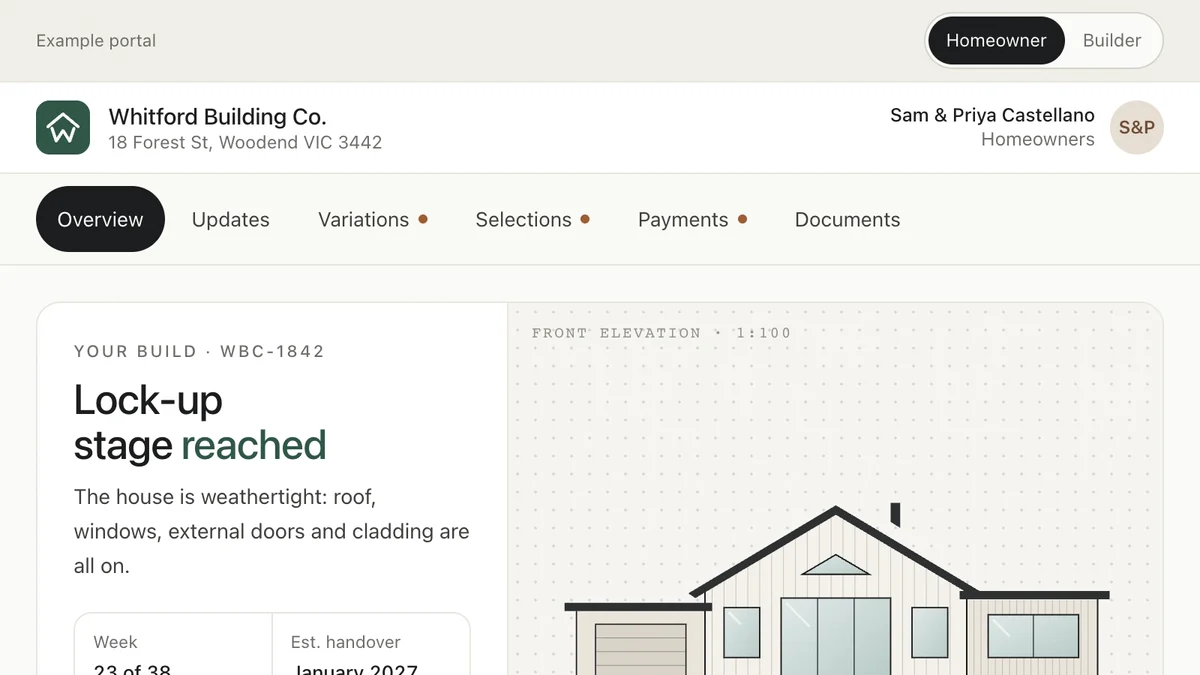
Buyers who get no news start to doubt the project and ring the sales office. A buyer portal with construction milestones, photos, expected dates and documents keeps them informed with almost no effort from your team, and gives your agents one answer to give.
Selections and variations without email chains
Colour schemes, upgrades and changes each have a deadline, a price and a signature. Running them through the portal, with choices locked once the deadline passes and every variation recorded against the lot, keeps the builder and the buyer working from the same list.
Settlement starts months early
Off-the-plan valuations can come in below the contract price, and finance approvals expire. Tracking each buyer's readiness, from finance and valuation to their conveyancer and final inspection, months before completion shows you which settlements are at risk while there's still time to act.
Before the first release
These are far easier to set up before buyers arrive than in the middle of a release.
- One stock list with price, status and plans for every lot or apartment
- A reservation process, including how buyers are verified if you sell direct
- Contract and disclosure versions recorded against each buyer
- Who holds deposits, and how buyers are told where their money is
- A plan for construction updates: how often, from whom, through what
- Selection and variation deadlines agreed with the builder
- A settlement readiness check scheduled months before completion
Where we'd tell you otherwise
If you're selling a handful of townhouses through an agent, their CRM and your solicitor's process are enough; a portal would be a lot of system for a few buyers. Custom work fits developers with repeat projects, apartment or land releases with dozens to hundreds of buyers, or an in-house sales team. We don't draft contracts or disclosure statements; your lawyer does, and the system keeps track of what each buyer received.
Tell us how your files move
Describe the software you run and where work gets typed twice, chased by phone or held up waiting on a client. We'll tell you what we'd do first, including when the answer is a setting in software you already pay for.
Common questions
They can. Since 1 July 2026, a business that sells real estate it owns in the course of business, without an independent real estate agent brokering the sale, can be a reporting entity under AML/CTF. That's typical of developers with in-house sales teams. Check AUSTRAC's guidance against how your projects are sold.
Ten business days for off-the-plan residential contracts, compared with five for an established home. A buyer who rescinds during cooling-off forfeits 0.25% of the price. Other states set their own periods, and your contracts should match the state.
Yes. They filter by price, bedrooms and level, see the plan, and reserve, with the stock list updating for everyone at once. Whether a reservation takes a holding deposit, and how it becomes a contract, follows your lawyer's advice and your state's rules.
It can show them earlier. When each buyer's finance, valuation, conveyancer and final inspection are tracked in the portal months before completion, the sales team can see which settlements are at risk and work on them while there's still time.
It depends on the number of lots or apartments, whether it includes a site plan, buyer portal and selections, and what it connects to. Custom work is quoted individually, at a fixed price agreed before anything starts.
See it working
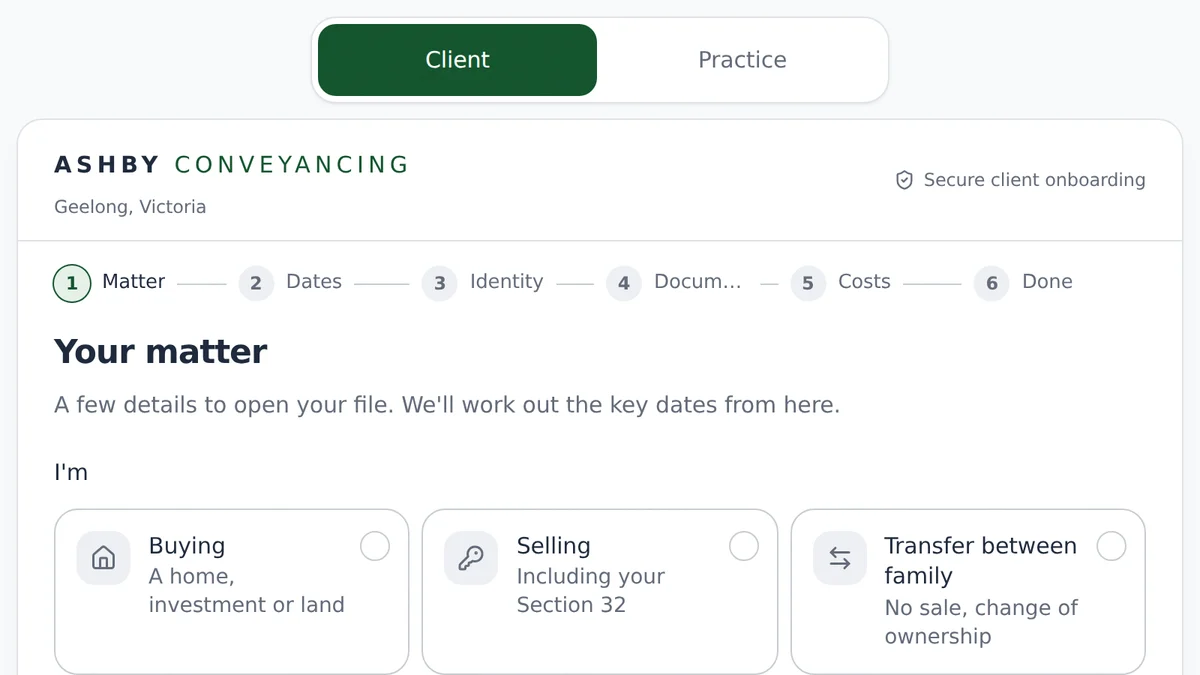
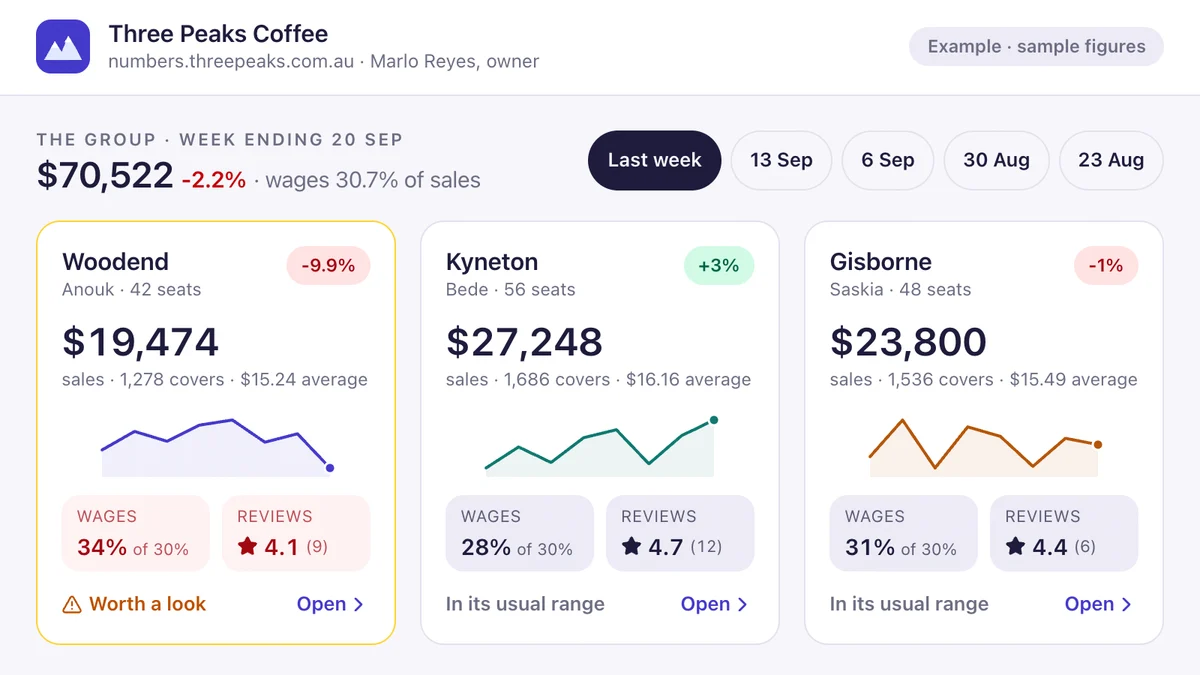
Software we'd build, running with a fictional business and sample data. Use it, then decide.
Also worth a look
- AML/CTF for Agents and Conveyancers: Systems
- Software and Client Portals for Conveyancers
- Real Estate Agency Websites That Win Listings
- Holding client IDs and trust money? Security reviews for code, cloud and integrations
Last reviewed . General information, not legal advice. Prices are indicative Australian ranges, not quotes.