Conveyancers
Software that takes the chasing out of conveyancing
Most conveyancing practices already run good software: LEAP, Smokeball or Actionstep for matters, PEXA for settlement. The time goes in the gaps between them. Chasing clients for details and ID, re-keying intake forms, answering 'where are we up to?' calls, and now AML/CTF checks on top. That's where a client portal and a few well-built integrations earn their keep.
Rather just ask someone? Talk to usIn short
Conveyancers rarely need new practice software; they need the gaps around it filled. The useful builds are an onboarding portal that collects details, ID and signed cost agreements, automatic matter updates so clients stop calling, and integrations that put everything straight into LEAP, Smokeball or Actionstep. Since 1 July 2026 the portal also carries AML/CTF customer due diligence.
General information about systems and processes, current as at November 2026. It isn't legal or compliance advice: check how the rules apply to your business with your regulator, professional body or adviser.
- What is a conveyancing client portal?
- A secure web page, branded as your practice, where a client completes their intake, uploads documents, verifies their identity, signs the cost agreement and later sees where their matter is up to. It sits in front of your practice management software rather than replacing it, so your team still works in the system they know.
What actually works
Start where the time goes: intake
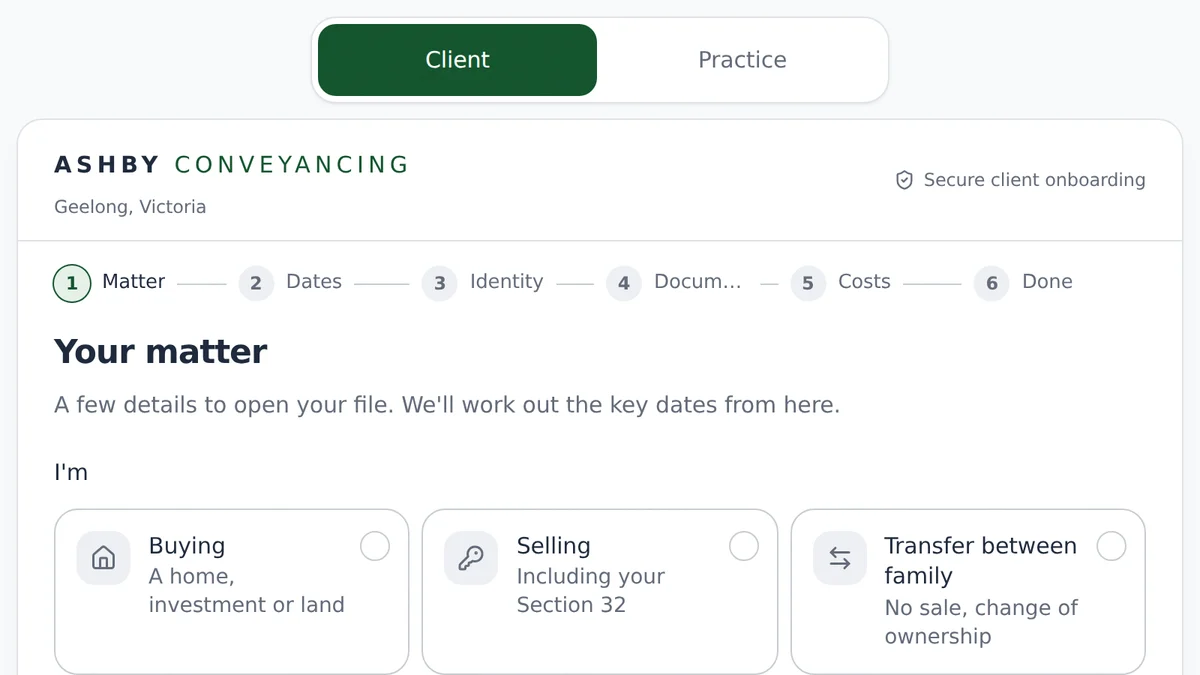
A good intake asks buying or selling, the property, the parties, finance and dates once, in plain language, on a phone. It works out the cooling-off and settlement dates for your state, flags what's missing, and creates the matter in your practice software without anyone re-typing it.
Fold identity checks and AML/CTF into the same flow
Verification of identity for e-conveyancing and customer due diligence for AML/CTF ask for overlapping things. One flow that collects both, records what was checked and keeps the evidence for seven years is far less work than two processes, and far easier to show a regulator.
Updates clients don't have to ask for
Most 'where are we up to?' calls are about the same milestones: contract reviewed, finance approved, searches back, settlement booked. Sending those automatically by email or text as the matter moves in your practice software removes most of the calls.
Integrate, don't replace
LEAP, Smokeball and Actionstep each offer ways to connect, and PEXA publishes APIs for practice management software providers. A custom tool should read from and write to the systems you have. If a vendor's built-in portal already does what you need, use it.
Make bank details tamper-proof
Payment redirection is the costliest risk in a property practice. Never accept or confirm bank details by email. Collect them through a secure channel such as PEXA Key or your portal, and confirm them by phone on a number you already hold.
Your website is often the first step of intake
Clients increasingly find a conveyancer by asking ChatGPT or Google who handles their kind of matter nearby. A site that states your fees, areas and process plainly, and links straight into the intake, turns that question into a new matter.
Where a portal saves the most time
If three or more of these are true, an onboarding portal will usually pay for itself.
- Staff re-type client details from email or PDF forms into the practice software
- Matters stall waiting for ID, signed cost agreements or authority forms
- Clients call or email weekly asking where the matter is up to
- AML/CTF due diligence is a separate checklist kept outside the matter
- Bank details sometimes arrive by email
- New-matter volume rises in spring and the team can't keep up
Where we'd tell you otherwise
If your practice software's own client portal already handles intake, documents and updates well enough, configure it fully before paying for anything custom; it's cheaper and one less system. We're also not an identity verification provider or an AML/CTF adviser: we build the flow around the provider and the program you choose.
Tell us how your files move
Describe the software you run and where work gets typed twice, chased by phone or held up waiting on a client. We'll tell you what we'd do first, including when the answer is a setting in software you already pay for.
Common questions
No. Those are good practice management systems and your team knows them. We build what sits around them, such as client onboarding, identity and AML/CTF checks, client updates and reporting, and connect it to the system you already use where the vendor allows.
It can run the process and keep the records. ARNECC's Verification of Identity Standard is a face-to-face interview with original documents; it's a safe harbour rather than a mandate, and remote methods can form part of reasonable steps at the practitioner's discretion and risk. We integrate the VOI provider you choose rather than deciding what's sufficient.
PEXA publishes APIs for practice management software providers, and most practices reach PEXA through their practice software's integration. For a custom build we connect to your practice software first, and to PEXA only where its integration program allows.
It depends on how many matter types, states and integrations are involved, so we quote a fixed price after a short call. A sole conveyancer's website on the Small Business Plan is $950 setup, then $95/month; ongoing support for a custom portal is a retainer from $750 per month.
Yes. The rules differ by state, especially cooling-off periods, vendor disclosure and paper versus electronic settlement, and an intake should reflect the states you practise in. We're based in Victoria and work with practices across Australia.
See it working
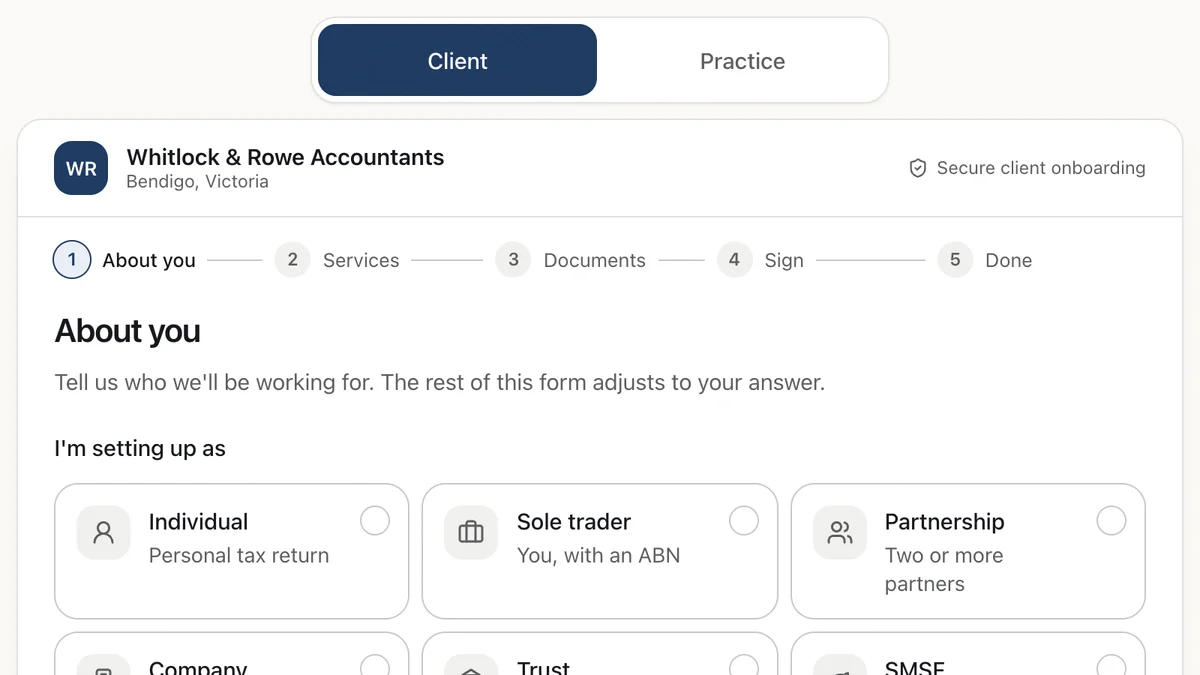
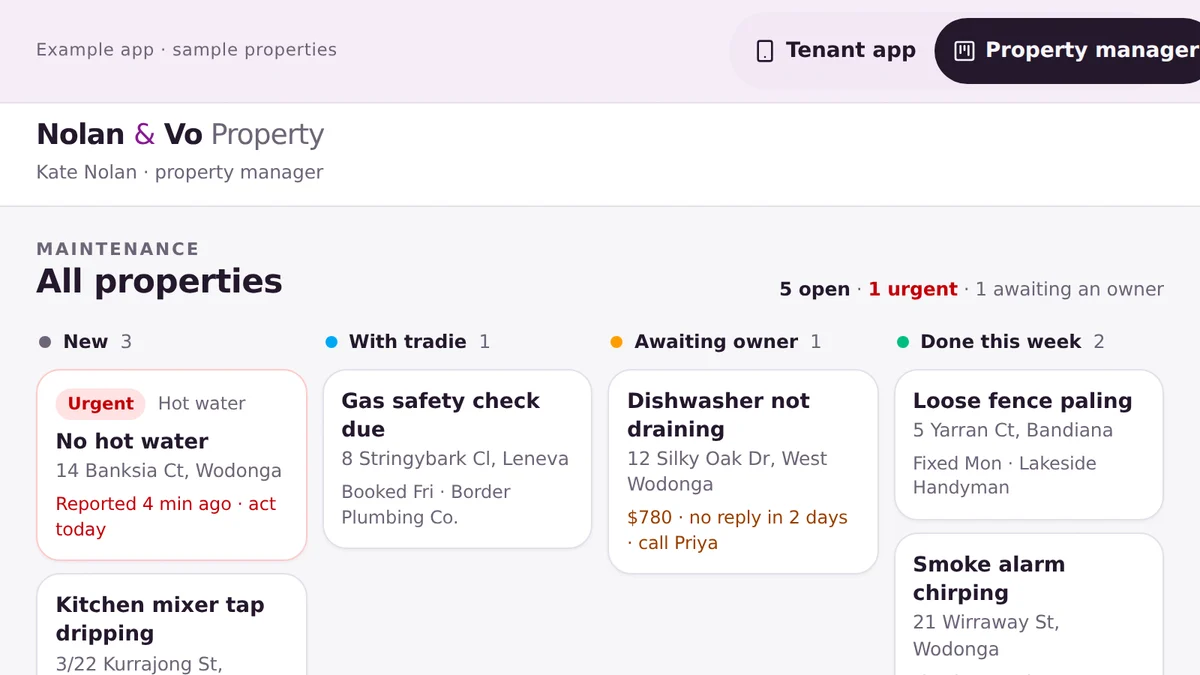
Software we'd build, running with a fictional business and sample data. Use it, then decide.
Also worth a look
- AML/CTF for Agents and Conveyancers: Systems
- Stopping Settlement Payment Fraud
- AI for Real Estate Agents and Property Managers
- Holding client IDs and trust money? Security reviews for code, cloud and integrations
Last reviewed . General information, not legal advice. Prices are indicative Australian ranges, not quotes.