Quantity surveyors
Software for quantity surveyors, from order to report
Quantity surveyors in property do two kinds of work at very different volumes. Tax depreciation schedules arrive in their hundreds from investors, accountants and brokers, each needing an inspection, a cost estimate and a report the accountant can use. Construction work, such as cost plans, lender progress claims and cost-to-complete reports, arrives in smaller numbers with more at stake. Both lose hours to chasing access, documents and payment.
Rather just ask someone? Talk to usIn short
Quantity surveyors gain most from an online order flow for depreciation schedules that quotes, takes payment and arranges the inspection; a field app for photos and measurements; reports delivered straight to the investor's accountant; and, for construction work, a portal where lenders and builders lodge progress claims and receive reports. Keep estimating in your existing software.
General information about systems and processes, current as at November 2026. It isn't legal or compliance advice: check how the rules apply to your business with your regulator, professional body or adviser.
- What is a tax depreciation schedule?
- A report that sets out the deductions an investor can claim each year for the wear on a rental property: the building itself under Division 43 and the plant and equipment inside it under Division 40. When the construction cost isn't known, the ATO accepts an estimate from an appropriately qualified person such as a quantity surveyor.
Depreciation facts an order form should capture
From ATO guidance and rulings, checked November 2026. General information, not tax advice.
- Who can estimate Qualified person
- Where construction costs are unknown, the ATO accepts estimates from an appropriately qualified person, such as a quantity surveyor (TR 97/25).
- Second-hand plant After 9 May 2017
- For most residential rentals acquired after this date, existing second-hand plant and equipment can't be depreciated.
- Building allowance 2.5% a year
- Capital works in residential properties built after 15 September 1987 are generally claimed at 2.5% a year over 40 years.
- Tax agent services Check with the TPB
- Many depreciation firms are registered tax agents, because the Tax Practitioners Board can treat schedules as a tax agent service.
What actually works
Ordering a schedule should take two minutes
Address, purchase date, property type, renovations, the tenant's or agent's contact for access, the accountant's email and payment. Most investors are referred by an accountant, broker or agent, so let referrers order for their clients too, and see the status.
Ask the questions that change the answer
Whether the property was bought new or second-hand, and when, decides what plant and equipment can be claimed: for most residential properties bought after 9 May 2017, existing second-hand items can't be. Collect it at order, so the estimator starts with the facts.
Inspections run on access
Most depreciation inspections need a tenant or property manager to open the door. Offering times by text and confirming automatically cuts wasted trips, and the inspector's photos and notes land on the job, not on a phone.
Deliver to the accountant, not just the client
The schedule is used at tax time by the investor's accountant. Send it to both with the client's consent, keep it available to download for future years, and remind investors when renovations mean it's worth an update.
Construction work needs a shared record
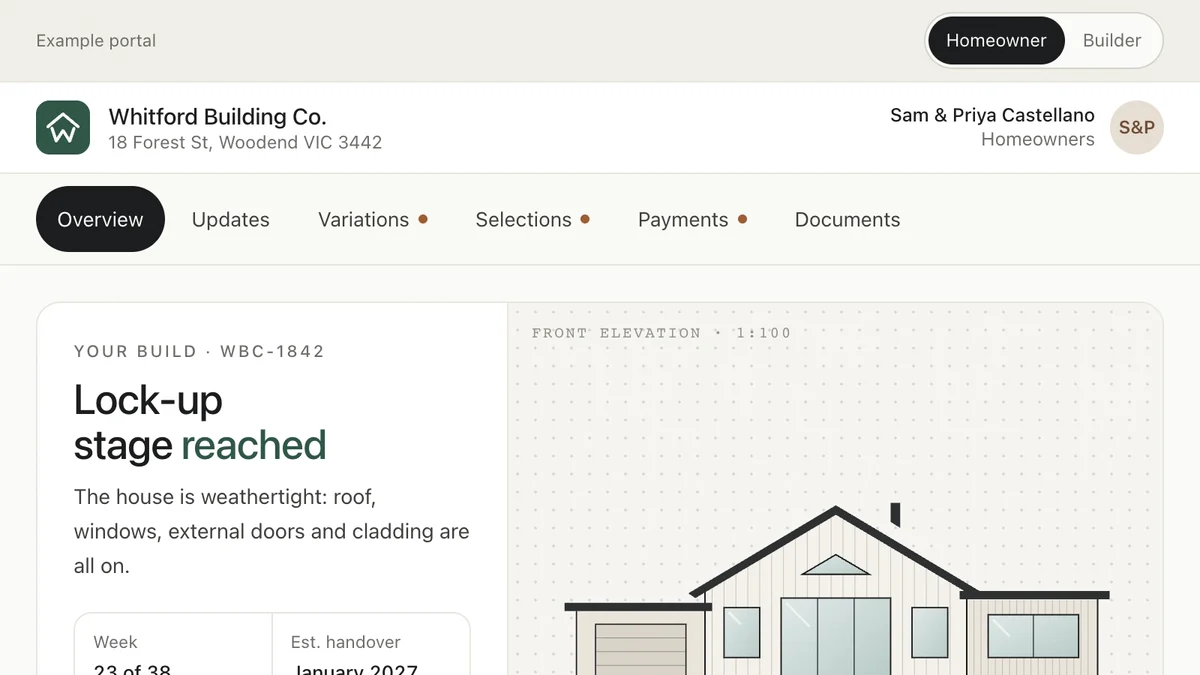
Lender progress claims, cost-to-complete reports and variations involve a lender, a builder and a borrower, each wanting to know what's been claimed, inspected and certified. A portal where claims are lodged, inspections booked and reports issued keeps everyone on one record.
Keep estimating where it is
Your cost estimating and takeoff software does the professional work. A custom system should move job details into it and the finished numbers out of it, not attempt to replace it.
Where we'd tell you otherwise
If you're a small depreciation practice getting most orders from a handful of accountants, a good order form and your estimating software may be all you need. Custom work fits firms with a large referral network, inspectors in several cities, or construction work for lenders where claims, inspections and reports have to be tracked across many projects. We don't estimate costs or give tax advice.
Tell us how your files move
Describe the software you run and where work gets typed twice, chased by phone or held up waiting on a client. We'll tell you what we'd do first, including when the answer is a setting in software you already pay for.
Common questions
Yes. They enter the property details, purchase date and access contact, pay, and the inspection is arranged with the tenant or property manager by text. The order lands in your job list with everything the estimator needs.
Yes. A referrer account lets them order for a client, see where each job is up to and download finished schedules with the client's consent. It also shows you which referrers send the most work.
For most residential rentals acquired after 9 May 2017, existing second-hand plant and equipment can't be. New items the investor adds, and the building itself under Division 43, still can. Commercial property isn't affected the same way. Your order form should ask the purchase date and whether the property was new.
Yes. The builder lodges a claim with invoices and photos, the inspection is booked, and the certified report goes to the lender, with every claim and variation kept against the project.
It depends on the mix of depreciation and construction work, the number of inspectors and referrers, and what it connects to. Custom work is quoted individually, at a fixed price agreed before anything starts.
See it working
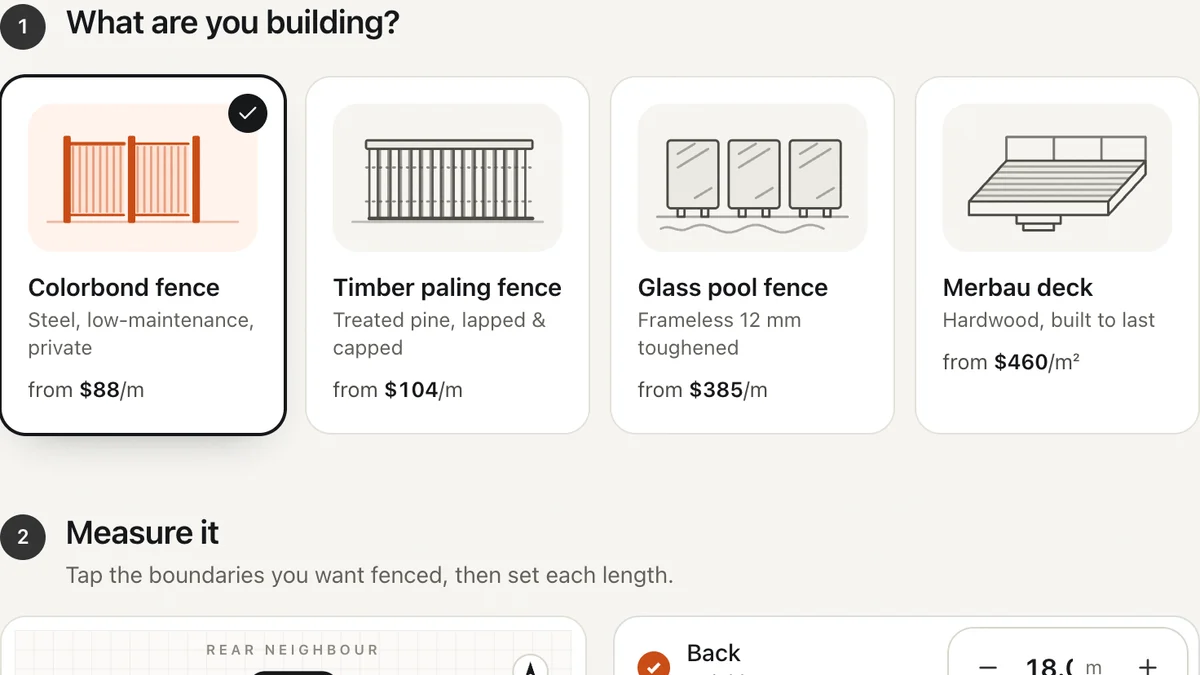
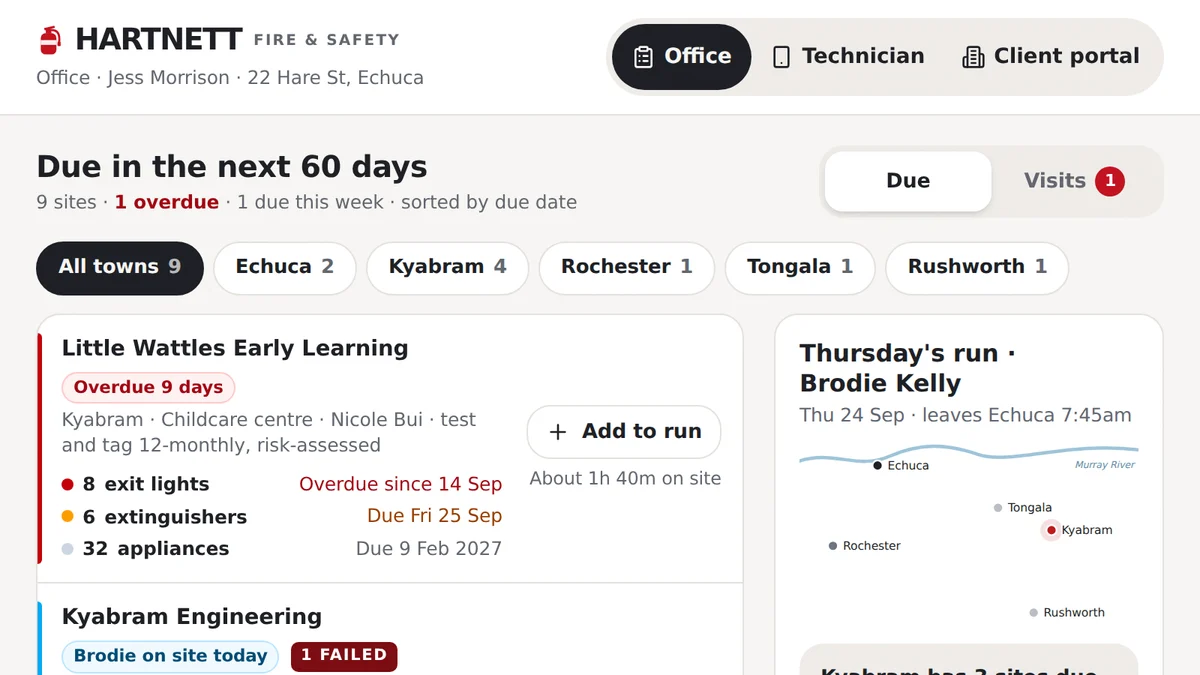
Software we'd build, running with a fictional business and sample data. Use it, then decide.
Also worth a look
- Booking and Job Software for Property Valuers
- Software for Building and Pest Inspectors
- Off-the-Plan Sales Software for Developers
- Holding client IDs and trust money? Security reviews for code, cloud and integrations
Last reviewed . General information, not legal advice. Prices are indicative Australian ranges, not quotes.