Business technology
Who can help your business with technology?
Most small businesses don't have a technology problem so much as a pile of them: a website that doesn't bring in work, software that doesn't talk to the accounts, a spreadsheet only one person understands, and a nagging worry about security. Nobody owns the whole picture, so each problem gets a separate fix from a separate person. The first useful step is working out which kind of help each problem needs.
Rather just ask someone? Talk to usIn short
It depends on the problem. A managed IT provider looks after devices, networks, email accounts and backups. A technology partner like PixelApps looks after the software side: choosing and connecting business systems, replacing spreadsheets, building custom tools and websites, and securing them. Many small businesses need both, and the two should work together.
- What is a technology partner?
- A technology partner is an outside team that takes responsibility for how your business uses software, not just for one project. They advise on what to buy, build what can't be bought, connect the systems you have and stay on call afterwards. For a business too small for a CTO or an in-house developer, it is the closest thing to having one.
What actually helps
Sort the problem before you pick the helper
Laptops, Wi-Fi, printers, Microsoft 365 or Google Workspace accounts and device security are IT support. Software that doesn't fit how you work, systems that don't share data, a website that doesn't perform and anything custom is software work. Each kind of provider is excellent at one of these and usually mediocre at the other.
A single owner for the whole picture saves the most money
The expensive mistakes happen between providers: the web designer who doesn't know the booking system exists, the bookkeeper exporting CSVs because nobody connected the two, the app subscription nobody remembers signing up for. Whoever you choose, make one person responsible for knowing what you run and why.
Look for someone who will tell you not to build
Good technology advice for a small business is mostly about buying well and connecting what you've bought. Custom software is the right answer less often than developers would like. A partner worth having says 'use Xero, use ServiceM8, connect them' when that's the answer, and builds only the part nothing on the market does.
Insist on owning every account
Domains, hosting, software subscriptions, code repositories and admin logins should be in your business's name, with your provider given access. It costs nothing to set up properly and it is the difference between changing providers in a week and being held hostage.
Price the ongoing relationship, not just the first job
Technology needs looking after. Ask what ongoing support costs, what it covers and how fast someone responds. A fixed monthly arrangement with a clear scope beats an open-ended hourly tab, because you can budget for it and nobody hesitates to call.
Senior people matter more than a big team
Small-business technology decisions are judgement calls with real money attached. A senior generalist who has seen fifty businesses' systems will give better advice than a large team of juniors who have each seen one layer of the stack.
Who does what
The four kinds of help a small business usually reaches for, and where each one fits.
| Criteria | Managed IT provider | Web agency | Freelancer | Technology partner |
|---|---|---|---|---|
| Best at | Devices, networks, email, backups, help desk | Marketing websites and campaigns | One well-defined job | Business systems, integrations, custom software, web |
| Typical arrangement | Per-user monthly fee | Project, then hourly | Hourly or per job | Fixed project, then a monthly retainer |
| Advises on what software to buy | Sometimes, mostly Microsoft or Google | Rarely | Rarely | Yes, it's the core of the job |
| Connects your systems together | Occasionally | Rarely | Sometimes | Yes |
| Builds custom software | No | Sometimes | Sometimes | Yes |
| Main risk | Software questions get a hardware answer | Everything becomes a website | Single point of failure | Needs a clear scope to stay affordable |
Questions to ask any tech provider
A good provider answers all of these without hesitating.
- What exactly is in scope, and what will you send to someone else?
- Will every account and subscription be in my business's name?
- Who actually does the work, and how senior are they?
- What does ongoing support cost, and how quickly do you respond?
- When would you tell me to buy software instead of building it?
- Can you work alongside my IT provider, bookkeeper or accountant?
- What happens if we part ways? How do I take everything with me?
Where we'd tell you otherwise
We are not a managed IT provider. If your problem is laptops, the office network, printers or Microsoft 365 licences, a local MSP will serve you better and usually costs less. We work happily alongside one. If your problem is the software your business runs on, how it connects and what it should be, that's exactly what we do.
Tell us what's getting in the way
Describe the systems you run and what isn't working. We'll tell you what we'd do first, including when the answer is a product you can buy or a setting you can change.
Common questions
If the problem is hardware, networks, email accounts or device security, you need IT support. If it's the software you run the business on, how your systems share data, your website or something custom, you need a software team. Plenty of businesses use both: an MSP for the machines and a technology partner for the systems.
The software side of running a business: advice on what to buy, connecting systems like Xero, MYOB and ServiceM8, replacing spreadsheets with proper tools, custom web apps, websites, AI automation, and fixing or securing what's already there. Small businesses of 1 to 5 staff often start on The Small Business Plan; larger engagements run on a retainer from $750 per month.
Usually more easily than it can afford the alternative, which is staff time lost to double entry, workarounds and broken tools. Engagements start small: a single fixed-price project, or $950 setup, then $95/month for a small business's website and online presence. Bigger ongoing arrangements are a retainer, agreed in writing.
Yes. We're based in the Macedon Ranges and work with businesses across Australia. Almost everything runs well remotely, and we visit when sitting together genuinely helps.
Yes, and we'd encourage it. Integrations with accounting software go better when the bookkeeper is in the room, and security works best when the people looking after the devices and the people looking after the software agree on who covers what.
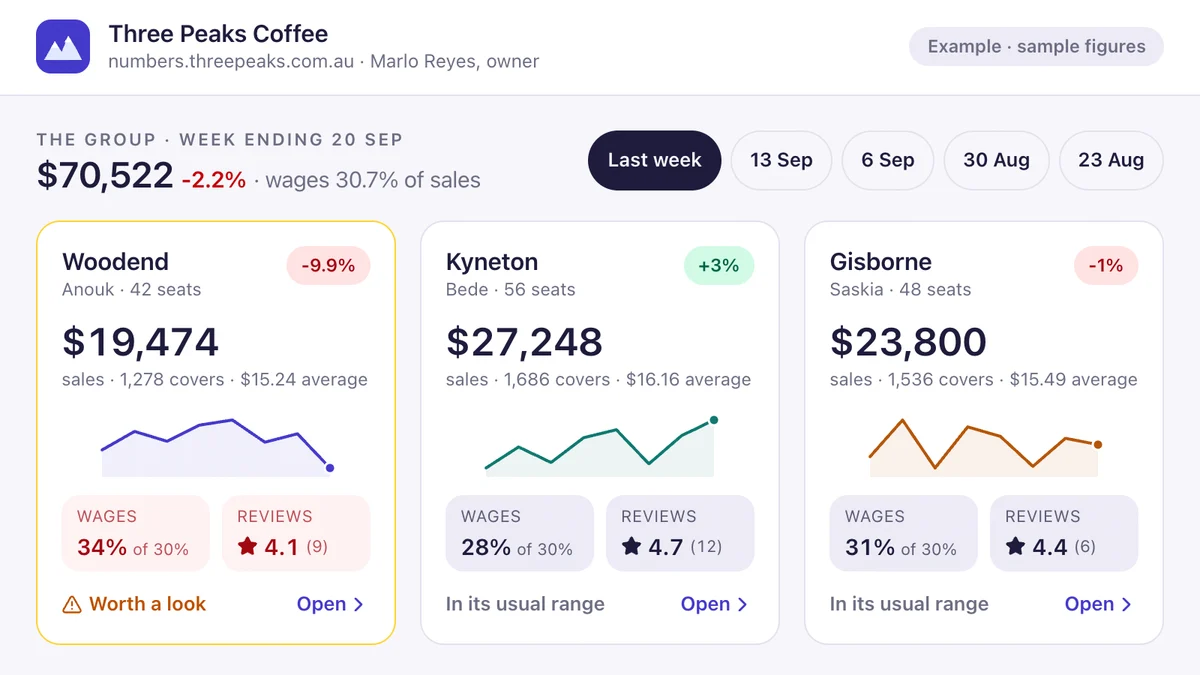
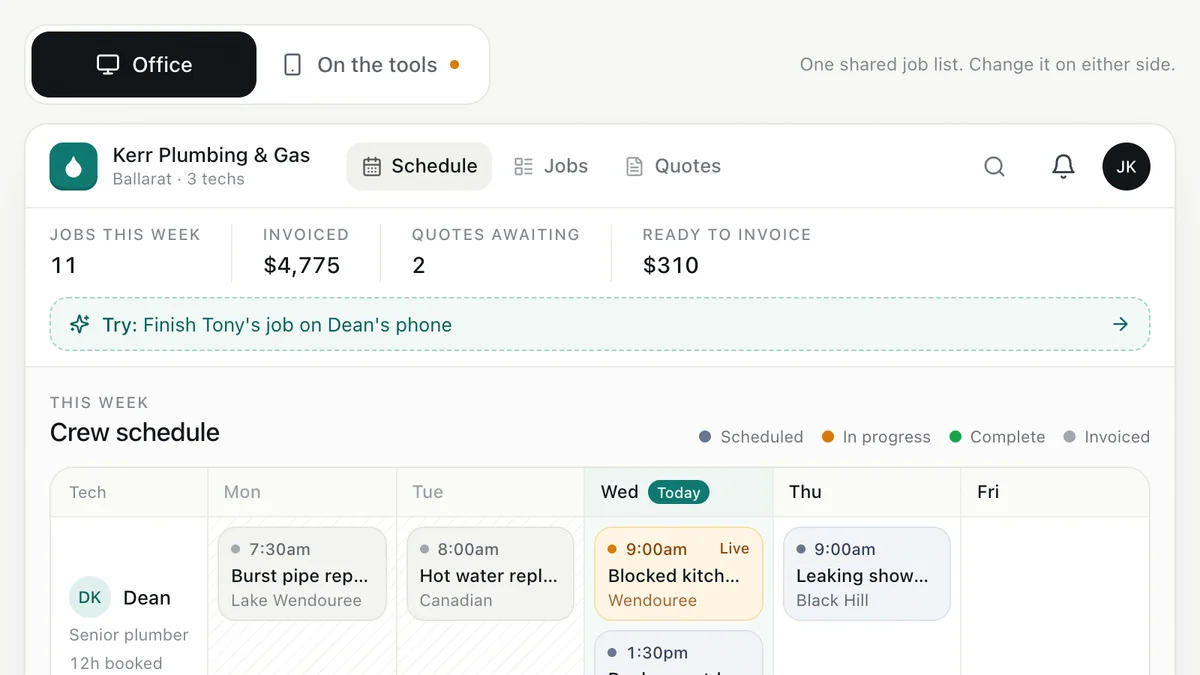
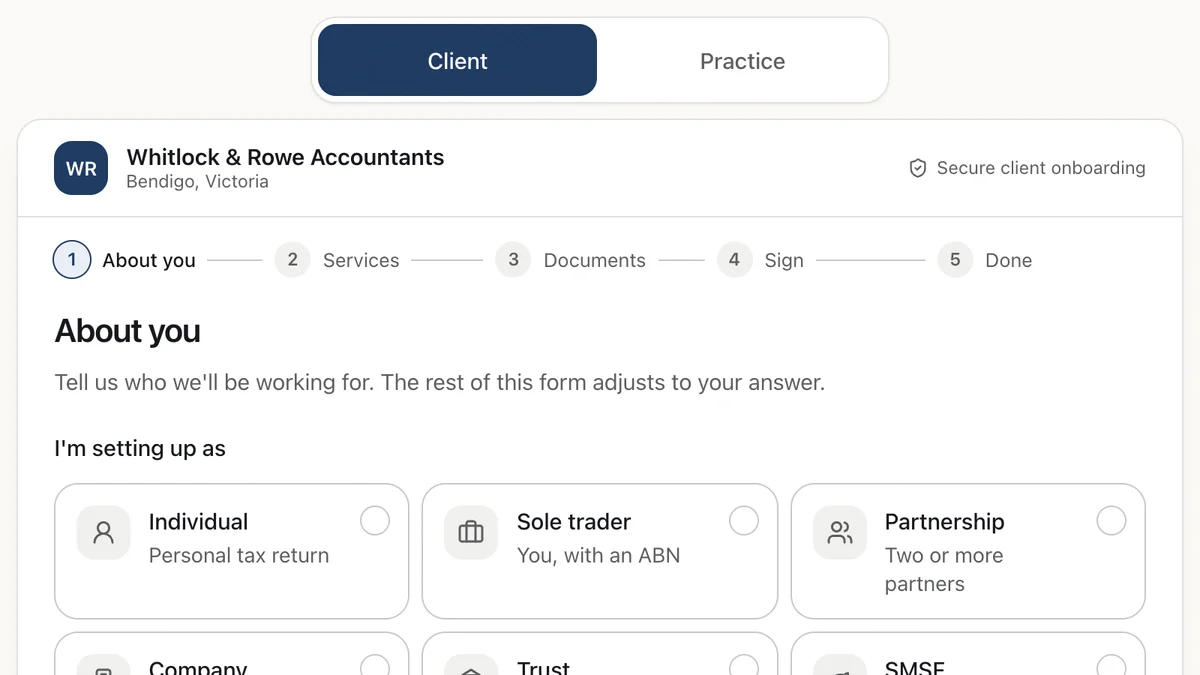
See it working
Software we'd build, running with a fictional business and sample data. Use it, then decide.
Also worth a look
- A Technology Roadmap for Your Small Business
- Custom Software vs Off-the-Shelf: Build or Buy?
- Too Many Apps? How to Simplify Your Business Software
- Ready to automate the repetitive work? AI for your business
Last reviewed . Prices are indicative Australian ranges, not quotes.