Dietitians
Referrals in, questionnaires done, reports back to the GP
A dietetics practice runs on GP referrals. Each one has to be matched to a current chronic condition management plan, counted against the client's Medicare allied health services for the year, and answered with a report to the GP. Then there's the questionnaire or food diary you want back before the first consult, and telehealth for clients who'd rather not travel. Cliniko, Nookal, Halaxy, Coreplus and Zanda cover the core. We build around them.
Rather just ask someone? Talk to usIn short
A dietetics practice can keep Cliniko, Nookal, Halaxy, Coreplus or Zanda and add what they leave out: GP referral intake that records the chronic condition management plan type and date and flags gaps, a count of the client's 5 Medicare allied health services a year, pre-consult questionnaires that feed the record, and reports back to the GP after the first and last service.
General information about systems and processes, current as at November 2026. It isn't legal, clinical or compliance advice: check how the rules apply to your practice with your National Board, professional body, indemnity insurer or adviser.
- What is an APD?
- Accredited Practising Dietitian is the credential run by Dietitians Australia. The APD program is governed by the Dietitian and Nutritionist Regulatory Council and aligned with the standards of the National Alliance of Self Regulating Health Professions. Dietetics isn't Ahpra-registered. APDs with a provider number can offer Medicare and DVA rebates.
Figures a dietetics practice works to
From the MBS explanatory notes (published 1 November 2026) and the NDIS Pricing Schedule 2026-27.
- Medicare allied health services under a GP plan Up to 5 a year
- 10 for Aboriginal and Torres Strait Islander patients. Counted from 1 January.
- Plan must be prepared or reviewed within 18 months
- For the client to keep accessing allied health services.
- Old GPMPs and TCAs valid until 30 June 2027
- For plans made before 1 July 2025. From 1 July 2027 a GP chronic condition management plan or a multidisciplinary care plan is needed.
- Type 2 diabetes group services 1 + 8 a year
- One group assessment, then up to 8 group sessions per calendar year.
- NDIS dietitian price limit $178.99/hour
- Down from $188.99. Applies to NDIA-managed and plan-managed participants.
What actually works
Check the GP plan when the referral arrives
On 1 July 2025, GP chronic condition management plans replaced GP Management Plans and Team Care Arrangements, and referrals became standard letters. The plan must have been prepared or reviewed in the previous 18 months. Older GPMPs and TCAs stay usable until 30 June 2027. Intake that records the plan type and date, and flags a plan that's out of date, saves a client finding out at the counter.
Count to five across the calendar year
A client with a GP plan can get up to 5 Medicare allied health services a calendar year, or 10 for Aboriginal and Torres Strait Islander patients, and the count resets on 1 January. Your software sees only what you've billed, so intake should ask how many the client has used with a physio, podiatrist or anyone else this year, then show what's left. Clients with type 2 diabetes can also get 1 group assessment and up to 8 group sessions a year.
Report back to the GP without retyping
The MBS notes require a written report to the referring GP after the first and last service on a referral, or after the only one. A letter template that pulls from structured consult notes leaves the dietitian to check and sign it, not retype it. Sending it by secure message needs HI Service registration. Dietitians aren't Ahpra-registered, so they get an HPI-I through HPOS or an eligible professional body.
Questionnaires before the first consult
A history, goals or food diary returned before the first appointment gives you the consult back for the conversation. Under the Privacy Act, ask only what's reasonably necessary, with the client's consent and a collection notice on the form. The OAIC says organisations must generally make sure tracking pixels don't send sensitive information to third-party platforms, so keep ad pixels off the form pages.
Telehealth bookings that send everything at once
A telehealth appointment type can send the video link, the pre-consult questionnaire and any measurement instructions in one confirmation, to the contact on file. Reception isn't copying links into emails, and the questionnaire can come back before the call rather than during it.
NDIS dietetics is priced lower in 2026-27
The NDIS dietitian price limit fell from $188.99 to $178.99 an hour in the NDIS Pricing Schedule 2026-27. Unregistered providers can serve plan-managed and self-managed participants only, and from 1 December 2026 claims must be made within 90 days of the session. Check your line items and your invoicing turnaround.
State your credential and rebates clearly
Dietitians Australia says APDs with a provider number can offer Medicare and DVA rebates, so say on every practitioner profile whether they're an APD and which rebates they can offer. The Privacy Act covers you whatever your turnover, and the OAIC lists nutritionists and weight loss clinics among health service providers. If your practice also employs registered professionals, Ahpra's advertising rules apply to how you promote their services.
Referral intake for a Medicare dietetics client
Collect these before the first consult, so claiming questions are settled before the client arrives.
- The GP referral letter, with the referring GP's details
- Plan type and date: a GP chronic condition management plan prepared or reviewed in the last 18 months, or a GPMP/TCA made before 1 July 2025
- Medicare allied health services already used this calendar year, with any provider
- Whether the client identifies as Aboriginal or Torres Strait Islander, which changes the yearly limit from 5 to 10
- Consent and a collection notice on the pre-consult questionnaire
- Preferred format: in person or telehealth, and the contact the link should go to
Where we'd tell you otherwise
If your practice software's intake forms and letter templates already cover referrals and GP reports, use them first. We don't decide Medicare eligibility, we aren't a booking marketplace, and we don't build meal-planning or nutrition-advice tools that make clinical decisions. The dietitian makes the clinical calls; we build the admin around them.
Tell us how your practice runs
Describe the practice software you use and where time goes: phones, intake forms, re-typing, no-shows or the website. We'll tell you what we'd do first, including when the answer is a setting in software you already pay for.
jayson@pixelapps.com.au
1300 204 802
Macedon Ranges, Victoria
Serving clients across Australia
Common questions
No. We build around them and connect where the vendor allows. Cliniko has a public REST API, Nookal lets the practice create API keys and choose which locations each key can reach, and Halaxy's FHIR-based API is a paid monthly subscription. Coreplus and Zanda have their own routes, and Zanda's public API was still in closed beta in November 2026.
It can count the services you deliver and ask the client about the rest. Your practice software only knows what you've billed, and the yearly limit of 5 covers allied health services from any provider. So ask clearly at intake, then keep a running count once they're with you.
The OAIC gives an online form with a privacy notice as one way to collect health information. The conditions matter: health information needs consent and must be reasonably necessary, the form needs a collection notice, and the data should land in your practice software rather than an email inbox. Keep advertising pixels off the form pages: the OAIC says sensitive information generally must not reach third-party platforms through them.
Dietetics isn't one of the 16 Ahpra-registered professions. Section 133 of the National Law covers advertising of a 'regulated health service', defined as a service provided by, or usually provided by, a health practitioner. We can't tell you a dietetics-only practice is outside it; ask Dietitians Australia or your adviser. If your practice also employs registered professionals, such as physiotherapists or psychologists, advertising for the business covers their services and the rules apply. We don't give compliance sign-off; Ahpra points advertisers to a legal adviser or indemnity insurer.
It depends on your practice software and how much of referral intake, questionnaires and GP reporting is in scope, so we quote after a short call. Custom work is quoted individually, at a fixed price agreed before anything starts. A sole dietitian's website on the Small Business Plan is $950 setup, then $95/month; ongoing support for custom work is a retainer from $750 per month.
See it working
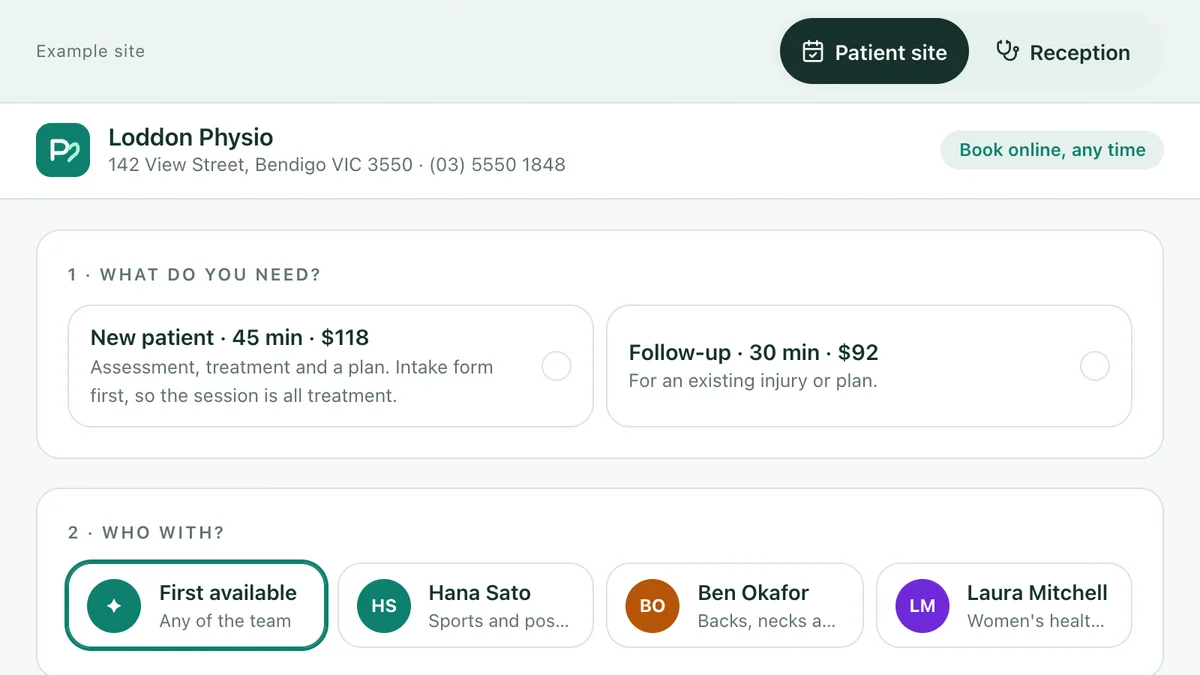
Software we'd build, running with a fictional business and sample data. Use it, then decide.
Also worth a look
- Online Booking for Clinics: Built-in, Marketplace or Custom
- Patient Privacy for Australian Health Practices
- Websites for Health Practices in Australia
- Software for Exercise Physiology Practices
- Holding patient records? Security reviews for code, cloud and integrations
Last reviewed . General information, not legal, clinical or compliance advice. Prices are indicative Australian ranges, not quotes.