Patient privacy
The Privacy Act for practices, from intake form to data breach
The small business exemption that lets most sole traders skip the Privacy Act doesn't apply to you. Every health service provider is covered, whatever its turnover, and almost everything a practice collects is health information. Health providers also notify more data breaches than any other sector. Here's what the Act asks of a practice's forms, software and website, and what changed between 2024 and 2026.
Rather just ask someone? Talk to usIn short
The Privacy Act covers every Australian health service provider regardless of turnover, and everything collected while providing care, down to appointment and billing details, is sensitive health information. Practices need to give patients a collection notice (the intake form is the usual place), take reasonable security steps, take care with overseas software, and be ready to assess and notify a data breach. From 10 December 2026, privacy policies must also disclose significant automated decisions.
General information about systems and processes, current as at November 2026. It isn't legal, clinical or compliance advice: check how the rules apply to your practice with your National Board, professional body, indemnity insurer or adviser.
- What is health information?
- Under the Privacy Act, all personal information collected while providing a health service is health information. That includes a patient's name, address, appointment and billing details and Medicare number, not just clinical notes. Health information is 'sensitive information', so stricter rules apply, including generally needing consent to collect it.
Privacy dates and numbers for practices
From the OAIC, the Privacy Act and the Privacy and Other Legislation Amendment Act 2024, as at November 2026. Breach figures are from the OAIC's Notifiable Data Breaches reports.
- Small business exemption threshold $3 million turnover
- Doesn't apply to health service providers, who are covered at any turnover.
- Time to assess a suspected breach 30 calendar days
- Then notify the OAIC and affected people as soon as practicable if it's eligible.
- All breach notifications, Jan–Jun 2026 667
- Up from 662 in the previous six months. Published 26 October 2026.
- Health service providers, Jan–Jun 2026 149
- Top sector again, with the most criminal attacks (72) and human-error breaches (62).
- Health service providers, calendar 2025 225 (19%)
- Most affected sector in a record year of 1,205 notifications.
- 'Technical and organisational measures' added to APP 11 11 December 2024
- Applies to information held after that date, whenever it was collected.
- Statutory tort for serious invasions of privacy 10 June 2025
- Claims must start within 1 year of becoming aware or 3 years of the invasion, whichever comes first. The OAIC has no direct role.
- Automated decision disclosure in privacy policies 10 December 2026
- Applies where a program makes or substantially informs significant decisions.
- Infringement notice, per contravention $4,368 / $21,840
- Individual / body corporate at the July 2026 penalty unit. Covers a missing or incomplete privacy policy.
- Court maximum, serious or repeated interference $50 million
- Or 3x the benefit or 30% of adjusted turnover if greater, for a body corporate; $2.5 million for an individual.
What actually works
Covered from the first patient, whatever your size
Most businesses turning over $3 million or less sit outside the Privacy Act. Health service providers don't, and the OAIC reads the term broadly: GPs, specialists, physios, psychologists, dentists, podiatrists, OTs, speech therapists, optometrists, chiropractors, massage therapists, gyms and telehealth services are all on its list. A sole practitioner has the full set of Australian Privacy Principles, and the Notifiable Data Breaches scheme applies to private health providers of any size.
Collect less, and say why on the form
You can collect health information with consent and only where it's reasonably necessary. At or before collection, APP 5 asks you to tell patients who you are, why you're collecting, what happens if they don't answer, who you usually share it with, whether it goes overseas, and that your privacy policy covers access, correction and complaints. The OAIC suggests putting that notice on the paper or online form itself; it's generally only needed at the first visit. An online intake can ask only what the first appointment needs, show the notice above the submit button and record consent.
Know where your software keeps patient data (APP 8)
Before personal information goes to an overseas recipient, you must take reasonable steps to make sure it won't breach the APPs, and you stay accountable if it does. Sending data to an overseas cloud provider only counts as a 'use' rather than a 'disclosure' in narrow cases: the provider only stores it and gives you access, under a binding contract that also binds its subcontractors. Either way you still hold the data. Ask every vendor in writing where data is stored and processed: practice software, SMS, online forms, email and any AI tool. Some let you choose; Jane, for example, offers an Australian data centre at signup.
Security is now spelt out (APP 11)
APP 11 asks for reasonable steps to protect personal information from misuse, interference, loss and unauthorised access, and to destroy or de-identify it once it's no longer needed, unless a law requires you to keep it. Since 11 December 2024 the Act says those steps include 'technical and organisational measures'. The Act doesn't list the measures. Steps a clinic can take include individual logins, access removed the day someone leaves, intake data going straight into the practice software rather than sitting in an inbox, and forms and integrations that have been checked by someone other than the person who built them.
Keep ad tracking off booking and intake pages
The OAIC's November 2024 guidance on tracking pixels says organisations must generally make sure sensitive information isn't disclosed to third-party platforms through pixels. Pixels can pick up form inputs and page URLs, so a pixel on a booking page or a 'treating back pain' page can leak health information. Your privacy policy and notices must disclose any pixel use, and a provider sending data overseas brings APP 8 in. The simplest build is no advertising pixels on booking, intake or condition pages at all.
Have a breach plan before you need one
A breach is notifiable when personal information is accessed, disclosed or lost without authorisation, serious harm is likely, and you couldn't prevent that harm by acting quickly. If you suspect one, you must take all reasonable steps to assess it within 30 calendar days. If it turns out to be an eligible breach, you must notify the OAIC and the people affected as soon as practicable. A breach already notified under the My Health Records Act doesn't need a second notice. Health providers were again the top sector from January to June 2026, with 149 of 667 notifications, and led on both criminal attacks (72) and human error (62). Write down who decides, who calls the insurer and where the log lives.
The 2024 reforms: a right to sue, and AI in the privacy policy
Since 10 June 2025 people can sue for serious invasions of privacy, such as intrusion upon seclusion or misuse of information, under a statutory tort that reaches beyond the Privacy Act's usual entities; remedies include damages and apology orders. From 10 December 2026, if a computer program, including AI, makes or substantially and directly informs decisions that could significantly affect someone's rights or interests, your privacy policy must say what kinds of personal information it uses and what kinds of decisions it makes or informs. The OAIC published a fact sheet and flowchart on this on 30 September 2026. List every automated tool you run before then and check each against it.
What the collection notice on your intake form must cover
APP 5 asks for reasonable steps to tell patients these things at or before collection. The OAIC suggests a notice on the form itself.
- Your practice's name and contact details
- That you're collecting their information, if they might not realise it
- Whether a law requires or authorises the collection
- Why you're collecting it
- What happens if they don't provide it
- Who you usually disclose it to, such as referrers or health funds
- That your privacy policy explains how to access and correct their information and how to complain
- Whether it's likely to go overseas, and to which countries
Where we'd tell you otherwise
We're not privacy lawyers and we don't do privacy compliance reviews. We build intake forms, websites and integrations that collect less, tell patients what's happening and, where the vendor allows, put the data straight into your practice software. For your privacy policy wording, a breach assessment or whether an overseas vendor meets APP 8, talk to a privacy lawyer or your indemnity insurer. The OAIC's free Guide to Health Privacy is a good place to start.
Tell us how your practice runs
Describe the practice software you use and where time goes: phones, intake forms, re-typing, no-shows or the website. We'll tell you what we'd do first, including when the answer is a setting in software you already pay for.
jayson@pixelapps.com.au
1300 204 802
Macedon Ranges, Victoria
Serving clients across Australia
Common questions
Yes. The OAIC says that regardless of turnover, the Privacy Act covers any business that is a health service provider. The $3 million small business exemption doesn't help you, and the Notifiable Data Breaches scheme applies to private health service providers of any size.
Not automatically, but you stay accountable. Under APP 8 you need reasonable steps to make sure an overseas recipient won't breach the APPs, and under s 16C you answer for it if it does. A pure storage arrangement under a tight contract may count as a 'use' instead, but you still hold the data. Ask the vendor where data is stored and processed, including by subcontractors, and say so in your collection notice and privacy policy.
Generally no. The OAIC says that unless your information handling changes, you'll usually only need to notify a patient at their first visit. If you start using a new tool that changes where data goes, such as an AI scribe or an overseas SMS provider, update the notice and tell existing patients.
Three things together: personal information is accessed, disclosed or lost without authorisation; serious harm to someone is likely, which the OAIC defines as more probable than not and which can be physical, psychological, emotional, financial or reputational; and you haven't been able to prevent that harm with remedial action. Assess a suspected breach within 30 days, and notify the OAIC and affected patients if it's eligible.
The automated decision disclosure starts on 10 December 2026. Beyond that, the Attorney-General's Department released an exposure draft Privacy Amendment (Personal Data Protection) Bill 2026, with consultation from 31 August to 18 September 2026. The department says it remains subject to further consideration by government, so nothing in it applies yet.
An online intake connected to your practice software is custom work, priced on the forms and integrations involved. Custom work is quoted individually, at a fixed price agreed before anything starts. Ongoing support is a retainer from $750 per month. A sole practitioner's website on the Small Business Plan is $950 setup, then $95/month, including hosting, security and backups.
See it working
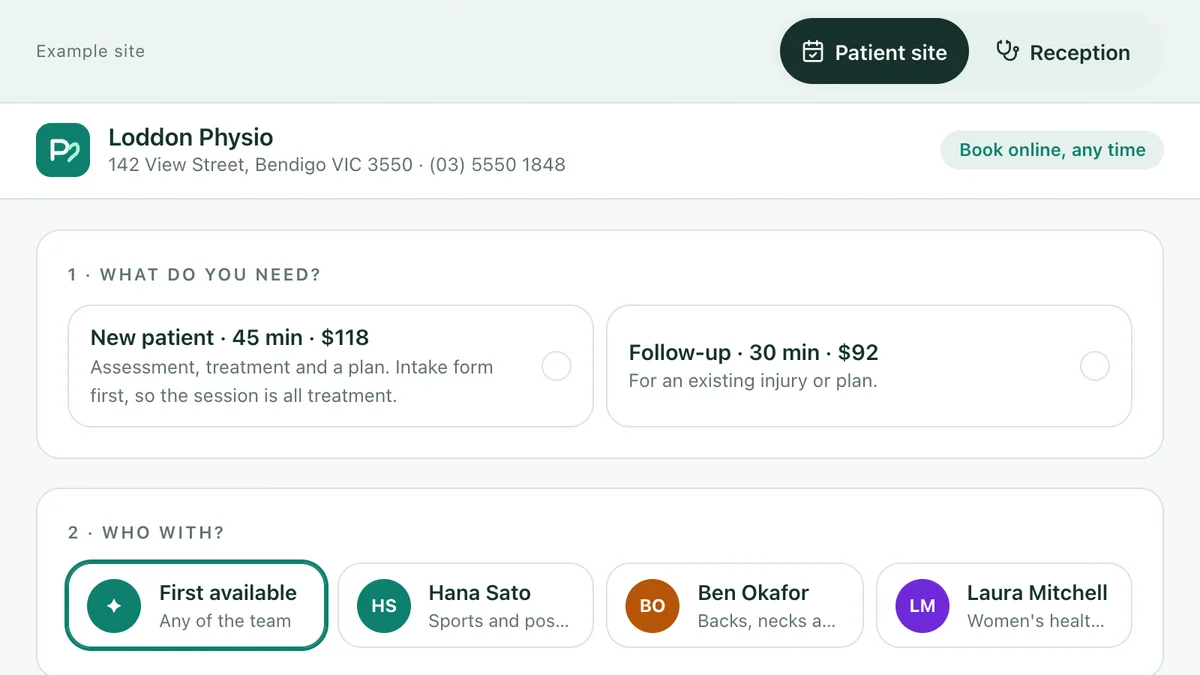
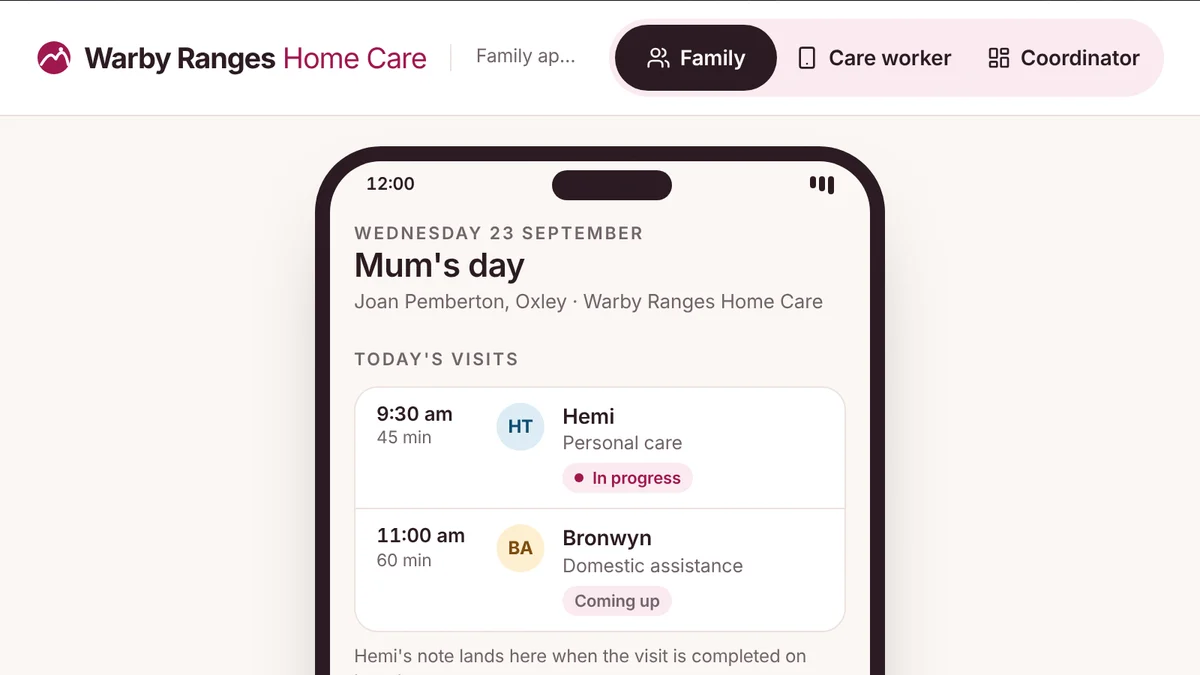
Software we'd build, running with a fictional business and sample data. Use it, then decide.
Also worth a look
- AI Scribes and AI Tools in Australian Practices
- Ahpra Advertising Rules for Practice Websites
- Online Booking for Clinics: Built-in, Marketplace or Custom
- Software for Psychology and Counselling Practices
- Holding patient records? Security reviews for code, cloud and integrations
Last reviewed . General information, not legal, clinical or compliance advice. Prices are indicative Australian ranges, not quotes.