Exercise physiologists
Exercise physiology software for referrals, classes and GP reports
Exercise physiology practices work across several funding streams: GP chronic condition referrals, DVA, NDIS, workers' compensation and private clients, often in the same week, with group classes running alongside one-to-one sessions. AEPs aren't Ahpra-registered. ESSA accreditation is what Medicare's chronic condition items name. The software question is how to keep referrals, class bookings and GP reports moving without double entry.
Rather just ask someone? Talk to usIn short
Exercise physiology practices need booking that handles group classes as well as one-to-one sessions, referral tracking across Medicare, DVA, NDIS and compensable schemes, and GP reports that go out on time. AEPs aren't Ahpra-registered but are ESSA-accredited, and that accreditation is what Medicare's chronic condition items name and what compensable schemes may require.
General information about systems and processes, current as at November 2026. It isn't legal, clinical or compliance advice: check how the rules apply to your practice with your National Board, professional body, indemnity insurer or adviser.
- What is an Accredited Exercise Physiologist?
- An Accredited Exercise Physiologist (AEP) is credentialed by Exercise & Sports Science Australia (ESSA), the self-regulating body for the profession. Exercise physiology isn't one of the 16 Ahpra-registered professions. There's no legal mandate to hold the accreditation, but ESSA says people without it may be restricted from compensable schemes, and Medicare's chronic condition items list accredited exercise physiologists.
Exercise physiology numbers worth knowing
From the MBS, DVA, the NDIS Pricing Schedule 2026-27 and NDIS legislation, as at November 2026.
- NDIS exercise physiology price limit $161.99/hour
- 2026-27 national limit, down from $166.99 in 2025-26
- Allied health services on a GPCCMP 5 a year
- Per patient per calendar year (10 for Aboriginal and Torres Strait Islander patients)
- Type 2 diabetes group services 1 + 8
- One group assessment and up to eight group sessions a year
- DVA treatment cycle 12 sessions or 1 year
- Whichever ends first; TPI Gold Card holders exempt for exercise physiology
- NDIS claim window from 1 December 2026 90 days
- Down from 2 years
- NDIS provider record keeping 7 years
- Claims and payments records, from 27 August 2026
What actually works
Classes and one-to-one sessions in one diary
Group classes need capacity limits, waitlists, recurring enrolment and attendance; one-to-one sessions need practitioner and length rules. Nookal, for one, lists classes among the clinic types it serves, so check your own system first. The chronic condition framework also funds one group assessment and up to eight group sessions a year for patients with type 2 diabetes; if you run those, each patient's count has to be tracked.
Track referrals by funder
Each funder counts differently. GP chronic condition referrals allow up to 5 MBS allied health services per patient a calendar year, in total. DVA referrals cover up to 12 sessions or one year, and TPI Gold Card holders are exempt for exercise physiology. NDIS depends on how the plan is managed. Intake should record the funder, and the system should show sessions left before each booking.
Reports back to the GP, on time
For chronic condition referrals the AEP must send the GP a written report after the first and last service, or after the only one. DVA needs an end-of-cycle report to the usual GP. A report queue can show which patients are due, with a template prefilled from the assessment data the AEP already recorded. The AEP reviews and sends every one.
NDIS price limit, registration and the 90-day window
The 2026-27 NDIS price limit for exercise physiology is $161.99 an hour, down from $166.99. Unregistered providers can serve only plan-managed and self-managed participants. Registered providers of therapy supports need a verification audit. Since 27 August 2026 providers must keep claim and payment records for 7 years, and from 1 December 2026 claims must be made within 90 days of the support, down from two years.
Compensable claims through the practice software
HICAPS Digital sends government scheme claims, including Medicare, NDIS, DVA, WorkSafe Victoria, TAC, WorkCover Queensland and icare, from practice software and reconciles the results back. Tyro Health also covers workers compensation schemes. Record the claim number and insurer at intake so the claim doesn't stall at the desk.
Advertising and privacy still apply
AEPs aren't a registered profession. Section 133 of the National Law covers advertising of a 'regulated health service', which it defines as a service provided by, or usually provided by, a health practitioner; how that applies to an EP-only practice is a question for ESSA or your adviser, not us. If your clinic also employs physios or other registered practitioners, the site advertises regulated services and the business is an advertiser, so hold the whole site to that standard. The Privacy Act covers every health service provider regardless of turnover, so intake still needs a collection notice.
Home programs in a tool built for them
Exercise programs between sessions belong in a dedicated platform. Physitrack lists integrations with Cliniko, Coreplus, Halaxy and BpAllied. A custom build is for the parts no product covers, like a class timetable on your website that books straight into your practice software where the vendor's API allows.
What to settle before building anything
These decide whether your practice software is enough or something custom is worth it.
- Which funders you bill, and what each one counts: services, sessions or hours
- Whether your practice software handles class capacity, waitlists and recurring enrolment
- Who sends GP reports, and how you know when one is due
- How NDIS participants' plans are managed, and whether you're registered
- Where home exercise programs live, and whether that tool connects to your practice software
- How claims will be lodged within 90 days of NDIS supports from 1 December 2026
Where we'd tell you otherwise
If your practice software already runs your classes, counts referrals and holds your report templates, configure it fully before building anything. We don't write clinical reports, set exercise programs or decide funding eligibility; the AEP does. We're not an NDIS registration consultant or auditor, and we can't sign off your advertising.
Tell us how your practice runs
Describe the practice software you use and where time goes: phones, intake forms, re-typing, no-shows or the website. We'll tell you what we'd do first, including when the answer is a setting in software you already pay for.
jayson@pixelapps.com.au
1300 204 802
Macedon Ranges, Victoria
Serving clients across Australia
Common questions
Exercise physiology isn't an Ahpra-registered profession. Section 133 covers advertising of a regulated health service, meaning a service provided by, or usually provided by, a health practitioner, and how that applies to an EP-only practice is a question for ESSA or your adviser. If your clinic also advertises physiotherapy or another registered service, the business is an advertiser of regulated services. Holding the whole site to Ahpra's standard is the simpler course. Check your position with a lawyer or your insurer.
Often the practice software can. Check its class features first: capacity, waitlists, recurring enrolment and attendance. Where it falls short, we build the class timetable and enrolment flow and write bookings back through the vendor's API where it allows.
A template can be prefilled from the assessment data the AEP already recorded, and a queue can show which reports are due after first and last services. The AEP reviews, edits and sends each one. If you add an AI scribe, the TGA says the health professional is responsible for getting informed consent and for checking the accuracy of what goes into the record.
Only to serve NDIA-managed participants; unregistered providers can serve plan-managed and self-managed participants. Mandatory registration expands from 1 July 2027, but therapy supports aren't named in the first tranche. Check the NDIS Commission's current position before deciding.
An EP practice website on the Small Business Plan is $950 setup, then $95/month, for businesses of 1–5 staff. Class booking, referral tracking or report queues depend on what your practice software already does and what its API allows. Custom work is quoted individually, at a fixed price agreed before anything starts. Ongoing support for custom work is a retainer from $750 per month.
See it working
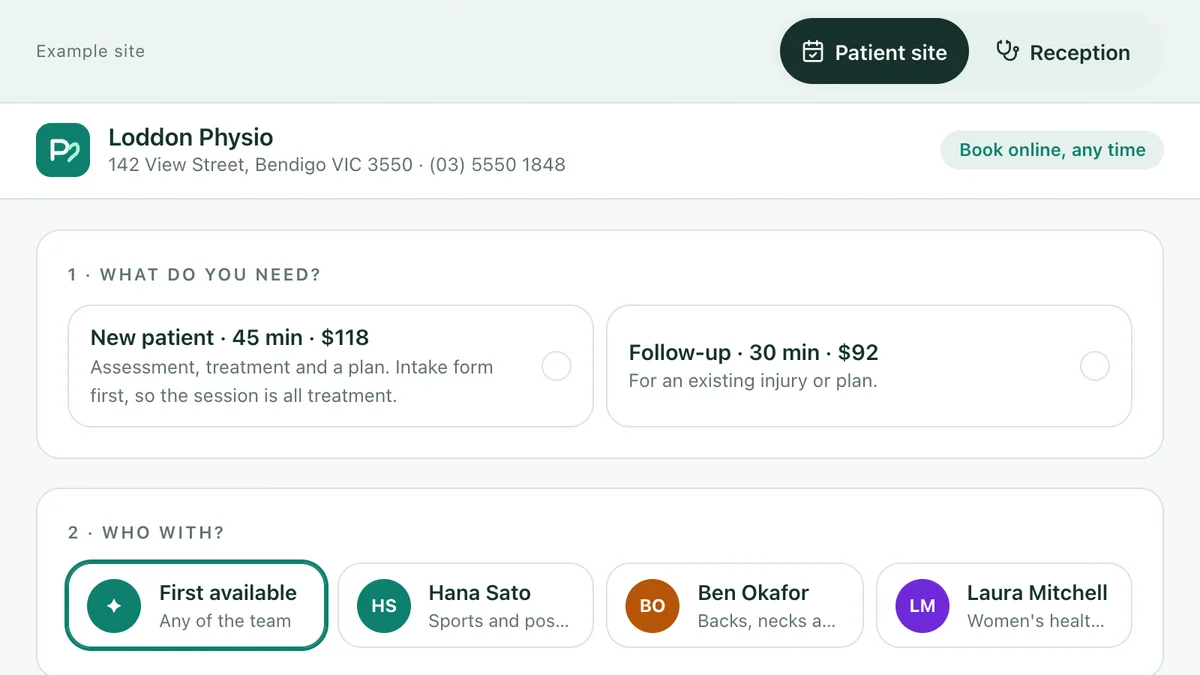
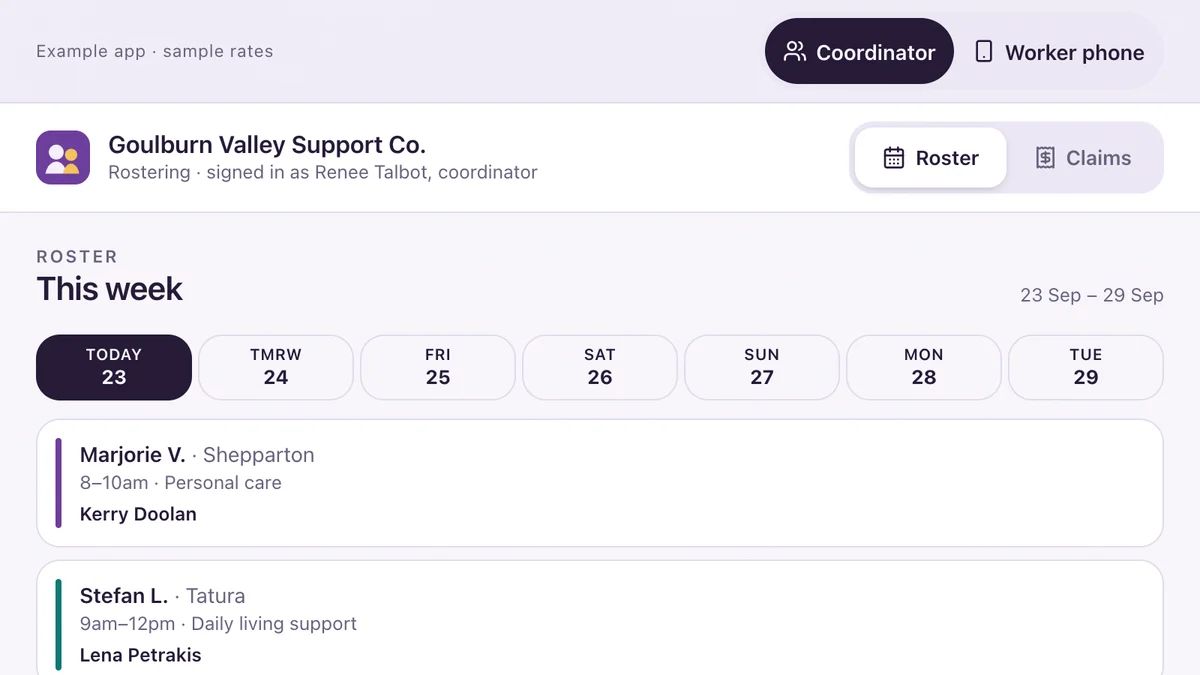
Software we'd build, running with a fictional business and sample data. Use it, then decide.
Also worth a look
- Booking, Intake and Software for Physio Clinics
- Online Booking for Clinics: Built-in, Marketplace or Custom
- Patient Privacy for Australian Health Practices
- Ahpra Advertising Rules for Practice Websites
- Holding patient records? Security reviews for code, cloud and integrations
Last reviewed . General information, not legal, clinical or compliance advice. Prices are indicative Australian ranges, not quotes.