Osteopaths
Osteopathy clinic software built around the system you already run
Osteopaths often work in small clinics, sometimes alongside physios, massage therapists or myotherapists. Practice software such as Cliniko, Nookal, Halaxy or Coreplus runs the diary. What usually needs more thought is the shared front door: one website and booking flow that send each patient to the right practitioner and appointment length, intake done before they arrive, and advertising that holds up when some of the team are Ahpra-registered and some aren't.
Rather just ask someone? Talk to usIn short
Osteopathy clinics may need a better front door more than new practice software: a website and booking flow that send patients to the right practitioner and appointment length, online intake before the first visit, and reminders for booked visits. Osteopaths are Ahpra-registered, so the site must follow the advertising rules on titles, 'Dr' and testimonials.
General information about systems and processes, current as at November 2026. It isn't legal, clinical or compliance advice: check how the rules apply to your practice with your National Board, professional body, indemnity insurer or adviser.
What actually works
One front door for a mixed clinic
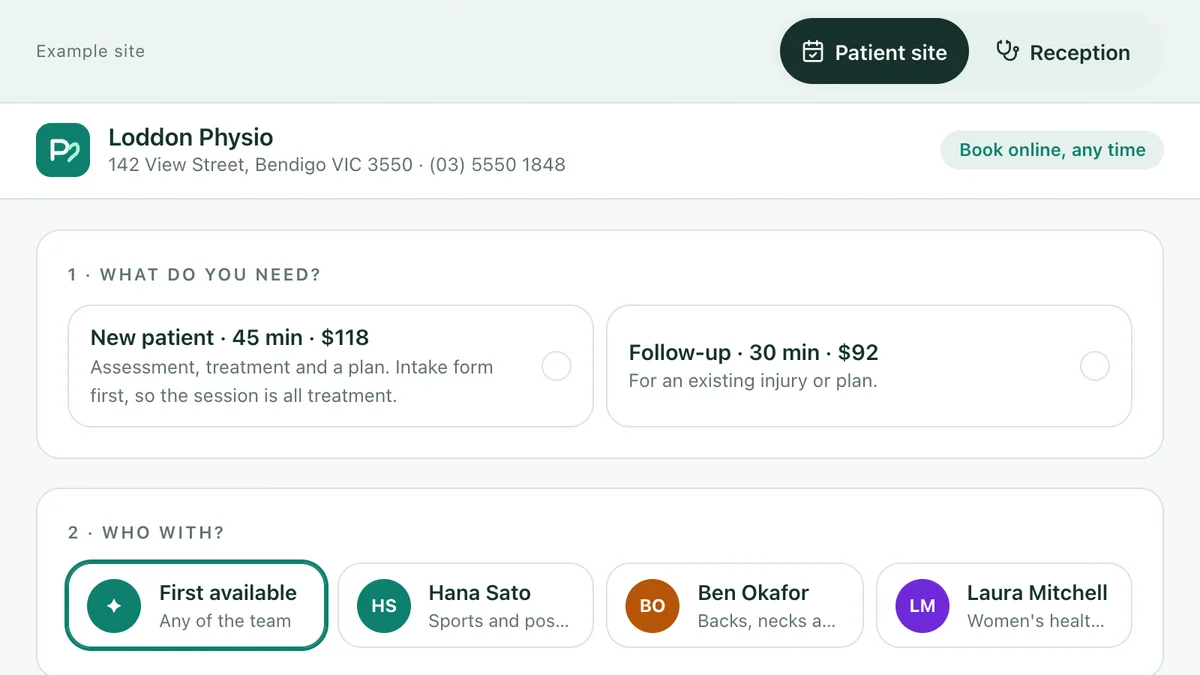
When osteos share a clinic with physios or massage therapists, patients often don't know whom to book. Booking can start from what they need, then offer the practitioner types and appointment lengths that fit, with a named practitioner or the first available. Configure your practice software's own online booking first; custom booking fits when the routing rules get complicated.
Write 'Dr' the way Ahpra asks
Ahpra's own example uses an osteopath. 'Doctor' isn't a protected title, but if you use it and you're not a registered medical practitioner, the advertising should make your profession clear: 'Dr Lee (Osteopath)', not 'Dr Lee'. That applies whether or not you hold a doctorate. 'Osteopath' itself is protected, and osteopathy has no recognised specialty, so nobody should be advertised as a 'specialist'.
The advertising rules cover the whole clinic
Ahpra counts businesses and unregistered people as advertisers, and makes whoever controls the website responsible for reviews on it. Testimonials about clinical outcomes are banned on your site and your clinic's Facebook page. Massage and myotherapy aren't Ahpra-registered, but a site that also advertises osteopathy is simpler held to one standard throughout.
Intake before the first visit
A structured online intake collects the reason for the visit, history, medications and funding (private, health fund or GP referral) once, and writes it into the patient file where the vendor's API allows. Under the Privacy Act every health service provider is covered whatever its size, and all of it is health information, appointment details included. The form needs a collection notice and should ask only what the osteo uses.
Track GP chronic condition referrals
Osteopaths are eligible providers under GP chronic condition management plans. A patient gets up to 5 MBS allied health services a calendar year in total, the plan must have been prepared or reviewed in the last 18 months, and the GP needs a written report after the first and last service. Record the referral letter and plan date at intake and count services as they're used.
Claiming and payments stay where they are
HICAPS handles health fund claims from practice software through its terminal and government scheme claims through HICAPS Digital, and lists Halaxy and Nookal among its partners. Nookal also lists direct Medicare and DVA claiming, and Cliniko connects to Tyro Health. A custom tool should pass clean data to these, not replace them.
Factual reminders from a registered sender ID
Factual reminders for booked appointments are generally not spam. Since 1 July 2026, texts from an unregistered branded sender ID show as 'Unverified', so register yours through your SMS provider. Keep promotions separate and send them only to patients who agreed; the OAIC says database-wide promotional messages generally need express consent.
Before you change your booking setup
Work through these with the practice software open; most answers decide whether you need anything custom.
- List every appointment type, its length and which practitioners offer it
- Decide whether new patients pick a practitioner or take the first available
- Check what your practice software's own online booking and intake forms can already do
- Write the intake questions each practitioner type uses, and drop the rest
- Add a collection notice to the intake and link your privacy policy
- Take clinical reviews off your website, and switch off reviews on your clinic's Facebook page
- Register your SMS sender ID so reminders don't arrive as 'Unverified'
Where we'd tell you otherwise
A sole osteopath with one appointment type may need nothing more than the practice software's own booking page and a clear website. We're not a booking marketplace, we don't give clinical or compliance advice, and we can't approve your advertising; Ahpra tells advertisers to get that advice from a lawyer or indemnity insurer.
Tell us how your practice runs
Describe the practice software you use and where time goes: phones, intake forms, re-typing, no-shows or the website. We'll tell you what we'd do first, including when the answer is a setting in software you already pay for.
jayson@pixelapps.com.au
1300 204 802
Macedon Ranges, Victoria
Serving clients across Australia
Common questions
Yes. Booking can ask what the patient needs, then offer the practitioner types and appointment lengths that fit, from the same diary in your practice software. Where the vendor's API allows, the booking writes straight into that diary, so there's no second calendar to keep in sync.
Ahpra's guidance uses exactly this case. 'Doctor' isn't protected, but unless you're a registered medical practitioner the advertising should state your profession, as in 'Dr Lee (Osteopath)'. That holds whether or not you have a doctorate or PhD.
Massage and myotherapy aren't Ahpra-registered professions. But your site advertises osteopathy, Ahpra counts businesses as advertisers, and whoever controls the site is responsible for reviews on it. Holding the whole site to one standard, especially on testimonials, is simpler than drawing a line through it. Confirm the detail with a lawyer or your indemnity insurer.
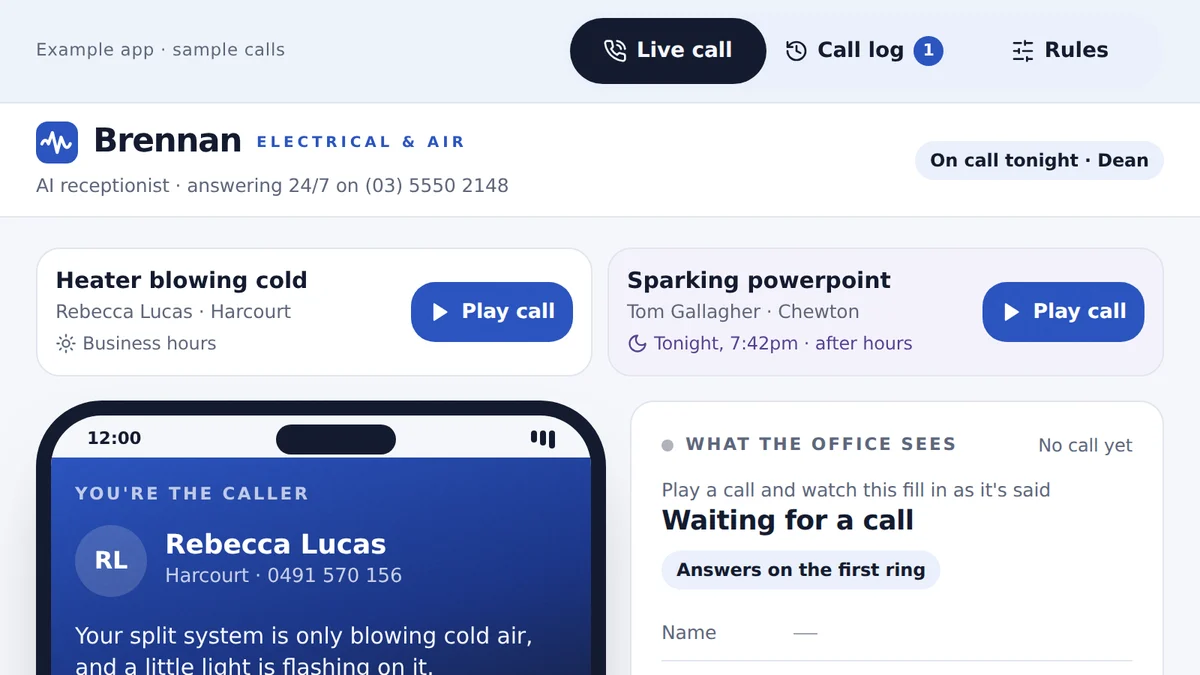
It can answer calls, take booking requests and pass on messages when you're treating. If it records calls, tell callers at the start. The OAIC says it is illegal to record a telephone consultation without informing the patient, and the same care belongs on any recorded call. It should never give clinical advice. Our AI receptionist demo was built for tradies, but the call-handling pattern transfers.
An osteopathy clinic website on the Small Business Plan is $950 setup, then $95/month, for businesses of 1–5 staff. Custom booking, intake or integrations with your practice software are scoped on a short call. Custom work is quoted individually, at a fixed price agreed before anything starts. Ongoing support for custom work is a retainer from $750 per month.
See it working
Software we'd build, running with a fictional business and sample data. Use it, then decide.
Also worth a look
- Ahpra Advertising Rules for Practice Websites
- Online Booking for Clinics: Built-in, Marketplace or Custom
- Software and Websites for Chiropractic Clinics
- Software for Remedial Massage and Myotherapy Clinics
- Holding patient records? Security reviews for code, cloud and integrations
Last reviewed . General information, not legal, clinical or compliance advice. Prices are indicative Australian ranges, not quotes.