Victorian agencies
Victoria's reserve price and Property Price Statement rules: the systems side
Since 1 October 2026, Victorian agents have had to publish a seller's reserve price at least seven days before an auction or fixed-date sale, use the new Property Price Statement, and publish the sale price after an unconditional sale. Each rule has a deadline, and missing one can stop an auction going ahead. That makes it a workflow and systems problem as much as a legal one.
Rather just ask someone? Talk to usIn short
For Victorian auctions and fixed-date sales from 16 October 2026, agents must request the reserve in writing, publish it as a single dollar figure at least seven days before, and update all advertising. The Property Price Statement replaces the Statement of Information and must show the sale price within seven days of going unconditional, staying online for 18 months.
General information about systems and processes, current as at November 2026. It isn't legal or compliance advice: check how the rules apply to your business with your regulator, professional body or adviser.
- What is the Property Price Statement?
- The document that replaced Victoria's Statement of Information on 1 October 2026. It shows the indicative selling price, the key features of the property and of each comparable sale, the suburb median, the seller's reserve price once received, and the sale price after an unconditional sale. It must sit prominently next to the price in the main online advertisement.
The deadlines
From Consumer Affairs Victoria guidance, October 2026.
- Rules commenced 1 Oct 2026
- For auctions and fixed-date sales on and from 16 October 2026.
- Reserve published 7 days before
- The full period restarts if the published reserve changes.
- Online ads updated 1 business day
- After the agent receives the seller's reserve price.
- Sale price published Within 7 days
- Of the sale becoming unconditional.
- Statement kept public 18 months
- After the sale, unless an exemption is granted.
What actually works
The seven-day clock is now the critical date
If the reserve isn't published for the full seven days, the auction or fixed-date sale can't go ahead. If the seller changes the published reserve, up or down, the seven days start again. Your CRM should show that deadline on every campaign and warn well before it.
The reserve request has a prescribed shape
Agents must ask the seller for the reserve in writing, with their proposed reserve, the reasons for it, and how the seller can respond. The seller accepts with signed confirmation, asks for another figure, or sets their own. A templated request with e-signature keeps that record tidy.
Every advertisement has to change, quickly
Once the reserve is received, online advertising must be updated within one business day, as a single dollar amount without 'from', 'over' or '+'. That means your website, the portals via your CRM's feed, and any social or print material. A single source of truth for the price matters.
Sold prices have a deadline and a long tail
The statement must be updated with the sale price within seven days of the sale going unconditional, and stay publicly available for at least 18 months, unless the Director of Consumer Affairs Victoria grants an exemption. Old listings on your website now need managing, not deleting.
Comparable properties need more detail
Each comparable sale now needs its key features, and if fewer than three can be found the agent must use the one or two available and say why. A tool that pulls comparables with features from your own sales history saves time on every appraisal.
Check your CRM before building anything
Ask your CRM vendor what it already supports for these rules, and configure that first. Custom work makes sense for the gaps: deadline dashboards across all campaigns, website listing pages that keep the statement prominent, or seller approval flows.
Systems check for a Victorian agency
Each of these is a place a deadline can slip.
- Every campaign shows its reserve-publication deadline
- Reserve requests go out from a compliant template, signed electronically
- Changing the reserve restarts the seven-day clock in the system
- The website shows the Property Price Statement next to the price
- Sold prices update the statement within seven days of going unconditional
- Past listings and statements stay online for 18 months
Where we'd tell you otherwise
Your CRM vendor is the first call for most of this, and many Victorian agencies will find their CRM handles it. Custom work is worth it when you need a view across every campaign, your website is outside the CRM, or your approval process with sellers is still on paper.
Tell us how your files move
Describe the software you run and where work gets typed twice, chased by phone or held up waiting on a client. We'll tell you what we'd do first, including when the answer is a setting in software you already pay for.
Common questions
Under Consumer Affairs Victoria's guidance, the auction or fixed-date sale cannot go ahead until the reserve has been published for the full seven days. Penalties also apply.
Yes. Any change to the published reserve, up or down, starts the seven-day period again, and the auction or fixed-date sale can't take place until the new figure has been public for a further seven days.
Prominently on the main online advertisement, which Consumer Affairs Victoria describes as visible, or linked, immediately next to the advertised price on the first visible part of the listing, not at the bottom of the page.
The updated Property Price Statement with the sale price must be publicly available on the internet for at least 18 months after the sale, unless an exemption is granted. Many agencies will meet this through the portals and their own site's sold listings.
See it working
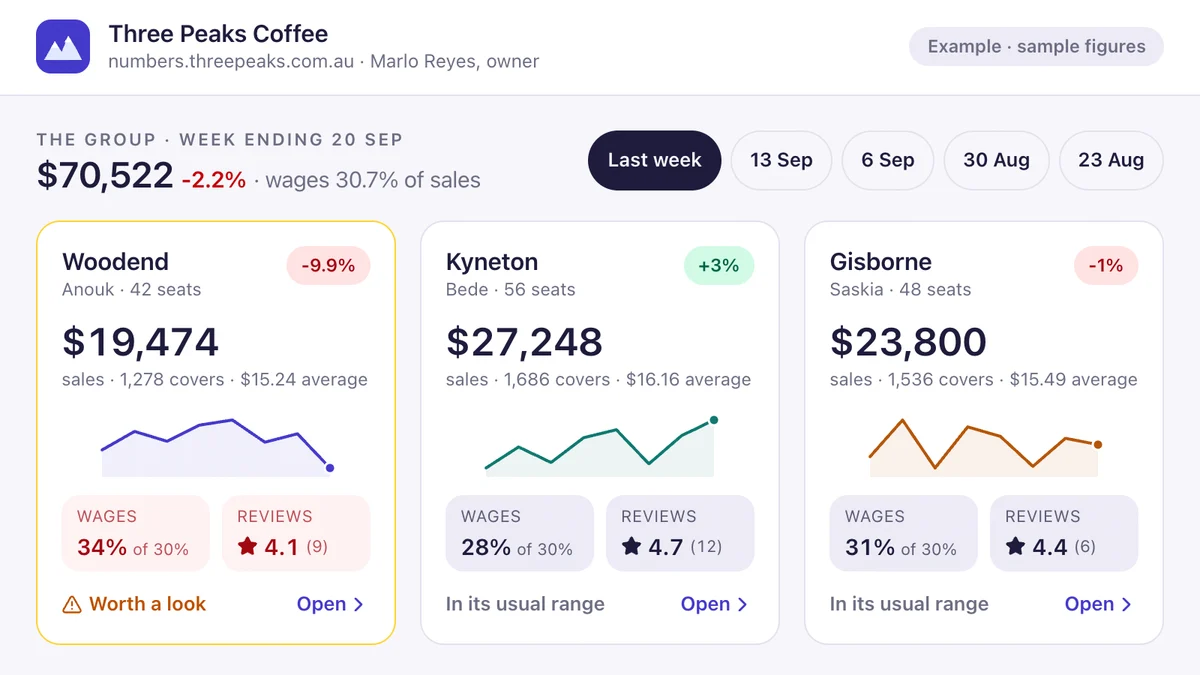
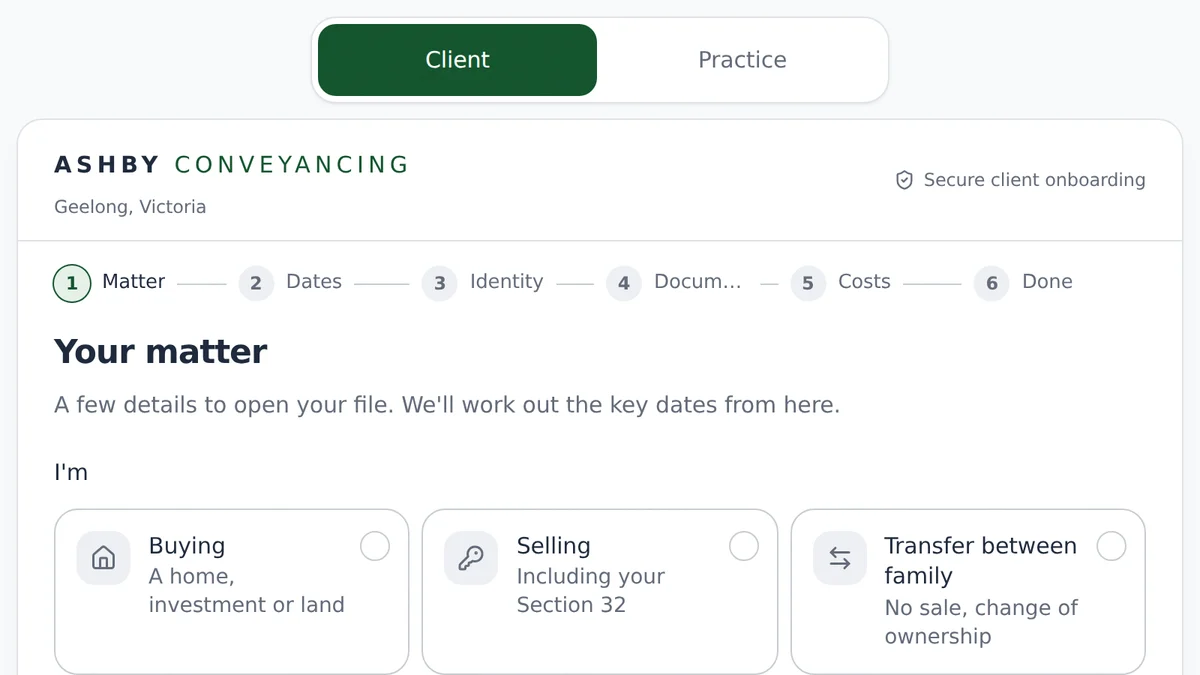
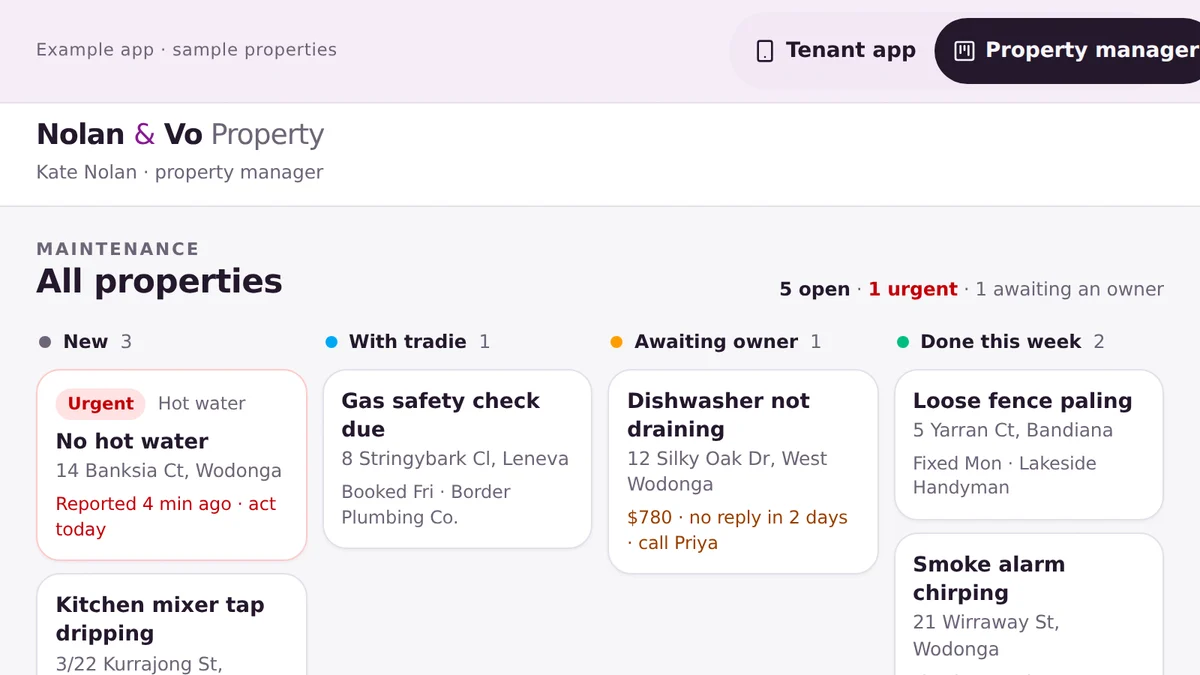
Software we'd build, running with a fictional business and sample data. Use it, then decide.
Also worth a look
- Real Estate Agency Websites That Win Listings
- AI for Real Estate Agents and Property Managers
- AML/CTF for Agents and Conveyancers: Systems
- Holding client IDs and trust money? Security reviews for code, cloud and integrations
Last reviewed . General information, not legal advice. Prices are indicative Australian ranges, not quotes.