Outgrowing your software
Is it time to build your own software?
Nobody decides to build software on a quiet Tuesday. It creeps up: another subscription, another workaround, another spreadsheet sitting beside the system because the system can't quite do it. Most businesses should keep buying software for most things. But there's a point where renting someone else's idea of your business costs more than owning your own, and the signs are easy to miss from the inside.
Rather just ask someone? Talk to usIn short
It's time to build your own software when workarounds cost your team hours every week, subscriptions grow faster than the business, a critical process lives in a spreadsheet, or the way you work is why customers choose you. If bought software does 90% of the job, keep it and connect it. Build only the part that's genuinely yours.
- What 'building your own' actually means
- Owning software made for your business: the code in your name, on hosting you control, looked after by someone you choose. It rarely means replacing everything. Usually it's one tool for the work that sets you apart, connected to the accounting, payroll and email products you keep.
Putting a number on it
A worked example with round numbers. Use your own figures; the method is the point.
- Re-keying between systems ≈ $37,500 a year
- Three staff, an hour a day each, 250 working days, at $50 an hour including super and on-costs.
- Per-seat subscriptions ≈ $68,600 over five years
- Fifteen users at $60 each a month is $10,800 in year one. With 12% annual rises, the five-year total is about $68,600, before add-ons.
- A focused internal tool $8,000 – $40,000
- A fixed price for the tool that removes the re-keying. It usually replaces some subscriptions, not all of them.
- Owning it from $750 per month
- Hosting, updates, security patching, monitoring and an agreed block of development time each month.
The signs it's time
The same information gets typed twice
Every re-key costs time and invites errors. Three people each losing an hour a day to copying between systems is about 750 hours a year, roughly $37,500 at $50 an hour all-in. A focused custom tool that removes the copying often costs less than one year of that.
Subscriptions grow faster than the business
Per-user pricing means every hire adds a licence in every tool, for as long as you use it, and prices keep moving. Vertice, which tracks software pricing, measured SaaS price inflation of roughly 12% to 16% a year through 2026. Software you own still costs hosting and care, but no per-seat fee and no price rise you didn't agree to.
A spreadsheet runs the important part
If the real record of jobs, stock or compliance lives in a spreadsheet beside the software, the software isn't doing the job. That spreadsheet is also the best specification you'll ever have: its columns are the data, its formulas the rules.
You've bent the business to fit the tool
When staff say 'the system won't let us', and customers feel it in slower quotes or clumsier bookings, the software is shaping the business instead of the other way round. That costs most where your process is the reason people choose you.
Five products are doing one job
A booking tool, a form builder, a CRM, a quoting add-on and a spreadsheet gluing them together is already a custom system, just an expensive and fragile one. One tool built for the job can replace several subscriptions and all of the glue.
The vendor decides your roadmap
Features move up a pricing tier, products get bought and retired, and the one change you need sits on someone else's wish list for years. If losing a product would stop the business, check how easily you could get your data out. 'Not easily' is a risk you're already carrying.
You need to own the data and the rules
Some work needs an audit trail, data kept in Australia, or rules a regulator or client will check. When a product can't meet those requirements, or only meets them on an enterprise plan, owning the system can be the cheaper way to comply.
Building got cheaper. Owning didn't.
AI-assisted development has cut the time and cost of the first version of a well-scoped tool, which changes the sums for businesses that ruled custom out a few years ago. It hasn't changed the rest: getting the data model right, security, and someone looking after it for five years. Budget for ownership, not just the build.
Signs it isn't time yet
If any of these is true, buy, connect or wait a year.
- You haven't trialled the two or three leading products for your industry
- The problem is training or process, not the software
- The gap is a preference, not a cost you can measure
- It's payroll, tax or accounting, where the big products keep up with the law for you
- Connecting the tools you already have would close the gap
- Nobody in the business will own the software after launch
- You can't yet describe the process on one page
Where we'd tell you otherwise
Most of the time the honest answer is 'not yet'. If a mainstream product does most of what you need, keep it, connect it to your other tools and look again in a year. We'd rather say that on a first call than sell a build that never pays for itself. When it is time, start with one tool for one process, not a replacement for everything.
Tell us what's getting in the way
Describe the systems you run and what isn't working. We'll tell you what we'd do first, including when the answer is a product you can buy or a setting you can change.
jayson@pixelapps.com.au
1300 204 802
Macedon Ranges, Victoria
Serving clients across Australia
Common questions
Look for costs you can measure: hours spent re-keying or reconciling, subscriptions that grow with every hire, a critical process running in a spreadsheet, or customers noticing that your systems slow you down. If the yearly cost of the problem is larger than the price of a focused tool, it's worth a proper look.
Sometimes, over five years. Subscriptions are cheap to start and grow with users and price rises; owned software costs more up front, then hosting and maintenance with no per-seat fee. Compare five-year totals, including the staff time each option costs, before deciding.
Not owning it properly, and nobody looking after it. Make sure the code, hosting and accounts are in the business's name, the documentation would let another developer take over, and someone is responsible for keeping it updated and secure.
For the first version of a well-scoped tool, yes. It hasn't made the thinking, the data model, the security or five years of upkeep much cheaper, and AI-written code still needs an experienced developer reviewing it. Be wary of a quote that only got cheaper because those parts were left out.
Almost never. Start with the process that costs the most, build one tool for it, connect it to the products you're keeping, and run old and new side by side until the numbers match. Then decide on the next piece with real evidence.
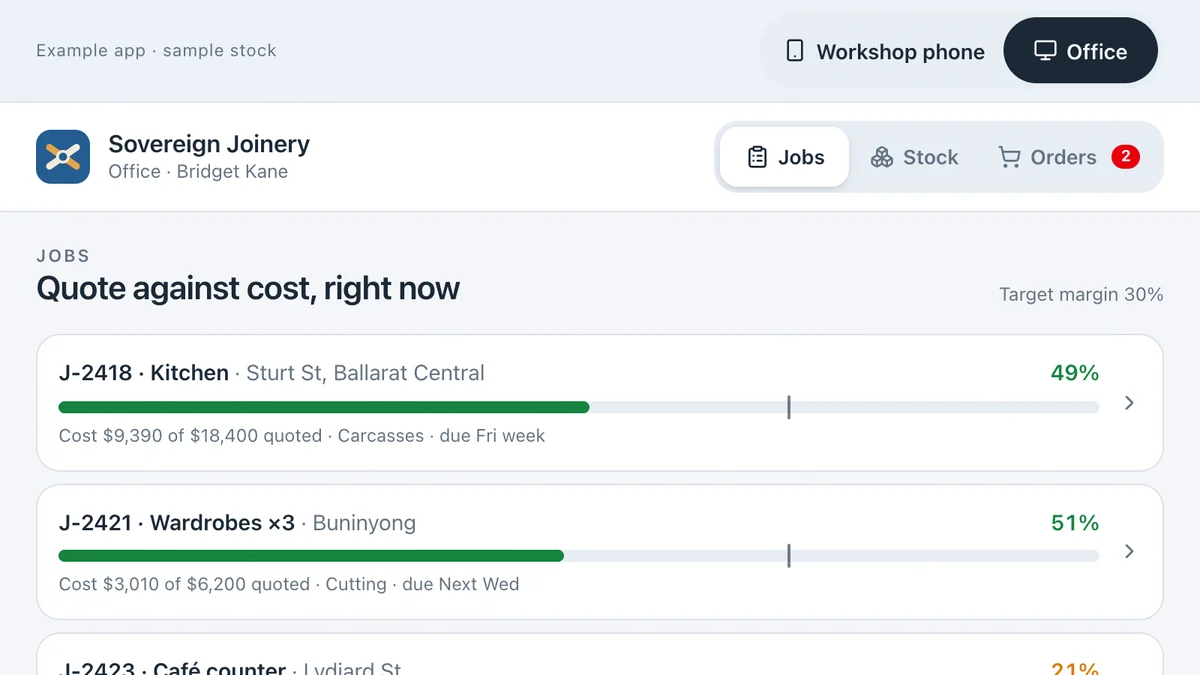
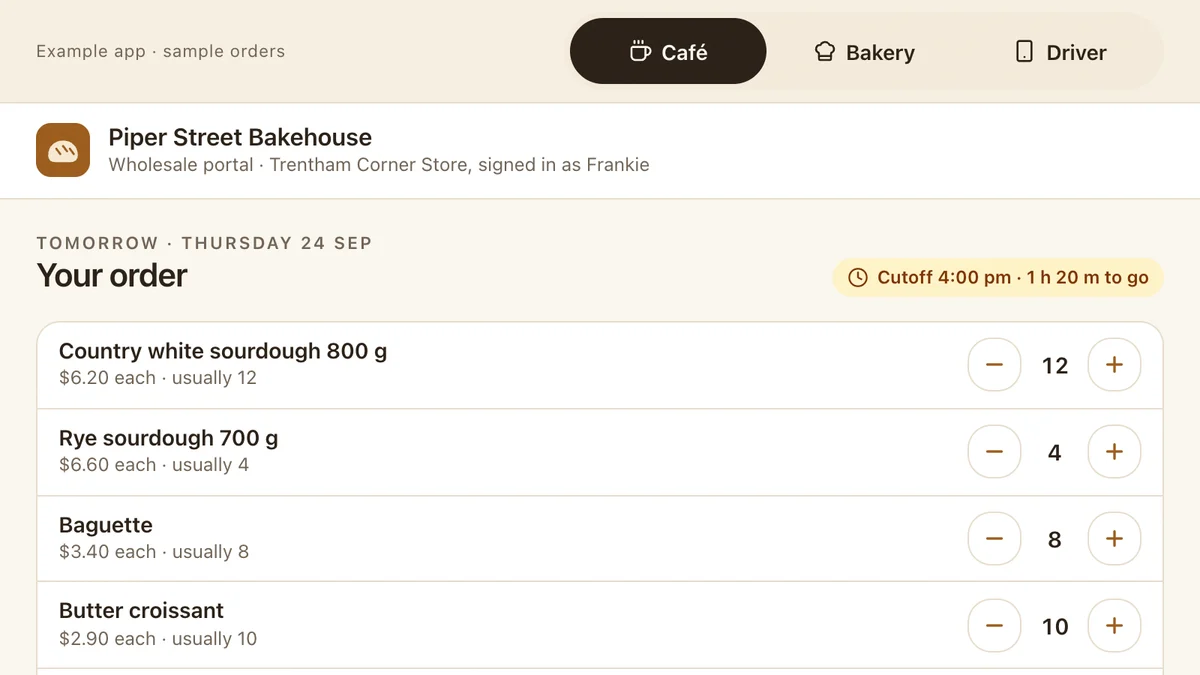
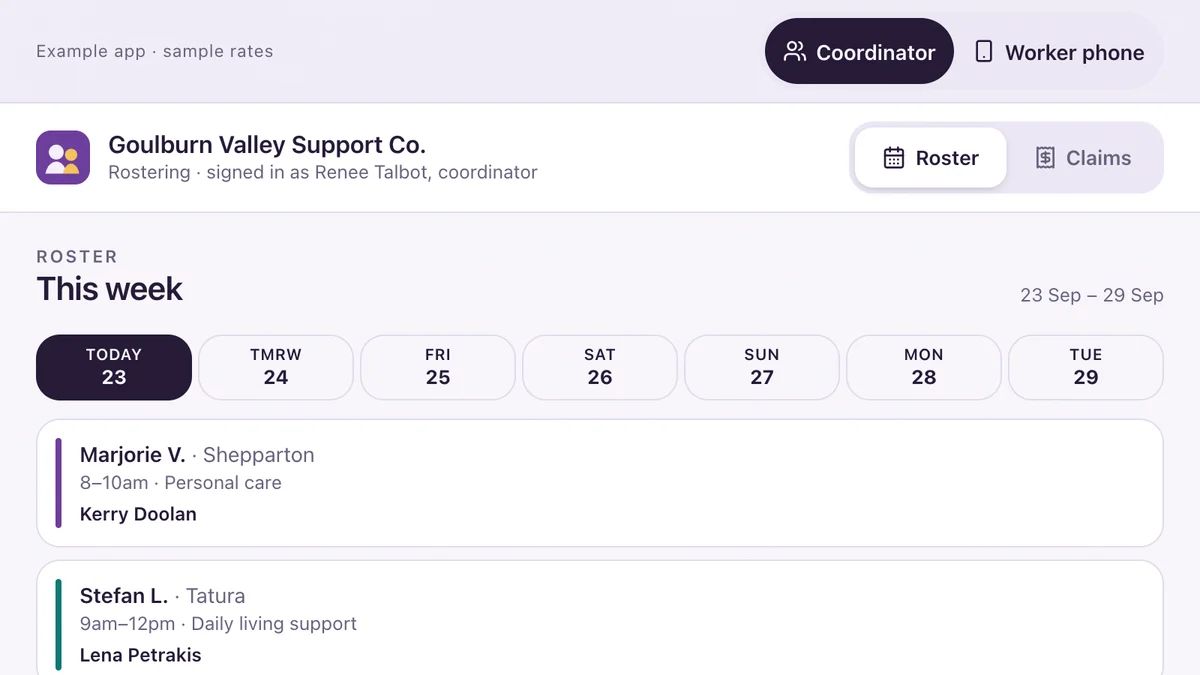
See it working
Software we'd build, running with a fictional business and sample data. Use it, then decide.
Also worth a look
- Custom Software vs Off-the-Shelf: Build or Buy?
- When to Stop Running a Business on Spreadsheets
- Too Many Apps? Simplify Your Business Software
- Thinking of leaving HubSpot, Zapier, Airtable or another platform?
- Ready to automate the repetitive work? AI for your business
Last reviewed . Prices are indicative Australian ranges, not quotes.