Occupational therapists
OT admin built around NDIS plans, home visits and reports
An OT practice with a large NDIS caseload spends much of its week on work that isn't therapy. It checks how each participant's plan is managed, drives between homes and schools, claims against the right line items, and turns session notes into reports. Practice software such as Splose, Coreplus or Zanda holds the diary, notes and invoicing. The gaps between it and the rest of the week are where a custom build fits, and from 1 December 2026 the time to claim shrinks to 90 days.
Rather just ask someone? Talk to usIn short
An OT practice on Splose, Coreplus or Zanda has its diary and invoicing covered; the gaps are elsewhere. For NDIS work that means intake recording how each participant's plan is managed, visit scheduling that accounts for travel, report drafts built from structured notes, and claims made promptly: from 1 December 2026, NDIS claims must be made within 90 days of the support, down from 2 years.
General information about systems and processes, current as at November 2026. It isn't legal, clinical or compliance advice: check how the rules apply to your practice with your National Board, professional body, indemnity insurer or adviser.
- Registered or unregistered: what's the difference for an OT?
- Therapy sits in NDIS registration group 0128, Therapeutic supports. You must be registered to deliver it to NDIA-managed participants; plan-managed and self-managed participants can use an unregistered OT. Registered therapy providers meet the verification module of the NDIS Practice Standards and have a verification audit. If you register for early childhood supports (group 0118), that needs a certification audit and the early childhood module.
NDIS figures for OT practices
From the NDIS Pricing Schedule 2026-27, the NDIS Commission and health.gov.au, as at November 2026.
- OT price limit $193.99/hour
- Unchanged from 2025-26. Remote +40%, very remote +50%. Applies to NDIA-managed and plan-managed funding.
- OT provider travel $97.00/hour
- Claimed under its own line items, at 50% of the hourly rate.
- Time to claim 90 days
- From 1 December 2026, down from 2 years.
- Provider record keeping 7 years
- For NDIS claims and payments, since 27 August 2026.
- Provider enrolment with the NDIA From 1 July 2027
- Needed to be paid; separate from registration. All in-scope providers enrolled by December 2027.
What actually works
Record plan management at intake
Whether a participant is NDIA-managed, plan-managed or self-managed decides whether an unregistered practice can take them at all, and whether price limits apply. Self-managed participants aren't bound by the limits; plan managers must keep to them whether you're registered or not. Intake should capture the management type, plan manager details and plan dates, and stop a booking your registration status doesn't allow.
Claim inside 90 days
Under the Securing the NDIS for Future Generations Act 2026, the time to claim for a support drops from 2 years to 90 days from 1 December 2026. A daily list of sessions delivered but not yet claimed or invoiced, sorted by days remaining, puts that window in front of staff. Since 27 August 2026 providers must also keep claim and payment records for 7 years, so the list should link to the note and the invoice.
Price against the 2026-27 schedule
The NDIA published the 2026-27 price limits as guidance effective 1 July 2026. On 24 September 2026 the Minister set the same prices by determination, and the NDIS Pricing Schedule 2026-27 replaced the old Pricing Arrangements and Price Limits as the legal source of maximum prices. The OT limit is $193.99 an hour, unchanged, with +40% for remote and +50% for very remote. Provider travel is claimed under its own line items at 50% of the hourly rate: $97.00 for OT. Keep those line items current in your practice software rather than in someone's head.
Schedule home and school visits as a route
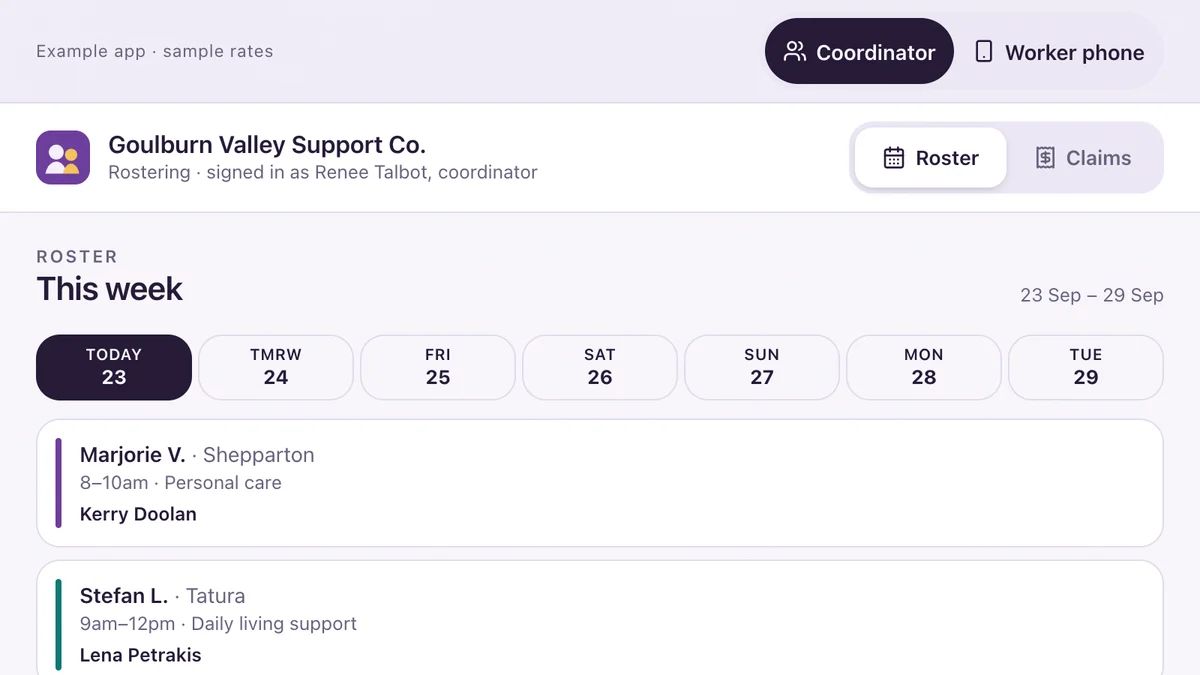
Visits spread across homes, schools and the clinic are hard to run if they're booked in the order the calls come in. A scheduler that groups visits by area, allows real travel time, records travel against the right line item, and holds access notes and school contacts with permission turns a diary into a run sheet. Our NDIS rostering demo shows the pattern.
Draft reports from structured notes, then review them
Session notes taken in consistent fields can fill a report template so the OT edits rather than starts from blank. The TGA says drafting documentation and formatting information into fields for a clinician to review isn't a medical device function, provided no new clinical content is added. Ahpra says the practitioner stays accountable for what the record says. So the draft holds only what the OT recorded, and the OT signs it off.
Medicare referrals still need a report back
OTs are eligible providers under GP chronic condition management plans: up to 5 allied health services a calendar year, each needing a referral letter, with a written report to the GP after the first and last service. The same structured notes can draft that letter, ready for the OT to check and send.
Advertise as a registered profession
Occupational therapy is Ahpra-registered and 'occupational therapist' is a protected title, so Ahpra's advertising rules apply to your website and social media: no clinical testimonials, offers that state their terms, and no 'specialist' wording, which only medical, dental and podiatric surgery titles carry. Separately, a ban on NDIS providers offering kickbacks and inducements is scheduled from 27 November 2026, so check any referral offer before it goes out.
Before you take on an NDIS participant
Collect these once, at intake, rather than by email after the first session.
- How the plan is managed: NDIA-managed, plan-managed or self-managed
- If NDIA-managed, that you're registered for group 0128 (or 0118 for early childhood)
- Plan manager name and invoicing address, where there is one
- Plan start and end dates
- Who can consent and who receives reports: participant, nominee or parent
- Visit locations with access notes, and school contacts with permission
- A claim-by date for every session, 90 days from delivery from 1 December 2026
Where we'd tell you otherwise
If your practice software already handles your NDIS invoicing and claiming well, configure it fully before anything custom. We're not a plan manager or a registration consultant, we don't prepare you for audit, and we don't write clinical recommendations. A report tool we build drafts from what the OT recorded, and the OT signs it off.
Tell us how your practice runs
Describe the practice software you use and where time goes: phones, intake forms, re-typing, no-shows or the website. We'll tell you what we'd do first, including when the answer is a setting in software you already pay for.
jayson@pixelapps.com.au
1300 204 802
Macedon Ranges, Victoria
Serving clients across Australia
Common questions
No. We build around them and connect where the vendor allows. Splose includes a REST API on its Platform plan, with keys issued to the account owner after approval. Coreplus has an API for server-to-server add-ons that its integrations team reviews before production. Zanda's public API was still in closed beta in November 2026.
Yes. From 1 December 2026, participants and providers have 90 days after a support is delivered to make a claim, down from 2 years. If you invoice a plan manager or a self-managed participant, a late invoice leaves them less of that window. What helps is a list of unclaimed sessions with a date on each.
Only to deliver therapy to NDIA-managed participants; plan-managed and self-managed participants can use unregistered providers. Mandatory registration is due to expand from 1 July 2027, starting with daily personal activities (groups 0104 and 0107), and therapy (0128) isn't named in that first tranche. Separately, most providers must enrol with the NDIA from 1 July 2027 to be paid.
It can draft from your notes. The TGA says drafting documentation for clinician review isn't a device function as long as it adds no new clinical content, and Ahpra says the practitioner stays accountable for the record. If notes come from a recorded session, you need informed consent first. A drafting tool we build would stick to what the OT recorded.
It depends on your practice software and how much of intake, scheduling, claiming and reporting is in scope, so we quote after a short call. Custom work is quoted individually, at a fixed price agreed before anything starts. A sole OT's website on the Small Business Plan is $950 setup, then $95/month; ongoing support for custom work is a retainer from $750 per month.
See it working
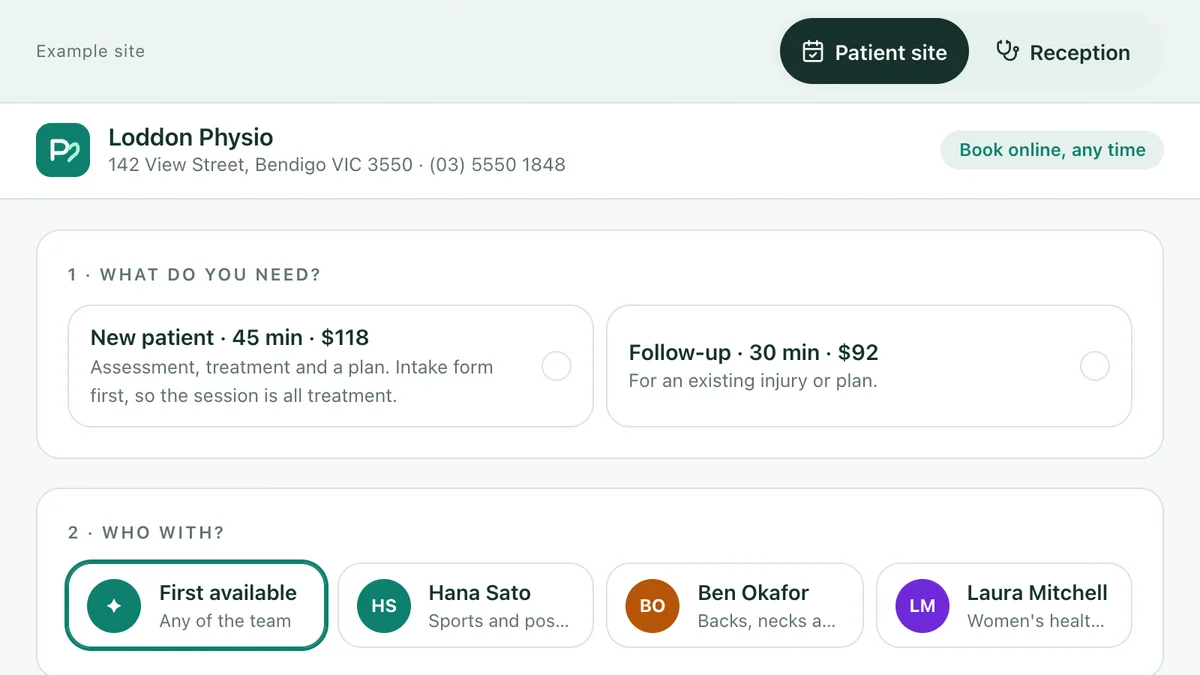
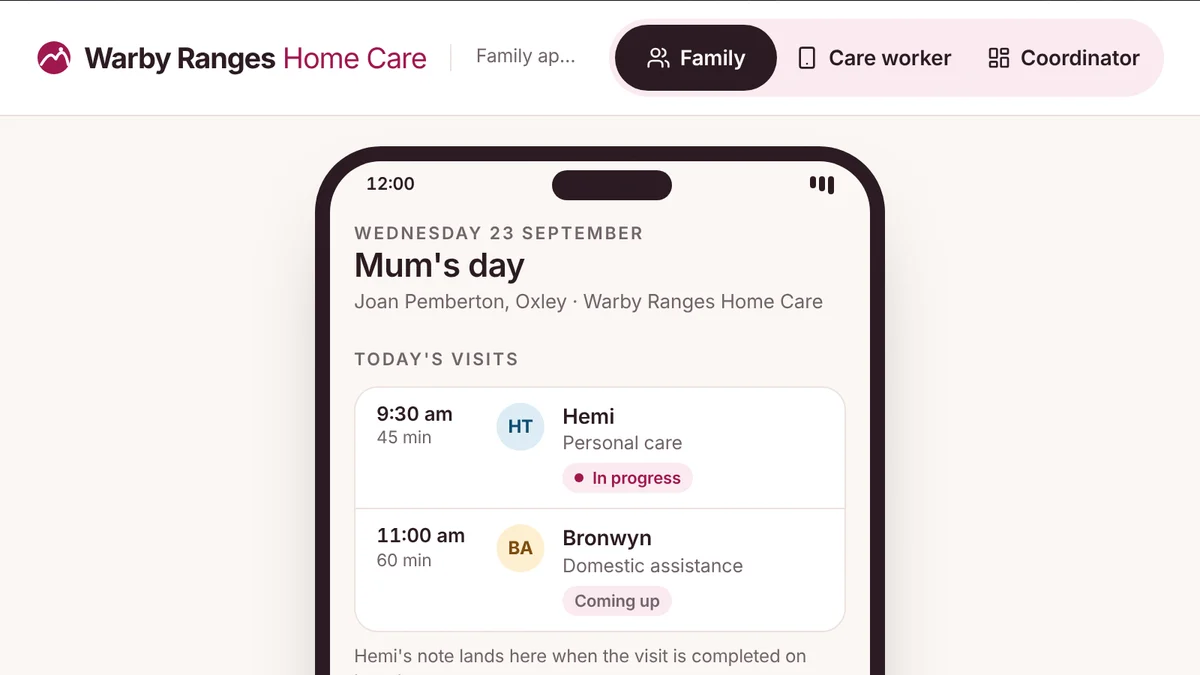
Software we'd build, running with a fictional business and sample data. Use it, then decide.
Also worth a look
- AI Scribes and AI Tools in Australian Practices
- Patient Privacy for Australian Health Practices
- Ahpra Advertising Rules for Practice Websites
- Software for Speech Pathology Practices
- Holding patient records? Security reviews for code, cloud and integrations
Last reviewed . General information, not legal, clinical or compliance advice. Prices are indicative Australian ranges, not quotes.