Speech pathologists
A waitlist families can see, and intake that records NDIS funding
A paediatric speech practice has a second client in nearly every booking: the parent. Sessions happen in the clinic, at school and over video, and many practices hold a waitlist of families who call to ask where they're up to. Splose, Coreplus, Zanda and Cliniko run the calendar and the invoicing. The waitlist, the parent messages and the NDIS paperwork around them are where the admin sits.
Rather just ask someone? Talk to usIn short
Around Splose, Coreplus, Zanda or Cliniko, a speech pathology practice can add a waitlist families can see moving, intake that captures funding and school details, secure parent updates and home practice, and a way to make NDIS claims within 90 days from 1 December 2026. Speech pathology isn't Ahpra-registered; CPSP is Speech Pathology Australia's voluntary credential.
General information about systems and processes, current as at November 2026. It isn't legal, clinical or compliance advice: check how the rules apply to your practice with your National Board, professional body, indemnity insurer or adviser.
- What is a CPSP?
- Certified Practising Speech Pathologist is Speech Pathology Australia's voluntary credential. Speech pathology isn't one of the 16 professions regulated through Ahpra, and 'speech pathologist' isn't a protected title. SPA is a full member of the National Alliance of Self Regulating Health Professions, and says some funding schemes, such as Medicare and private health insurance, indirectly require CPSP status.
Figures a speech pathology practice works to
From the NDIS Pricing Schedule 2026-27, health.gov.au and the MBS explanatory notes, as at November 2026.
- NDIS speech pathology price limit $193.99/hour
- Unchanged from 2025-26. Remote +40%, very remote +50%. Applies to NDIA-managed and plan-managed funding.
- Speech pathology provider travel $97.00/hour
- Claimed under its own line items, at 50% of the hourly rate.
- NDIS time to claim 90 days
- From 1 December 2026, down from 2 years.
- Thriving Kids starts 1 January 2028
- For children 8 and under with developmental delay and/or autism and low to moderate support needs, instead of the NDIS.
- Medicare allied health services under a GP plan Up to 5 a year
- 10 for Aboriginal and Torres Strait Islander patients. Counted from 1 January.
What actually works
Run the waitlist where families can see it
One list that records the child's age, reason for referral, available times (school hours or after school), funding and preferred setting (clinic, school or telehealth) lets you fill a cancellation with the right child quickly. A short automatic update on where each family stands answers the question families otherwise ring to ask.
Intake for two people
Each booking involves a child and at least one adult. Intake should record who can consent and who receives reports, plus the school and teacher contacts you have permission to use. The OAIC's elements of valid consent include capacity, so the form should be clear about who is consenting for whom.
Sessions in three places
Clinic, school and video sessions need different booking types: travel buffers for school visits, grouped by area; a video link sent to the parent's confirmed contact for telehealth. For NDIS participants, provider travel is claimed under its own line items at 50% of the hourly rate, $97.00 for speech pathology, so the visit should record the travel it took.
Parent updates and home practice in one place
A simple parent portal, or a secure link per session, holds the practice activities and a short session summary the therapist has approved, instead of attachments scattered across email threads. Appointment reminders stay plain: the ACMA says a promotion or promotional link can turn a reminder into a commercial message.
NDIS: plan management decides who you can see
Unregistered providers can serve only plan-managed and self-managed participants. If you register for early childhood supports (group 0118), that needs a certification audit and the early childhood module. The speech pathology limit in the NDIS Pricing Schedule 2026-27 is $193.99 an hour, and from 1 December 2026 claims must be made within 90 days. From 1 January 2028, children aged 8 and under with developmental delay and/or autism and low to moderate support needs move to Thriving Kids instead of the NDIS. Record funding for every child now so you can see how much of your caseload that touches.
Medicare: CPSP and the GP plan
Certified practising speech pathologists are eligible providers under GP chronic condition management plans: up to 5 allied health services a calendar year, each with a referral letter, and a written report to the GP after the first and last service. Secure messaging needs HI Service registration. Speech pathologists aren't Ahpra-registered, so you get your HPI-I through HPOS or an eligible professional body.
Say what you are, plainly
Because 'speech pathologist' isn't a protected title, CPSP status is what tells a family you meet a professional standard, and SPA says Medicare and private health insurance indirectly require it. Show it on every practitioner's profile. Speech pathology isn't one of the 16 professions regulated through Ahpra. Section 133 of the National Law is about advertising a 'regulated health service', which it defines as a service provided by, or usually provided by, a health practitioner. How that applies to a speech-only practice is a question for Speech Pathology Australia or your adviser, not us. If your practice also employs OTs, psychologists or physiotherapists, advertising for the business covers their regulated services, and those rules apply.
Where we'd tell you otherwise
If your practice software's waitlist, client portal and SMS already do the job, use them; it's one less system. We don't manage NDIS registration or audits, we aren't a booking marketplace, and we don't build tools that assess a child or recommend therapy. For CPSP and professional standards, Speech Pathology Australia is the authority, not us.
Tell us how your practice runs
Describe the practice software you use and where time goes: phones, intake forms, re-typing, no-shows or the website. We'll tell you what we'd do first, including when the answer is a setting in software you already pay for.
jayson@pixelapps.com.au
1300 204 802
Macedon Ranges, Victoria
Serving clients across Australia
Common questions
No. We build around the system you run and connect where the vendor allows. Cliniko has a public REST API, Splose includes one on its Platform plan with keys issued to the account owner after approval, Coreplus reviews add-ons before production, and Zanda's public API was still in closed beta in November 2026.
Speech pathology isn't one of the 16 professions regulated through Ahpra. Section 133 of the National Law covers advertising of a 'regulated health service', defined as a service provided by, or usually provided by, a health practitioner. We can't tell you a speech-only practice is outside it; ask SPA or your adviser. If your practice also employs registered professionals such as OTs or psychologists, advertising for the business covers their services and the rules apply to it. We don't give compliance sign-off; Ahpra suggests a legal adviser or your indemnity insurer.
Automate the updates that repeat: waitlist position, appointment reminders, and a link to home practice after each session. The therapist approves a short summary and the system sends it. Keep reminders free of promotions so they stay factual messages, and record at intake which parent receives what.
From 1 January 2028, children aged 8 and under with developmental delay and/or autism and low to moderate support needs will move to Thriving Kids instead of the NDIS. The provider detail wasn't in the government material we checked. The practical step now is recording each child's funding source, so you can see how much of your caseload it affects.
It depends on your practice software and whether you want a waitlist, parent portal or claiming tools, so we quote after a short call. Custom work is quoted individually, at a fixed price agreed before anything starts. A small practice's website on the Small Business Plan is $950 setup, then $95/month; ongoing support for custom work is a retainer from $750 per month.
See it working
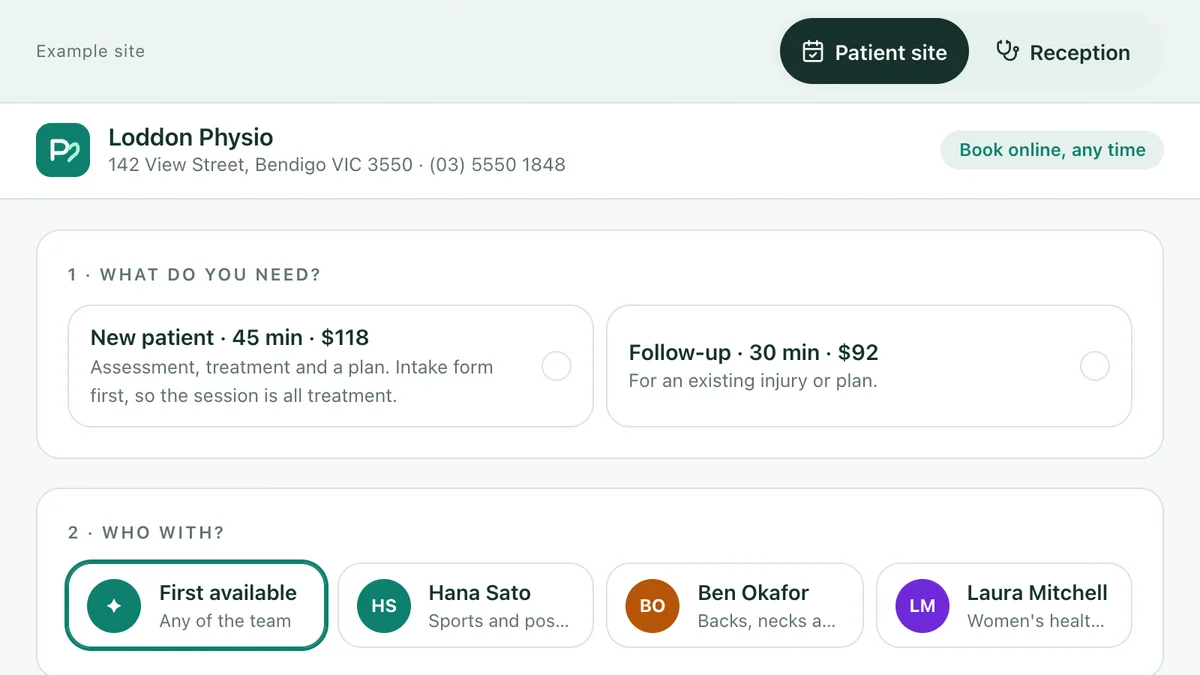
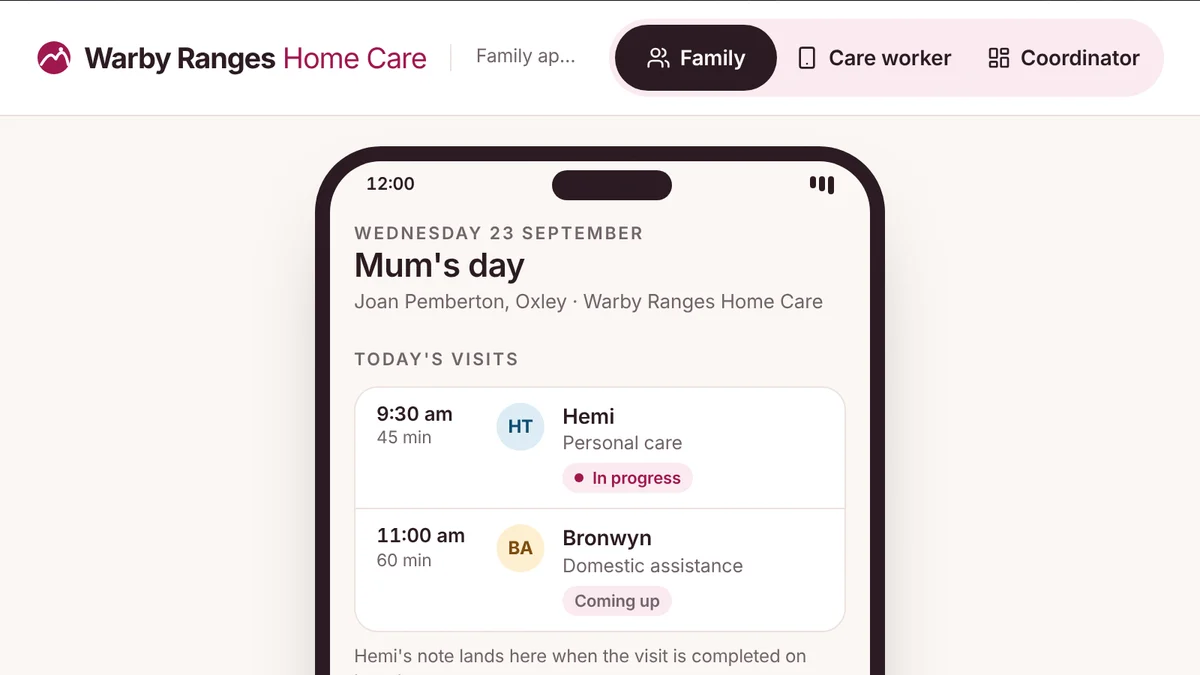
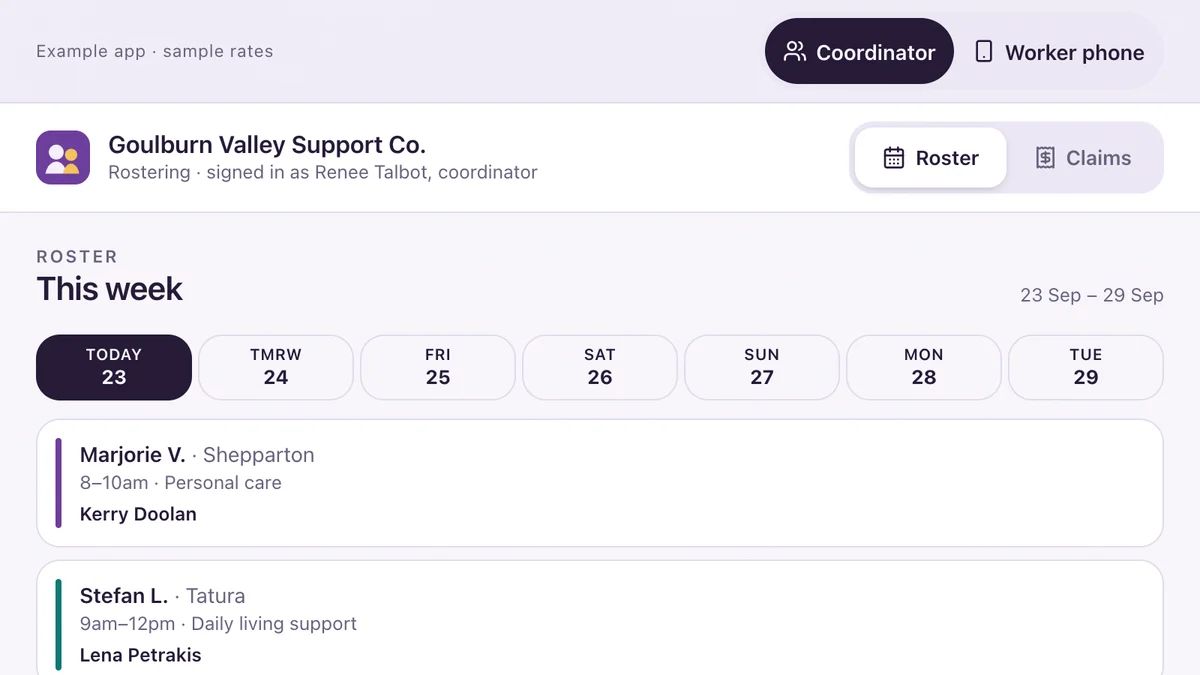
Software we'd build, running with a fictional business and sample data. Use it, then decide.
Also worth a look
- Online Booking for Clinics: Built-in, Marketplace or Custom
- Patient Privacy for Australian Health Practices
- Websites for Health Practices in Australia
- Software for Occupational Therapy Practices
- Holding patient records? Security reviews for code, cloud and integrations
Last reviewed . General information, not legal, clinical or compliance advice. Prices are indicative Australian ranges, not quotes.