Leaving Airtable
Is it time to move off Airtable?
Airtable is often the best thing that ever happened to a growing business's spreadsheet: shared, structured and easy to change. The trouble starts when it quietly becomes the system the business runs on, with dozens of editors, tens of thousands of records and customer data that needs proper permissions. It wasn't designed for that, and the bill and the workarounds say so.
Rather just ask someone? Talk to usIn short
Move off Airtable when per-seat costs outgrow its value, bases near their record limit, staff or customers need record-level permissions, or the five-requests-a-second API limit throttles your integrations. If you only need more records or API calls, the Business plan may be enough. Otherwise move to a proper database with an app built on it.
- What Airtable is, and isn't
- Airtable is a spreadsheet-like database with forms, views, interfaces and automations on top. It's excellent for shared records whose shape changes often. It isn't built to be a customer-facing application or a system with fine-grained permissions, and each plan limits a base's records, automation runs and API traffic.
Airtable's limits, by plan
Airtable's published limits, checked November 2026. Prices in US dollars per seat per month, billed annually.
- Team US$20 a seat
- 50,000 records and 20 GB of attachments per base, 25,000 automation runs a month, and a monthly API call cap before throttling.
- Business US$45 a seat
- 125,000 records and 100 GB of attachments per base, 100,000 automation runs a month, and no monthly API cap.
- Every plan 5 requests a second
- The API limit per base. Go over it and requests are refused for 30 seconds.
- Data held in Australia Enterprise only
- Available on Enterprise Scale, and some account and base metadata still stays in the US.
Signs it's time to go
You're paying editor prices for people who mostly look
Airtable charges per seat. When most seats belong to people who check a record and move on, you're paying database prices for a viewing job. At the Team plan's US$20 a seat a month, billed annually, 25 editors is US$6,000 a year before anything else.
A base is heading for its record limit
Team bases hold 50,000 records and Business bases 125,000. Bases slow well before the cap, especially with linked records, lookups and rollups. If you're archiving data to stay under the limit, the tool is shaping the business.
Staff or customers must see only their own records
Airtable sets permissions by base, table and field, and filters what each person sees in an interface, but it has no true record-level permissions inside a base. For a client portal, or staff who mustn't see each other's records, that's a risk rather than an inconvenience.
Integrations keep hitting the API limit
Every base accepts five API requests a second, and the Team plan caps monthly API calls before throttling. Syncing with your accounts, website and other tools at any volume ends up queuing, retrying or quietly failing.
Automations have become the business logic
When dozens of automations and scripts hold the rules for quoting, approvals or invoicing, the logic is scattered, untested and documented nowhere. Moving it into code you own makes it testable and visible.
The platform has a new owner
Bending Spoons, the owner of Evernote and WeTransfer, agreed to buy Airtable in August 2026. No pricing changes had been announced when we checked. A change of owner is still a sensible moment to know your way out before you need it.
Upgrade, switch tools, or build?
Three ways to deal with an Airtable setup that's straining. Prices are vendors' published rates or indicative Australian ranges.
| Criteria | Move to Business plan | Another no-code database | Custom database and app |
|---|---|---|---|
| Solves | Record count (125,000), API calls, storage | Per-seat cost, sometimes hosting location | Permissions, scale, rules in tested code, no per-seat fee |
| Doesn't solve | Per-seat cost, record-level permissions | Usually the same structural limits | Changing things yourself in an afternoon |
| Examples | Airtable Business | SmartSuite, or Baserow or NocoDB self-hosted | A Postgres database with screens for each role |
| Typical cost | US$45 a seat a month, billed annually | A subscription, or hosting if self-hosted | $8,000 – $40,000, then hosting and care |
| Best when | You need headroom, not structure | Simple shared records with many viewers | Airtable has become the system the business runs on |
Before you leave Airtable
Most of what makes an Airtable move painful is found too late. Do these first.
- Export every table and view as CSV, and note which fields link to which
- Download attachments now: exported attachment links expire within hours
- List every automation and script, and what triggers each one
- Screenshot every interface and note who uses it
- List every integration and sync touching each base
- Rebuild linked records as real relationships in the new database
- Keep the bases read-only for a month after the switch
When staying is the better answer
If the problem is record count or API calls and nobody outside the team needs access, the Business plan buys a lot of headroom for less than a rebuild. And if Airtable is a shared list a few people edit, it's doing exactly what it's good at. Leave when it has become the system the business runs on, or when people need permissions it can't give.
Tell us what you're on, and what isn't working
Name the platform, roughly what you pay, and what's getting in the way. We'll tell you whether to stay, switch to another product or build, and what the move would involve. Staying is a perfectly good answer.
jayson@pixelapps.com.au
1300 204 802
Macedon Ranges, Victoria
Serving clients across Australia
Common questions
Records, yes: as CSV, one table or view at a time. Linked records come out as text, attachment links in the export expire within hours, and automations, scripts and interfaces don't export at all. List and rebuild those deliberately.
For simple shared records with many viewers, another no-code tool such as SmartSuite, or a self-hosted option like Baserow or NocoDB, can cost less. When Airtable runs the business, a proper database with an application built for your process is the durable answer.
Only on its Enterprise Scale plan, and even then some account and base metadata stays in the US. If customers or contracts require Australian data residency, that's often the deciding factor.
Nothing had been announced when we last checked. It's still worth knowing exactly what you'd export and rebuild, so a future price or plan change is a decision rather than an emergency.
A base or two with simple links is usually a few weeks, including testing. A base that runs the business, with automations and integrations, is one to three months, moved in stages while Airtable keeps running.
See it working
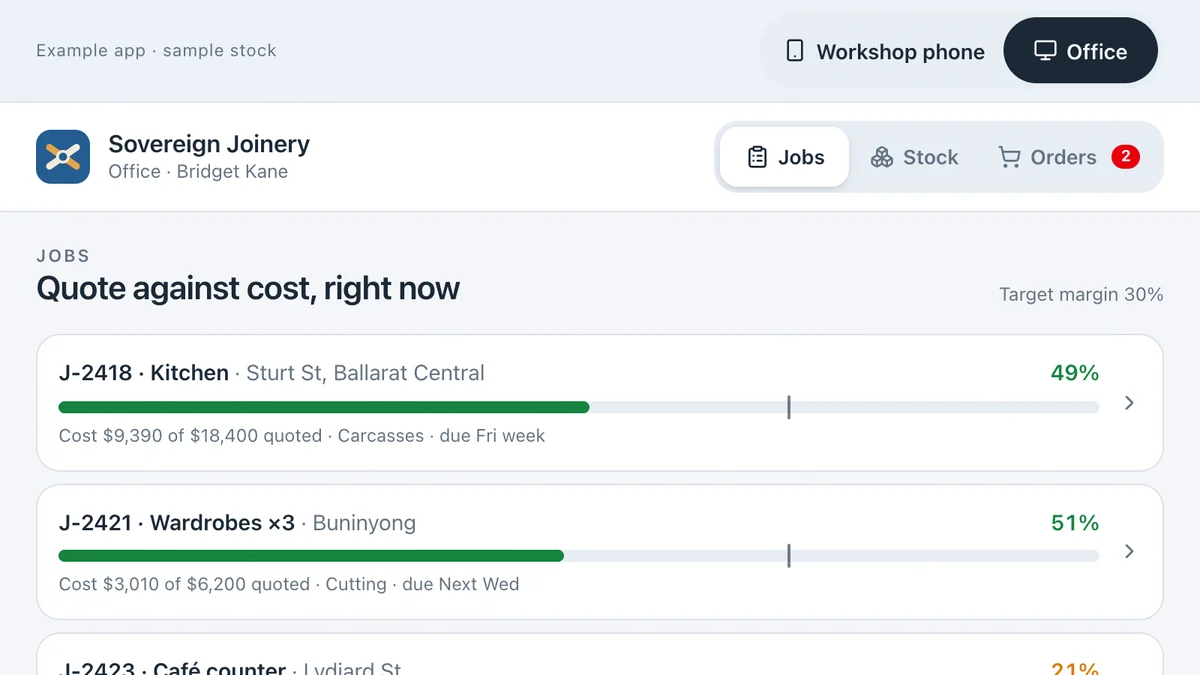
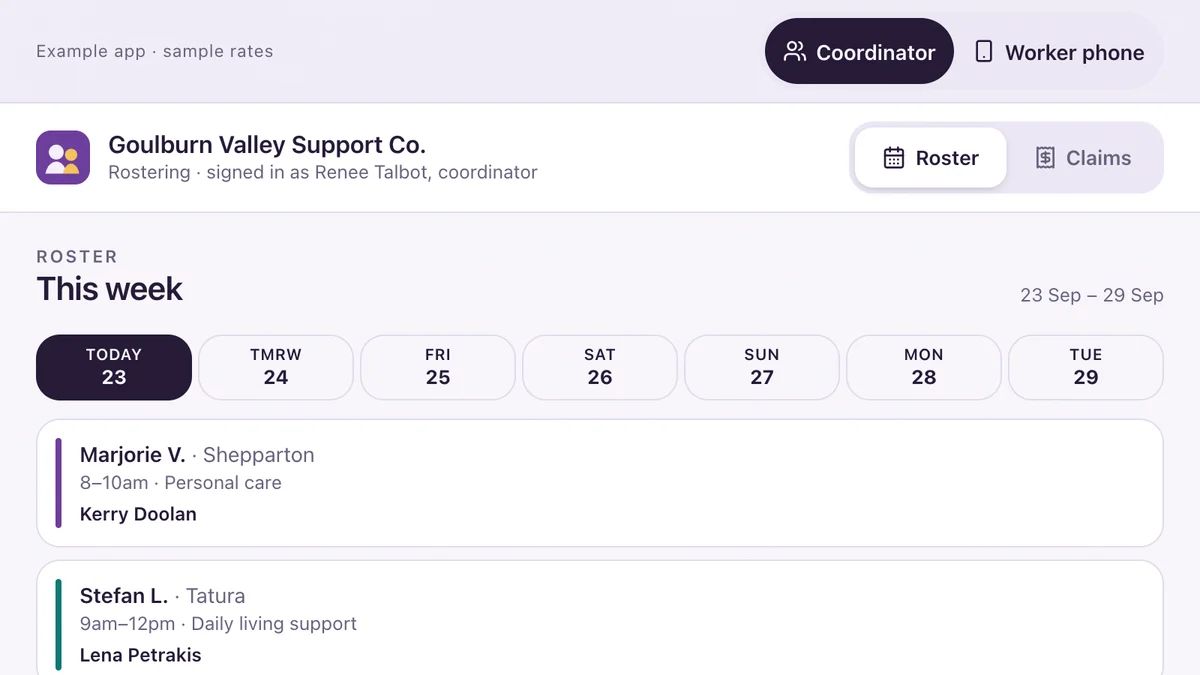
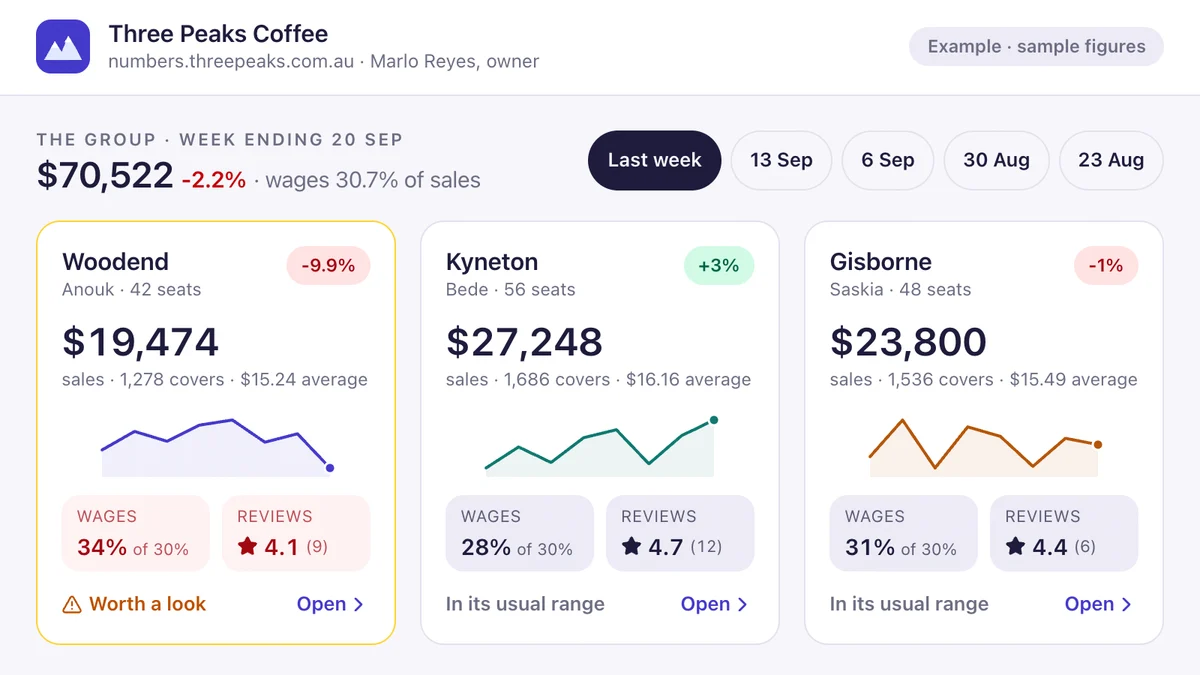
Software we'd build, running with a fictional business and sample data. Use it, then decide.
Also worth a look
- Is It Time to Move Off Bubble?
- Is It Time to Move Off Zapier?
- Is It Time to Replace Microsoft Access?
- When a business has outgrown its spreadsheet
- Signs it's time to build your own software
- Wondering whether to build your own instead? The signs it's time
Last reviewed . Platform prices are the vendor's published list prices when this page was reviewed and change often; check current pricing. Migration costs are indicative Australian ranges, not quotes.